Taipei, February 13, 2026 — Brussels Morning Newspaper — Taiwan reaffirmed that private enterprises will determine the direction and scale of overseas expansion tied to Taiwan US investments, signaling a market driven approach at a time of heightened global scrutiny over semiconductor supply chains and advanced manufacturing capacity.
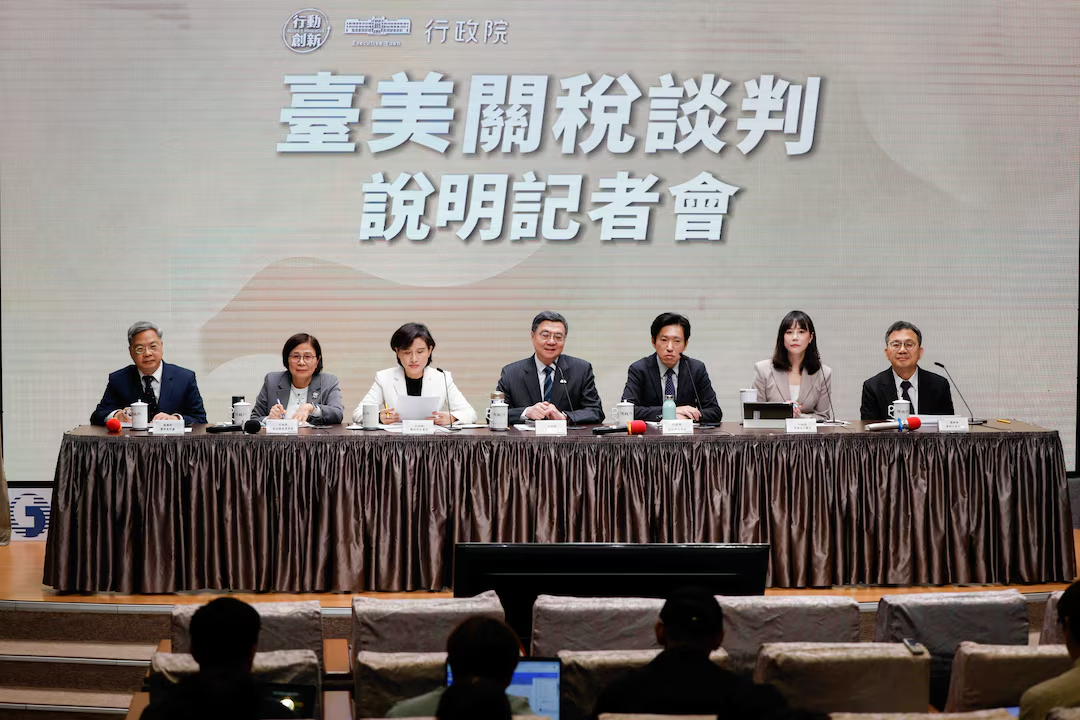
Officials in Taipei emphasized that while economic cooperation with Washington remains strong, final decisions regarding Taiwan US investments rest with corporate leadership and shareholders. The clarification arrives amid intensified international attention on capital flows, industrial incentives, and strategic technology partnerships between Taiwan and the United States.
The statement reflects Taiwan’s commitment to a stable business environment, reinforcing that expansion decisions are commercial judgments shaped by global demand, cost structures, and long term competitiveness.
Government Affirms Corporate Independence
Taiwan’s Ministry of Economic Affairs underscored that the island’s open market framework enables companies to assess international opportunities without compulsory directives. Authorities clarified that government policy supports global engagement but does not mandate specific investment levels abroad.
A senior economic official said,
“Our enterprises operate in competitive global markets, and their expansion strategies must be guided by financial logic and long term sustainability.”
This message seeks to reassure both domestic stakeholders and foreign investors that Taiwan’s regulatory approach remains predictable. By reinforcing autonomy, Taipei aims to maintain investor confidence while navigating a complex geopolitical landscape.
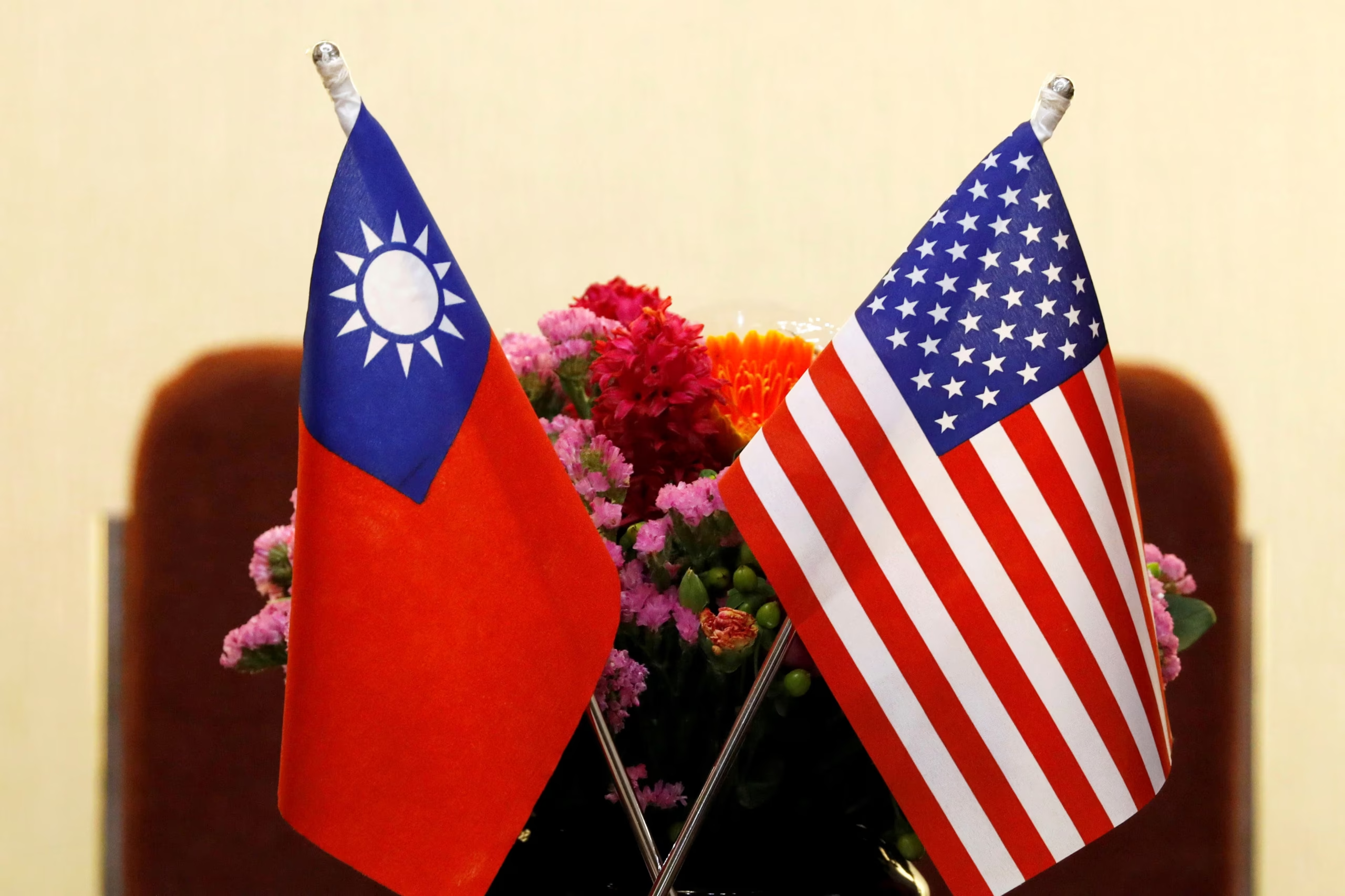
The renewed focus on Taiwan US investments comes as Washington continues promoting industrial policies designed to attract high value technology manufacturing.
Strategic Economic Drivers
Global technology demand remains robust in 2026, driven by artificial intelligence infrastructure, electric vehicles, advanced telecommunications, and cloud computing expansion. Taiwan’s manufacturers play a central role in supplying critical semiconductor components that power these industries.
Companies evaluating Taiwan US investments consider multiple variables, including access to skilled labor, energy reliability, supply chain integration, and regulatory stability. Financial incentives introduced in the United States have intensified discussions about expanding fabrication facilities and research partnerships.
Industry analysts note that diversification often strengthens operational resilience. Expanding geographically can mitigate risks associated with supply disruptions while preserving technological leadership.
Market Reaction and Investor Sentiment
Financial markets responded with cautious optimism following Taipei’s clarification. Investors typically favor policy consistency, particularly in sectors requiring multibillion dollar capital commitments.
Equity analysts observed that reaffirming corporate discretion reduces uncertainty surrounding Taiwan US investments. Market participants interpret the move as an effort to stabilize expectations while preserving flexibility.
A Taipei based market strategist commented,
“Clarity from policymakers supports valuation stability, especially in industries where long term planning cycles extend over several years.”
The statement has been viewed as constructive by institutional investors monitoring cross border technology collaboration.
Industrial Policy and Geopolitical Considerations
Taiwan’s strategic importance within the global semiconductor ecosystem has elevated the stakes of overseas expansion decisions. Governments worldwide are seeking to secure domestic supply chains amid concerns about geopolitical tensions and technological competition.
The discussion around Taiwan US investments reflects broader shifts in industrial policy. Washington’s incentives for domestic production have encouraged multinational corporations to consider localized manufacturing footprints.
However, analysts caution that geopolitical factors are only one part of the equation. Cost efficiency, operational scalability, and intellectual property safeguards remain equally influential.
A technology executive familiar with cross border strategy said,
“Diversification is about resilience, not relocation. We evaluate every decision through a comprehensive commercial lens.”
This perspective underscores the balanced approach adopted by many firms.
Domestic Economic Foundations
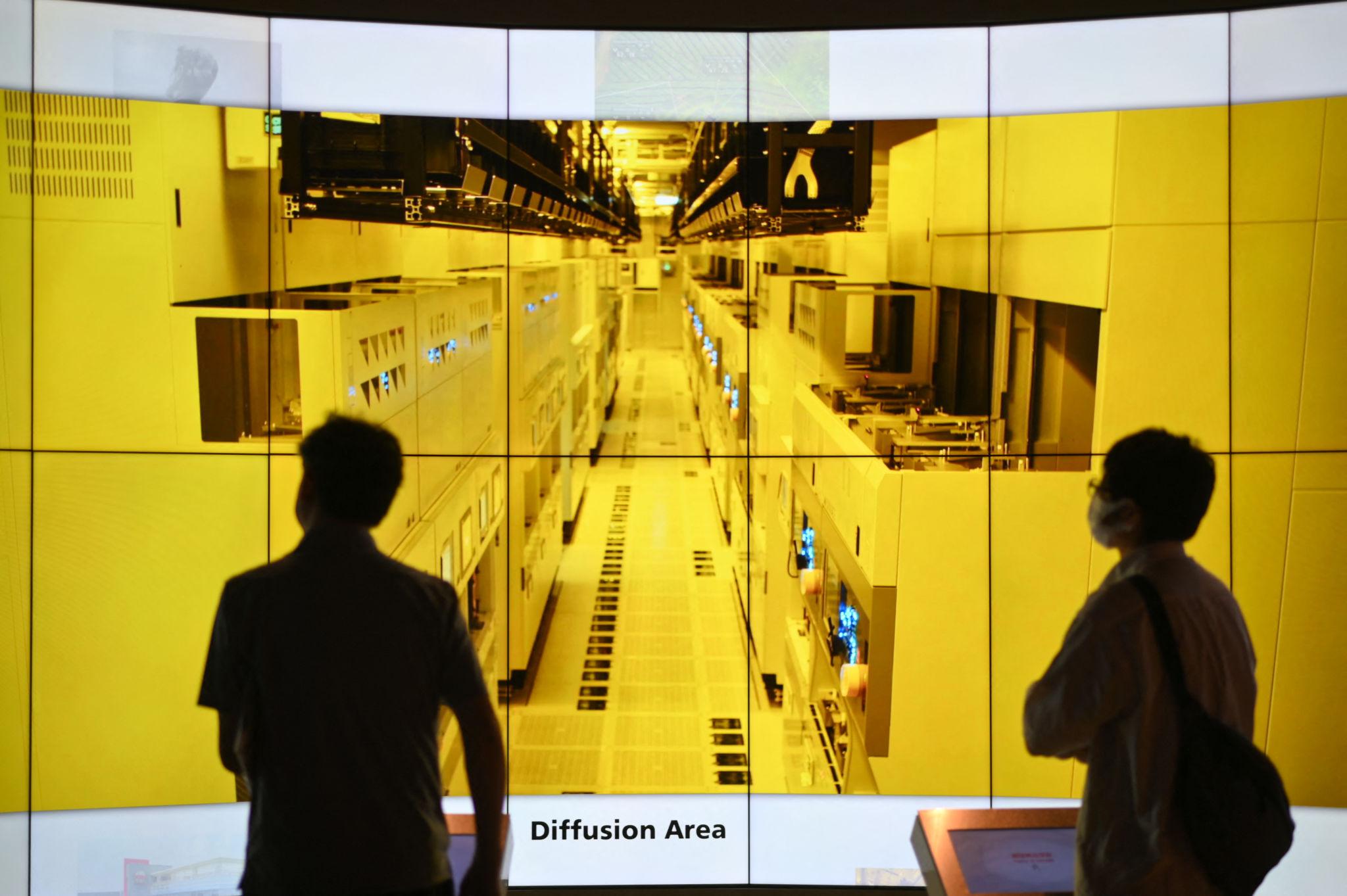
Despite global expansion discussions, Taiwan’s domestic industrial ecosystem continues to thrive. Research and development centers, highly specialized engineering talent, and integrated supply clusters anchor the island’s competitive edge.
Officials highlighted ongoing investments in infrastructure modernization, workforce training, and innovation incentives. These measures aim to ensure that overseas activity complements rather than undermines domestic capabilities.
Taiwan US investments are therefore framed as an extension of Taiwan’s global integration strategy rather than a shift away from its home base.
Economists note that sustaining domestic technological leadership remains critical for long term prosperity.
A Brief History of Taiwan’s Global Investment Strategy
Taiwan’s outward investment trajectory began accelerating in the late twentieth century as manufacturers sought access to emerging markets and lower cost production bases. Over time, firms developed sophisticated multinational structures, balancing domestic research with international assembly operations.
The evolution toward high value semiconductor production transformed Taiwan into a cornerstone of global electronics supply chains. As technological complexity increased, collaboration with international partners deepened.
Taiwan US investments represent a continuation of this historical pattern of strategic diversification. Earlier phases of globalization emphasized cost efficiency, while the current phase prioritizes resilience, innovation, and market proximity.
The historical record demonstrates that Taiwanese firms have consistently adapted to shifting economic landscapes while maintaining domestic strength.
Supply Chain Resilience and Technology Leadership
Supply chain resilience has become a defining objective for governments and corporations alike. Disruptions earlier in the decade highlighted vulnerabilities within concentrated production models.
Taiwan US investments are frequently discussed in this context, as geographic diversification can reduce exposure to localized disruptions. However, building advanced semiconductor facilities requires significant time, expertise, and capital.
Executives stress that expansion decisions must safeguard intellectual property and technological know how. Maintaining research leadership in Taiwan remains essential.
Industry observers argue that strategic partnerships, rather than simple relocation, define the next phase of global technology collaboration.
Financial Implications and Capital Allocation
Large scale manufacturing projects require substantial upfront capital. Companies evaluate projected demand cycles, return on investment timelines, and currency risk exposure before finalizing commitments.
The conversation surrounding Taiwan US investments illustrates the complexity of modern capital allocation. Decisions must balance shareholder expectations with operational realities.
Banks and investment firms indicate that financing frameworks often involve phased development. This allows companies to adjust expansion pace according to evolving market conditions.
Analysts emphasize that prudent capital discipline remains central to maintaining competitive advantage.
Global Trade Relations and Regulatory Outlook
Trade relationships between Taiwan and the United States continue to evolve amid broader shifts in global commerce. Regulatory alignment, export controls, and technology safeguards shape the contours of cross border collaboration.
Taipei’s reaffirmation of corporate autonomy sends a signal of continuity to international partners. Stable governance frameworks encourage sustained cooperation.
Observers suggest that transparent policy communication enhances Taiwan’s credibility within multilateral trade networks.
Taiwan US investments thus sit at the intersection of commerce, diplomacy, and technological innovation.
Corporate Governance and Long Term Planning
Corporate boards play a decisive role in determining expansion trajectories. Governance structures ensure that risk assessments, compliance reviews, and shareholder interests guide major commitments.
Taiwan US investments are subject to these oversight mechanisms, reinforcing that commercial viability remains paramount.
Strategists predict that expansion decisions in 2026 will proceed incrementally. Pilot projects, joint ventures, and strategic alliances may precede large scale facility construction.
Such measured pacing aligns with industry norms in capital intensive sectors.

Economic Outlook for 2026 and Beyond
Forecasts suggest continued growth in semiconductor demand as artificial intelligence systems and advanced computing platforms proliferate. Taiwan’s producers remain at the forefront of these innovations.
Taiwan US investments will likely continue evolving within this environment of technological acceleration. Analysts expect collaboration frameworks to deepen while preserving domestic research strength.
Policymakers maintain that stability, transparency, and adherence to market principles will underpin Taiwan’s strategy moving forward.
The broader objective is sustainable growth supported by diversified global partnerships.
The Defining Crossroads of 2026
Taiwan stands at a pivotal juncture in 2026, balancing international expansion with domestic innovation leadership. By reaffirming that business leaders control overseas commitments, Taipei reinforces its identity as a market oriented economy.
Taiwan US investments symbolize both opportunity and complexity. They reflect global demand for advanced manufacturing, strategic industrial alignment, and cross border collaboration.
At the same time, careful governance and disciplined capital planning remain essential to preserving competitiveness.
As global industries navigate rapid technological change, Taiwan’s measured approach may provide a model for balancing autonomy with strategic partnership.