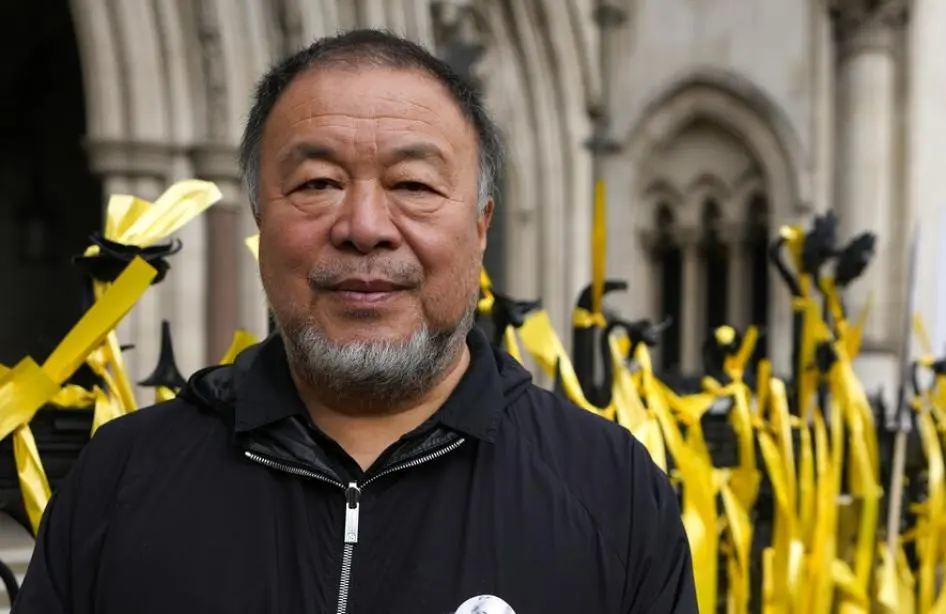
London, United Kingdom, January — A renewed international debate over moral authority and political credibility has emerged following public remarks by prominent Chinese artist and activist Ai Weiwei in the British capital. Speaking during interviews and public discussions in London, the artist challenged Western governments over their approach to global rights advocacy, bringing the Ai Weiwei human rights debate sharply back into focus at a time of heightened geopolitical tension.
His comments have resonated widely across diplomatic, cultural, and academic circles, reflecting broader unease about how universal values are defined, defended, and selectively applied in international politics.
A Cultural Figure With Global Political Reach
Ai Weiwei’s influence extends far beyond the art world. Known internationally for large-scale installations, documentaries, and outspoken political commentary, he has long occupied a unique space at the intersection of culture and dissent. His work has repeatedly challenged state authority, censorship, and institutional hypocrisy.
Observers say the longevity of the Ai Weiwei human rights discussion stems from his ability to connect personal experience with universal political questions, making abstract debates tangible to global audiences.
Why the London Remarks Matter
The choice of London as the setting for these remarks carries symbolic weight. As a global media hub and long-standing advocate of liberal democratic values, the city represents many of the principles Ai Weiwei has interrogated throughout his career.
Analysts argue that when the Ai Weiwei human rights debate unfolds in London, it gains added resonance because it confronts Western audiences directly within their own political and cultural environment.
Background of Diplomatic Friction
Human rights have been a persistent fault line in relations between China and Western governments. European and North American leaders regularly criticise Beijing’s policies, while Chinese officials dismiss such critiques as politically motivated and inconsistent.
Within this broader context, the Ai Weiwei human rights narrative has evolved into a wider examination of whether moral authority can exist without internal accountability.
China and the Question of Moral Consistency
Chinese officials frequently argue that Western governments apply double standards when addressing rights issues, overlooking their own domestic challenges. While Ai Weiwei has consistently criticised Chinese state power, his recent remarks highlight contradictions across multiple political systems.
Experts note that the Ai Weiwei human rights debate does not function as a defence of any government, but rather as a critique of selective moral judgment.
Western Democracies Facing Their Own Challenges
Issues such as racial inequality, migration policy, mass surveillance, and limits on protest have increasingly shaped public discourse in Western societies. These challenges complicate claims of moral leadership on the global stage.
For many observers, the Ai Weiwei human rights discussion resonates because it reflects widespread concern that values promoted internationally are not always upheld domestically.
Art as a Tool of Political Accountability
Throughout his career, Ai Weiwei has treated art as an instrument of accountability. His installations and films often expose hidden systems of control and compel audiences to confront uncomfortable realities.
Cultural commentators argue that the Ai Weiwei human rights debate mirrors this artistic approach, using public speech rather than physical form to provoke reflection and challenge complacency.
Media Coverage and Public Debate
International media coverage of Ai Weiwei’s London remarks has been extensive. Newspapers, broadcasters, and digital platforms have framed the comments as both provocative and reflective of broader global skepticism toward established power structures.
The prominence of the Ai Weiwei human rights theme in coverage underscores how cultural figures can shape political discourse in ways that formal diplomacy often cannot.
Human Rights Advocacy Under Pressure
Global human rights organizations face increasing scrutiny over consistency and impartiality. Critics argue that advocacy efforts are sometimes shaped by geopolitical interests rather than universal principles.
Analysts say the Ai Weiwei human rights debate highlights the challenge of maintaining credibility in a fragmented international system where power and influence are increasingly dispersed.
Public Opinion and Shifting Attitudes
Public opinion surveys across Europe suggest growing skepticism toward traditional sources of moral authority. Younger generations in particular appear more willing to question long-standing narratives about who defines justice and why.
Within this climate, the Ai Weiwei human rights discussion reflects a broader shift toward demanding accountability from all centers of power.
The Role of Intellectual Dissent
Artists and intellectuals have historically played a critical role in challenging dominant political narratives. Ai Weiwei continues this tradition by using visibility and influence to raise difficult questions.
During his London remarks, he stated,
“Human rights lose their meaning when they are applied selectively instead of being defended as universal principles.”
Cultural Influence and Diplomatic Sensitivity
Although Ai Weiwei does not represent any government, his global profile gives his words diplomatic significance. Cultural criticism can shape public perception in ways official statements often cannot.
As a result, the Ai Weiwei human rights debate has implications beyond art and activism, influencing how governments assess reputational risk and moral standing.
London as a Stage for Global Debate
London’s history as a city shaped by migration, protest, and political change adds symbolic depth to the discussion. Its role as a meeting point for diverse voices amplifies the reach of ideas expressed there.
This environment has helped elevate the Ai Weiwei human rights conversation into a truly global dialogue.
Criticism and Counterarguments
Some activists worry that broad criticism of Western credibility could be exploited by authoritarian governments to deflect legitimate scrutiny. They argue that distinctions between open and closed societies still matter.
Supporters respond that the Ai Weiwei human rights debate strengthens advocacy by insisting that moral authority must be demonstrated through consistent action.
Long-Term Implications for Global Discourse
As global power becomes more distributed, analysts predict that debates over moral authority will intensify. No single bloc, they argue, can claim uncontested leadership on human rights.
Within this evolving landscape, the Ai Weiwei human rights debate may serve as a lasting reference point for discussions about credibility and reform.
Art Exile and Personal Risk
Despite international recognition, Ai Weiwei’s life remains shaped by exile and political risk. His willingness to confront multiple power centers underscores the personal cost of dissent.
This reality adds depth to the Ai Weiwei human rights discussion, grounding abstract debate in lived experience.
Why the Debate Endures
The controversy sparked in London reflects deeper uncertainty about how universal values are defended in a divided world. It challenges societies to examine not only others, but themselves.
The continued relevance of the Ai Weiwei human rights debate suggests that questions of justice, consistency, and accountability will remain central to global politics for years to come.