
“ The Industrial Revolution fueled all of humanity….everything we do has been exploding ever since. It has been the biggest, most impacting thing for human beings in the last 250 million years.”
David La Chapelle, American Avant-guard film director, photographer, and philosopher.
“ The greatest revolution in the history of mankind is the Industrial Revolution.”
John Kenneth Galbraith, Canadian economist, diplomat, and public official.
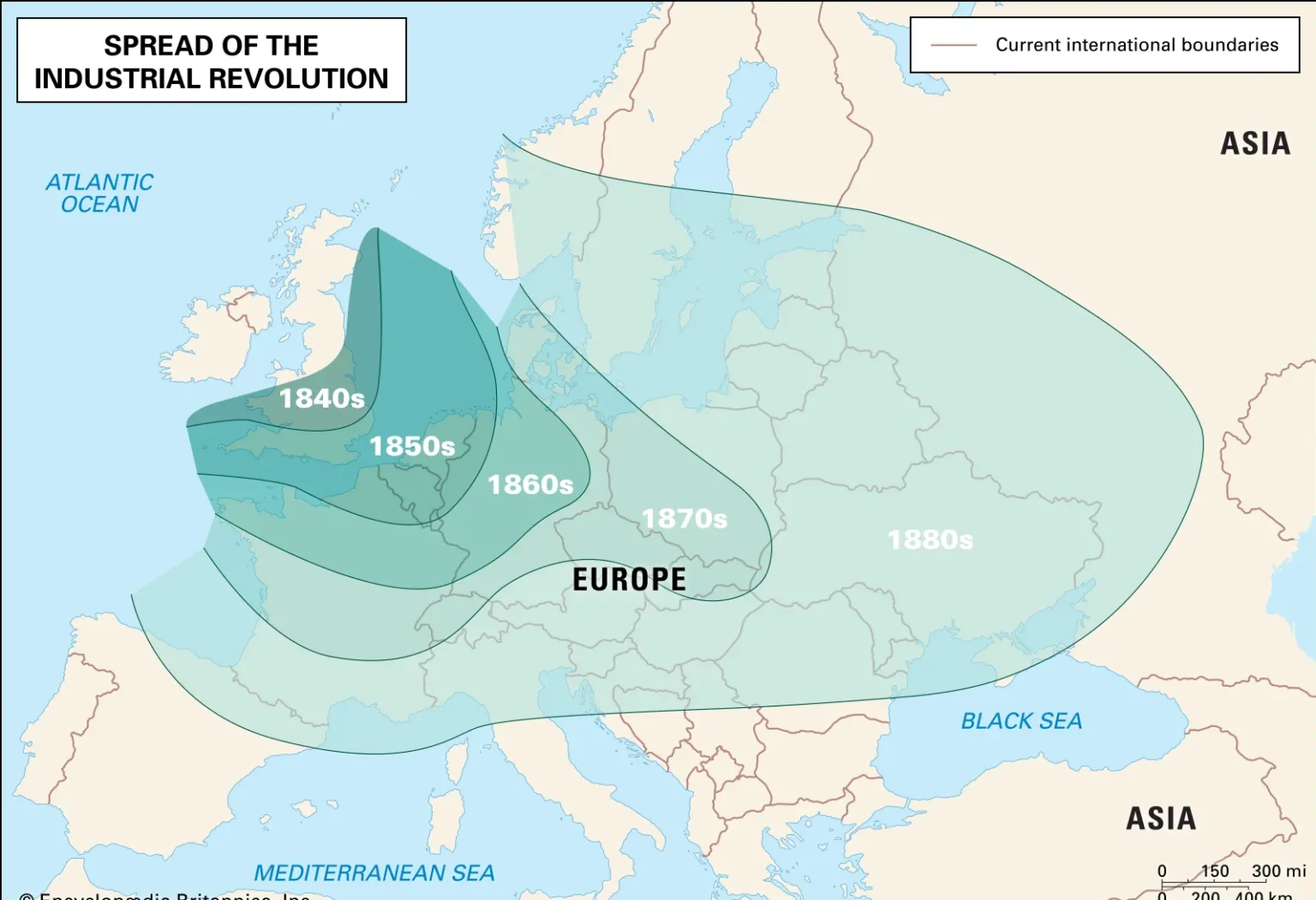
Hyperbole? An overstatement or exaggeration? Perhaps… after all, there have been countless examples of historical pivot points that have greatly impacted humanity: wars, pandemics, religious movements, political upheaval, natural disasters, etc. But when it comes to the rapid development of technical innovation, the Industrial Revolution (1760-1840), stands a monumental transitional period for the global status quo. Not to be overlooked in this tidal wave of change is the significant role of Belgium. Let’s take a look…
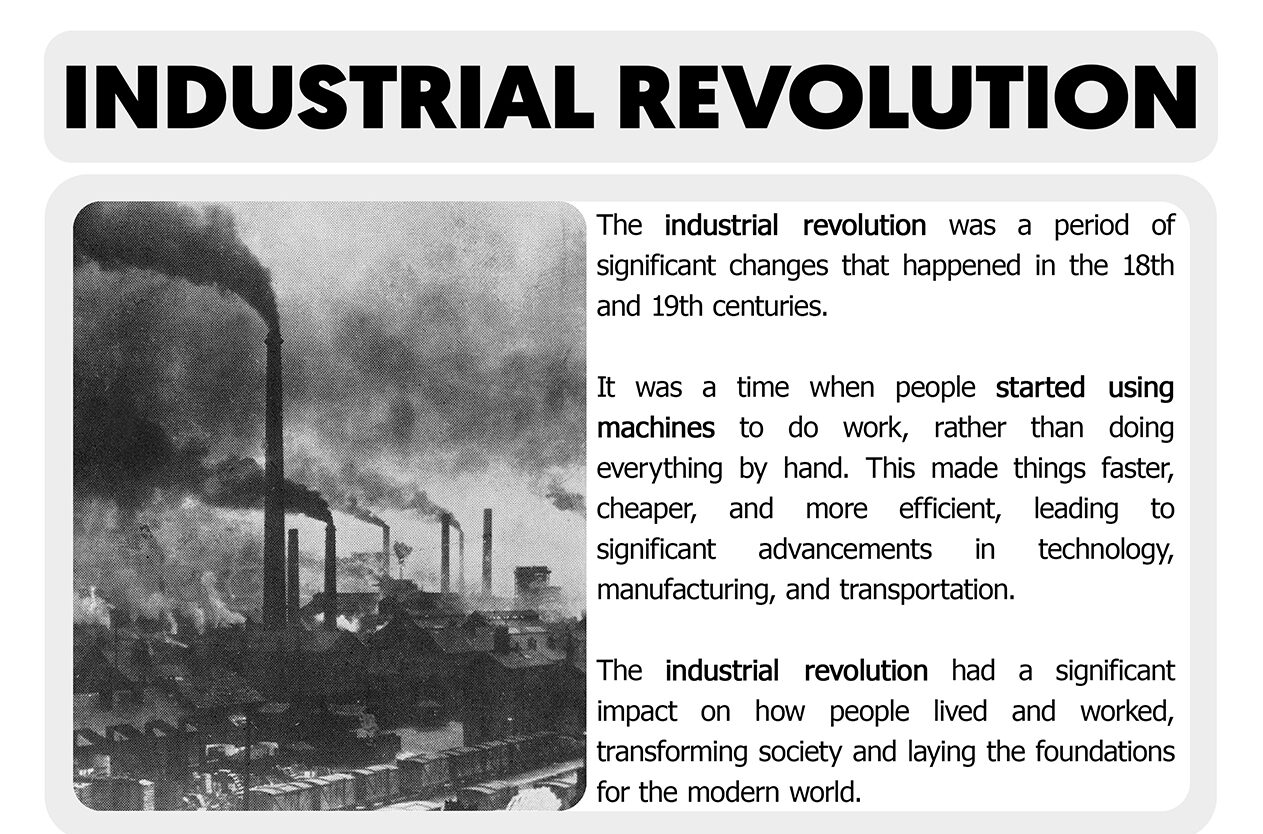
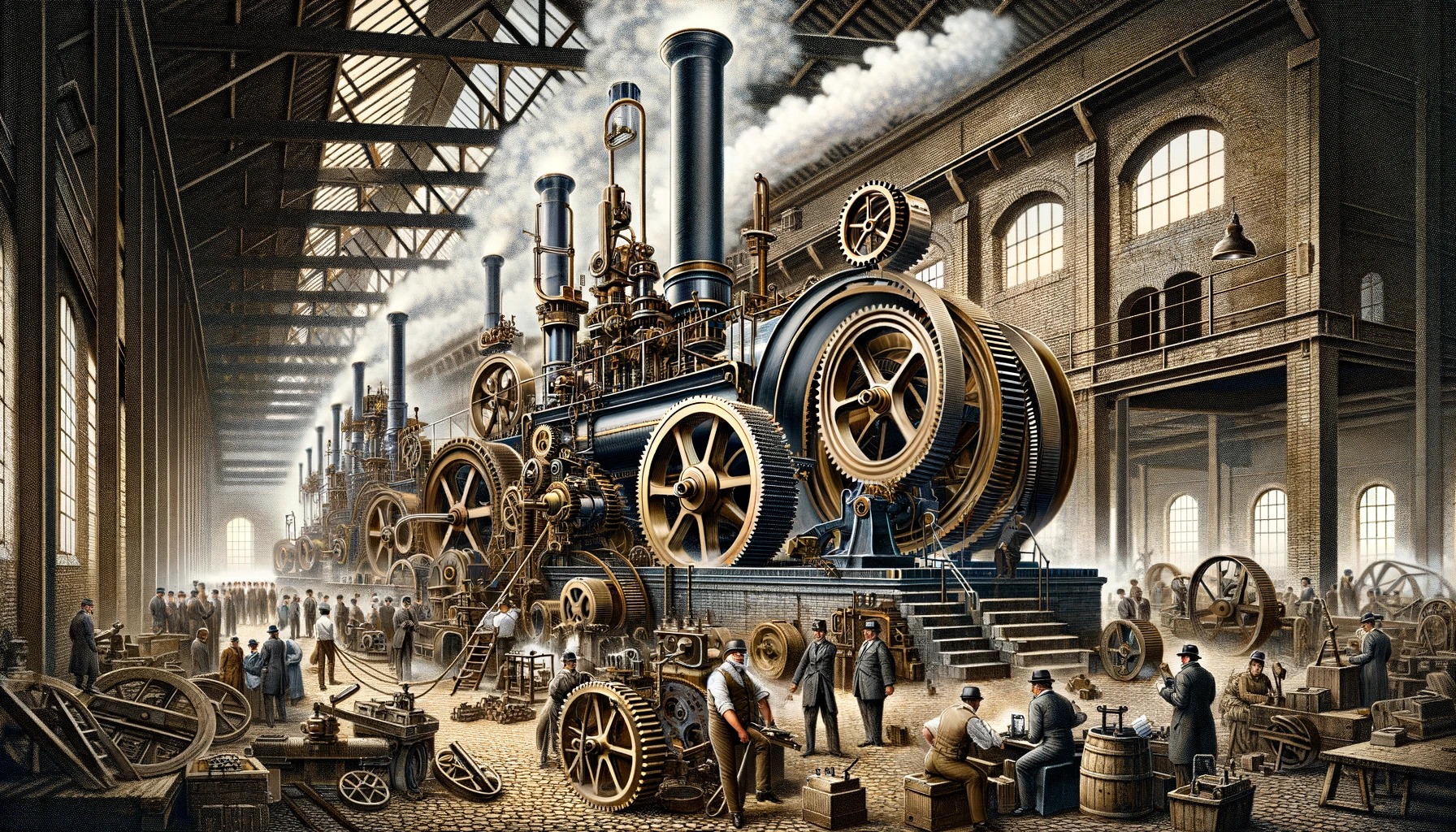
Beginning in Great Britian, the technological transition influenced nearly every aspect of life— economically, socially, and politically. Economically, the Industrial Revolution was the catalyst for the emergence of modern capitalistic economies. Socially, the growth of industry and the factory system led to massive urbanization upsetting what had been an agrarian based population. Housing issues, labor laws, environmental degradation led to social disorder. Politically, the Industrial Revolution fostered debates disruptive to the status quo. The movement demanded new ideas to address the tensions between rich and poor and lead to political trends (not always peaceful ) such as socialism, capitalism, communism and anarchism. It was the sheer number of British technological innovations however that jump started what both La Chapelle and Galbraith called the “greatest revolution in human history.” For example, the steam-powered cotton gin and power loom increased textile (wool, silk, cotton) production by a factor of 50%. Variations to the stationary steam power engines were made adaptable to the transportation infrastructure. Steam engine locomotives, and steamships changed the distribution systems both on land and sea. Another major change in industry was a shift from charcoal (wood) to the availability of cheap and plentiful coal. This allowed for more efficient ways to smelt iron in the manufacturing of machinery.
Beginning in the 1820’s and 1830’s the center of gravity of technological change began to percolate onto the European Continent. Belgium was the second country in which the Industrial Revolution took place—and for good reasons. Obviously, Belgium’s proximity to the British Isles was a major factor but there are other reasons.
The first major sector to experience the Industrial Revolution on Belgian soil was the textile industry. For centuries skilled Belgian weavers were invited to England— transforming it from a raw wool exporter into a finish cloth manufacturer. During the 16th Century alone, thousands of Flemish weavers ( many fleeing religious persecution) established high quality workshops coveted by the English aristocracy. The Belgian style textile revolution was not a uniform national event but rather concentrated in specific regions that specialized in different fibers. Ghent for example, was the first city in Europe to industrialize “cotton spinning” using borrowed (some say smuggled!) British technology. Verviers ( Province of Liège), a historic center for wool, pioneered the use of wool spinning due to the influx of British immigrants. In rural Flanders , where flax had been grown for centuries, the traditional linen industry morphed from a cottage industry to massive urban mills using steam looms powered by coal.
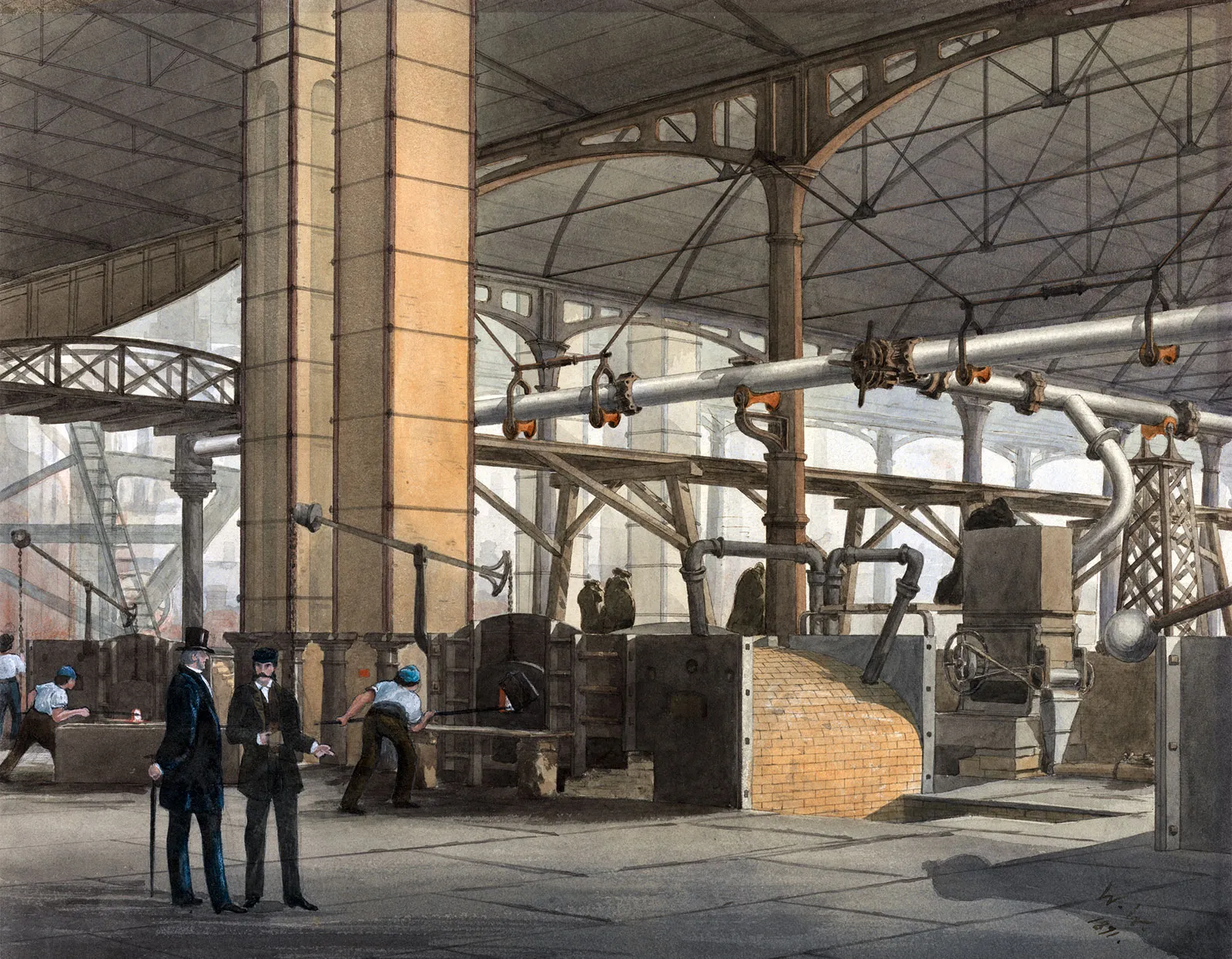
Belgian industrialization began primarily in Wallonia due to its cheap and readily available coal. Factories with coke blast furnaces located around the coal mining areas of Liege and Charleroi, attracted a cadre of entrepreneurs. The leader of this change was a transplanted English man named John Cockerill whose factories integrated all stages of iron-making— from mining, to production techniques, to engineering. Industry spread especially in the Haine, Sambre and Meuse river valleys. After 1830 ( perhaps due to Belgium and home rule) the Wallon regions were consider the second leading industrial power after Britian. Being geographically located between England and France made available markets for both the export of coal and those Belgian products enhanced by manufacturing. Conditions were ripe for Belgian industry to experiment and perfect new technologies. The new nation provided the model for showing the world the value of an efficient infrastructure. Belgium was among the first Continental countries to fund a “grid pattern” railway system that connected major cities, ports, mining areas and neighboring countries. In fact, the first railway in continental Europe was built between Brussels and Mechelen in 1835. Later in the century, Belgium was a major exporter of railway components across the globe. Additionally, a technologically advanced canal system, many in-place since the 1500’s, served as a vital artery for trade within the Low Countries. Belgium’s network of canals was able to connect major seaports like Antwerp and Zeebrugge to the heartlands of France, Germany and the Netherlands. Not to be overlooked, was Belgium’s investment banking system which was able to provide the massive capital, a stable currency , and credit needed to build Belgium’s ”cathedrals of industry.”
In the past decade some prognosticators parallel todays “information age” with the past industrial Revolution. Cell phones, high speed internet, social media, artificial intelligence, cloud computing etc., are changing humanity economically, socially and politically just as did the Industrial Revolution. Once again Belgium is well positioned to be a European leader. The small country ranks consistently high in the EU’s Digital Economy and Society Index. It also ranks near the top in Europe for enterprises using internal electronic information sharing, AI adaptation, cloud computing, and data centers. Due to a stable power grid and its geographical location, Belgium finds itself as a central European hub for the information age.
Is history repeating itself? The question is rhetorical….
Fun Facts
— By 1810 , Ghent was the center of cotton production earning the name “ The Manchester of the Continent”.
—- The small community of Verviers became so dominant as the world leader in mechanized wool carding and spinning that it was able to “set the price” for the entire trade.
—Belgian entrepreneur Édouard Empain, built so many public rail systems worldwide (e.g. The Paris Metro System (1845), Cairo’s Heliopolis ) that he became known as The Tramway King.