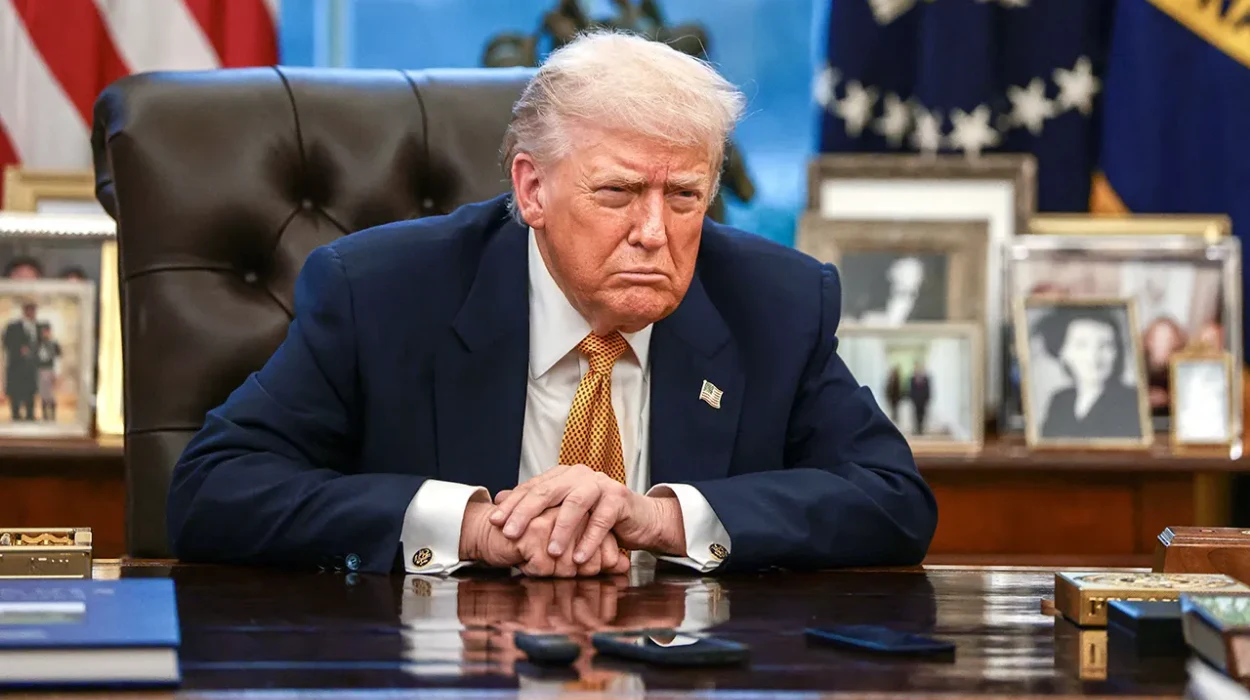
Washington (Brussels Morning Newspaper) January 19, 2026 – US President Donald Trump announced new tariffs on Denmark and seven other European countries to pressure for Greenland’s sale. The 10 percent duties start February 1, potentially rising to 25 percent by June 1 without a deal. European leaders condemned the move as threats to NATO unity and trade relations.
Trump posted on Truth Social that the tariffs target Denmark, Norway, Sweden, France, Germany, the Netherlands, Finland, and Great Britain until a “Complete and Total purchase of Greenland” occurs. He cited national security, minerals, and countering China and Russia in the Arctic.
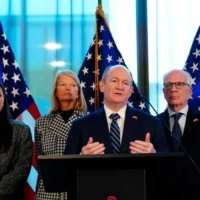
Denmark’s Prime Minister Mette Frederiksen stated the US has no right to annex any Danish kingdom territory. Greenland’s Prime Minister Jens Frederik Nielsen called the idea a “fantasy” and urged dialogue through proper channels.
Tariff Details and Timeline
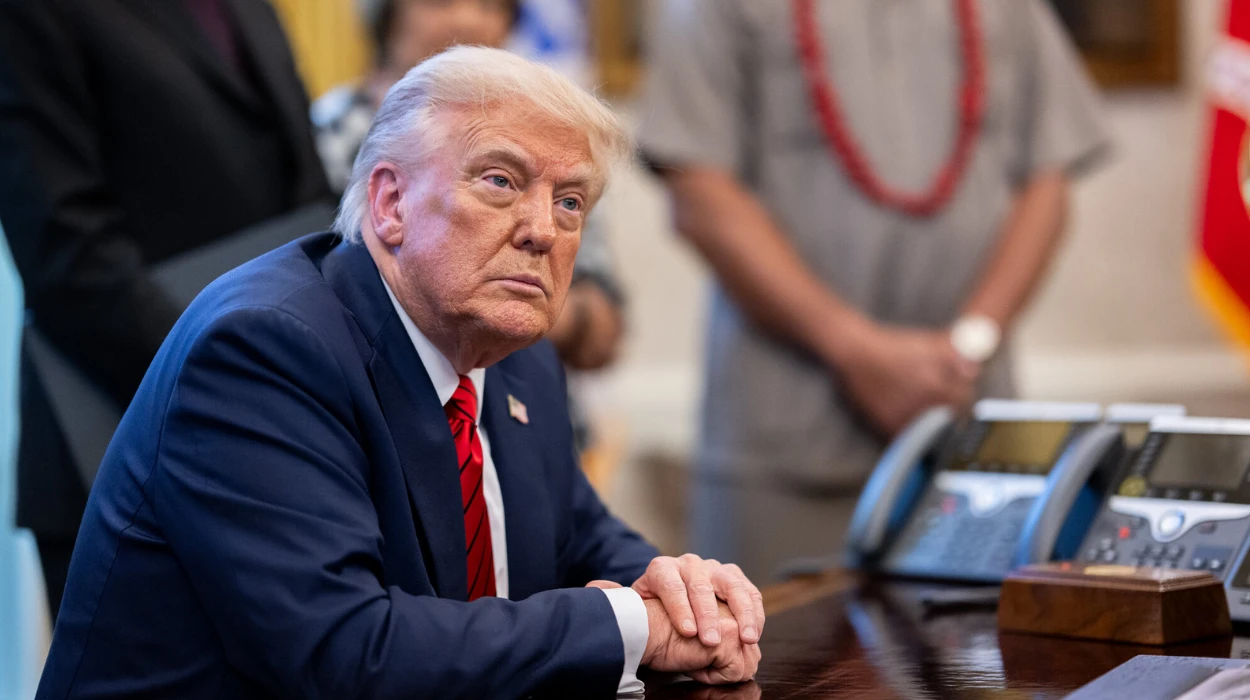
The tariffs impose 10 percent on all exports from the listed countries to the US beginning February 1. Trump warned escalation to 25 percent by June 1 if no negotiations advance. These add to existing 10-15 percent tariffs on some nations, which have deployed troops to Greenland.
Trump invokes the International Emergency Economic Powers Act for enforcement. The US Supreme Court reviews its legality, with a ruling expected soon. European envoys discuss retaliatory tariffs on €93 billion ($108 billion) of US goods.
The announcement followed Denmark’s call to cease threats and a social media post showing Greenland in US flag colours.
Reactions from European Leaders
Denmark’s Frederiksen emphasised NATO membership protects Greenland under alliance guarantees. A 1951 treaty allows US military access without ownership transfer. UK Prime Minister Sir Keir Starmer said only Denmark and Greenland decide its future.
European Commission spokesperson Paula Pinho denied any EU request for US control over Greenland. NATO members warned of a “dangerous downward spiral” from tariff threats over sovereignty. Scotland’s John Swinney called the approach “wrong” and “unacceptable”.
No European nation indicated willingness to negotiate Greenland’s sale.
Naveen S Garewal highlighted potential EU response to the escalating trade tensions.
Naveen S Garewal – @naveengarewal said in X post,
“EU may put retaliatory tariff on US over Trump’s Greenland threat.”
EU may put retaliatory tariff on US over Trump’s Greenland threat https://t.co/O2fKAzftew
— Naveen S Garewal (@naveengarewal) January 19, 2026
Greenland’s Strategic Importance
Trump repeated that the US “needs Greenland” for national security due to its Arctic position and minerals for high-tech industries. He argued it counters Chinese and Russian Arctic interests. Greenland holds rare earths vital for technology and defence.
Greenland remains a semi-autonomous Danish territory with its own prime minister. Nielsen prioritised respect for international law and dialogue. Trump has not ruled out force, though current tactics focus on economic pressure.
Denmark maintains defence agreements granting US base access in Greenland.
Impact on European Businesses
The tariffs place Europe Inc in renewed crosshairs, threatening transatlantic trade. Bruegel think tank fellow Funk Kirgaard stated they end last year’s Turnberry deal on steel tariffs. EU economic revival plans leave the bloc vulnerable to US pressure.
Targeted exporters face immediate 10 percent duties, with potential 25 percent hikes. Retaliation talks target US goods worth over $100 billion. Markets debate if tariffs harm US interests more than allies.
Germany, France, and others with Arctic presence or Denmark support face broadest exposure.
MacroMicro provided market analysis on the tariff strategy and broader economic context.
MacroMicro – @MacroMicroMe said in X post,
“Weekly Commentary | Trump’s threat of a 10% tariff on those European countries is a strategic use of market access to force a deal on Greenland. By weaponizing tariffs, the US is eyeing a monopoly on Arctic shipping lanes and the rare earth minerals needed to break the Chinese supply chain. Full sovereignty unlikely, but NATO pacts, defense deals, and resource partnerships could deliver the prize. Elsewhere: US big banks post their strongest results since 2021, surging M&A, debt underwriting, and record trading revenues fueled by policy volatility. Consumer resilience holds (rising card spend, recovering mortgages), yet looming credit card rate caps threaten profitability and credit access. TSMC anchors the AI supercycle: record earnings, margins soaring on advanced nodes and AI server demand set to grow >50% annually through 2026. US-Taiwan trade carve-outs shield it from tariff risk, while overseas fabs deliver pricing power without meaningful dilution.Read the full report now.”
Weekly Commentary | Trump’s threat of a 10% tariff on those European countries is a strategic use of market access to force a deal on Greenland.
By weaponizing tariffs, the US is eyeing a monopoly on Arctic shipping lanes and the rare earth minerals needed to break the Chinese… pic.twitter.com/rKQMl7uADF
— MacroMicro (@MacroMicroMe) January 19, 2026
Historical Context of Trump’s Greenland Interest
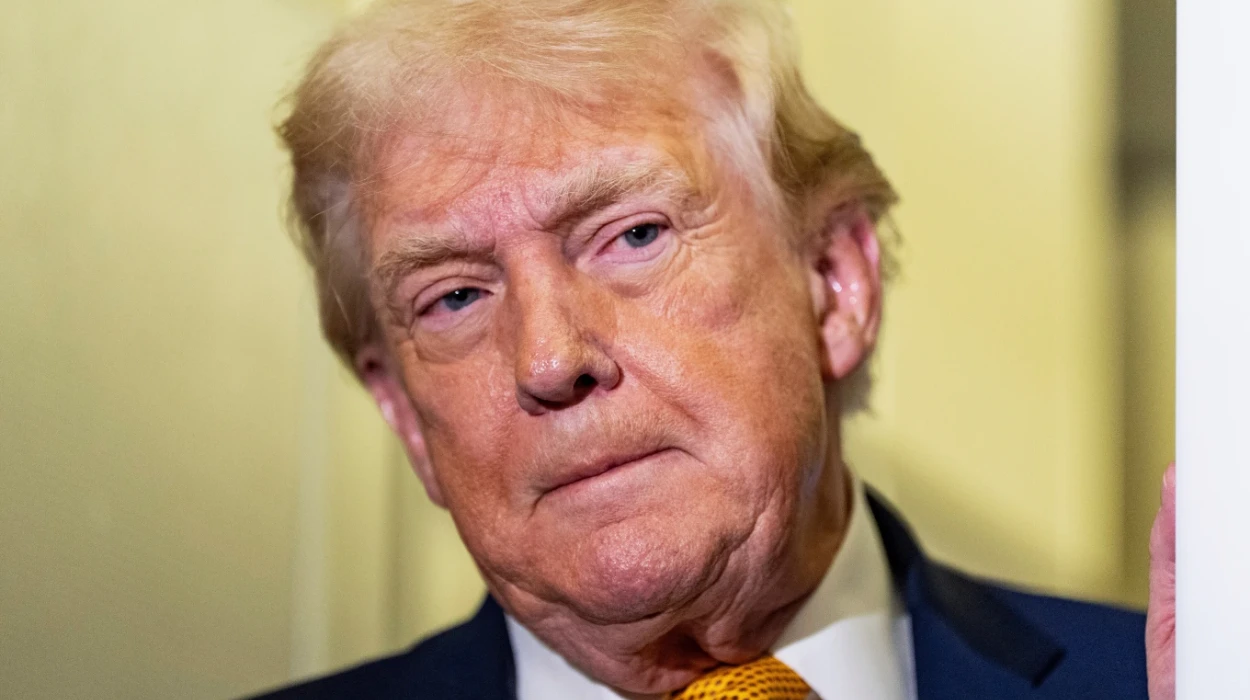
Trump first expressed interest in buying Greenland during his first term. He reiterated the push post-reelection in November 2024. Recent statements aboard Air Force One claimed the EU “needs” US management.
A Katie Miller social media post with a US-flagged Greenland map preceded tariffs. Trump dismissed Danish objections, stating “Denmark can do nothing about it”.
EU Commission President Ursula von der Leyen secured prior tariff relief, now at risk.
Broader Trade War Implications
The Greenland dispute risks full-blown transatlantic trade war. Trump has used tariffs against multiple nations over the past year. Europeans eye Supreme Court ruling for relief.
NATO cohesion faces strain as tariffs target allies over non-trade issue. Von der Leyen faces criticism for slow economic responses heightening vulnerability.
Trump framed acquisition as benefiting US under his presidency.
European Countermeasures Under Discussion
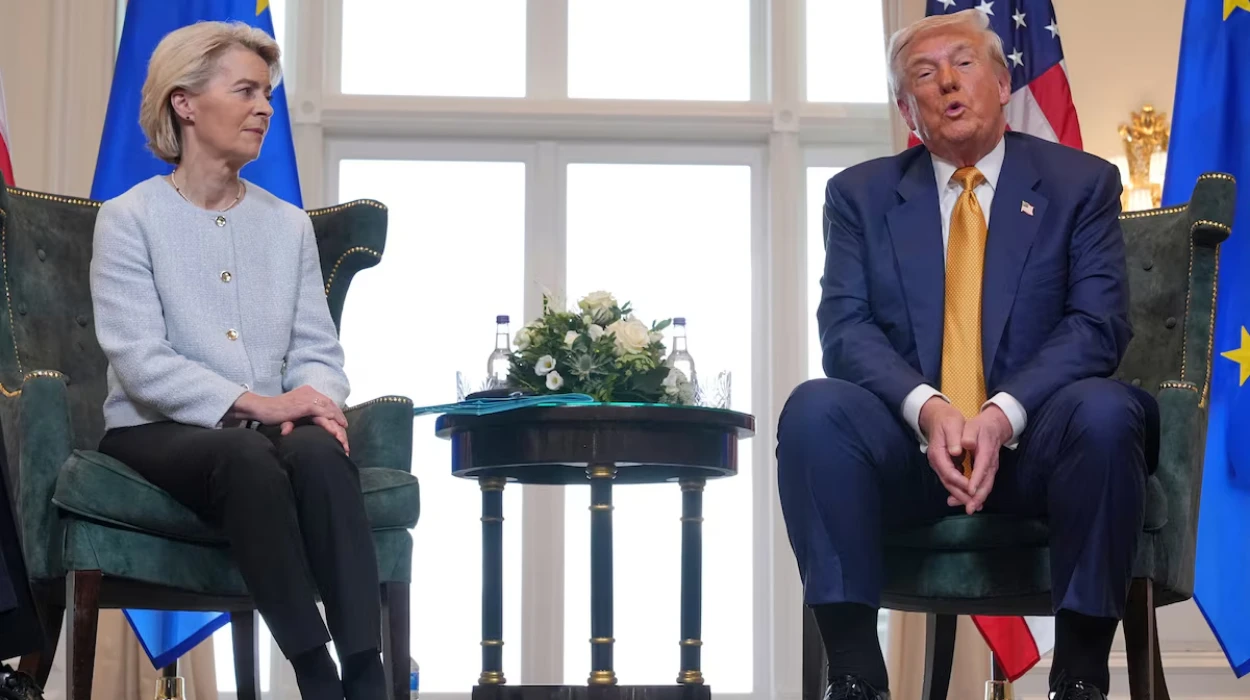
EU prepares unprecedented countermeasures against Trump tariffs. Envoys consider duties on key US exports. Following an emergency ambassadors’ meeting on Sunday, member states signalled solidarity with Denmark but held off immediate activation of the Anti-Coercion Instrument.
French President Emmanuel Macron called for activating the €93 billion retaliation package. European Council President Antonio Costa convened an extraordinary summit for January 22. The bloc views reciprocal tariffs as a last resort while prioritising diplomacy.