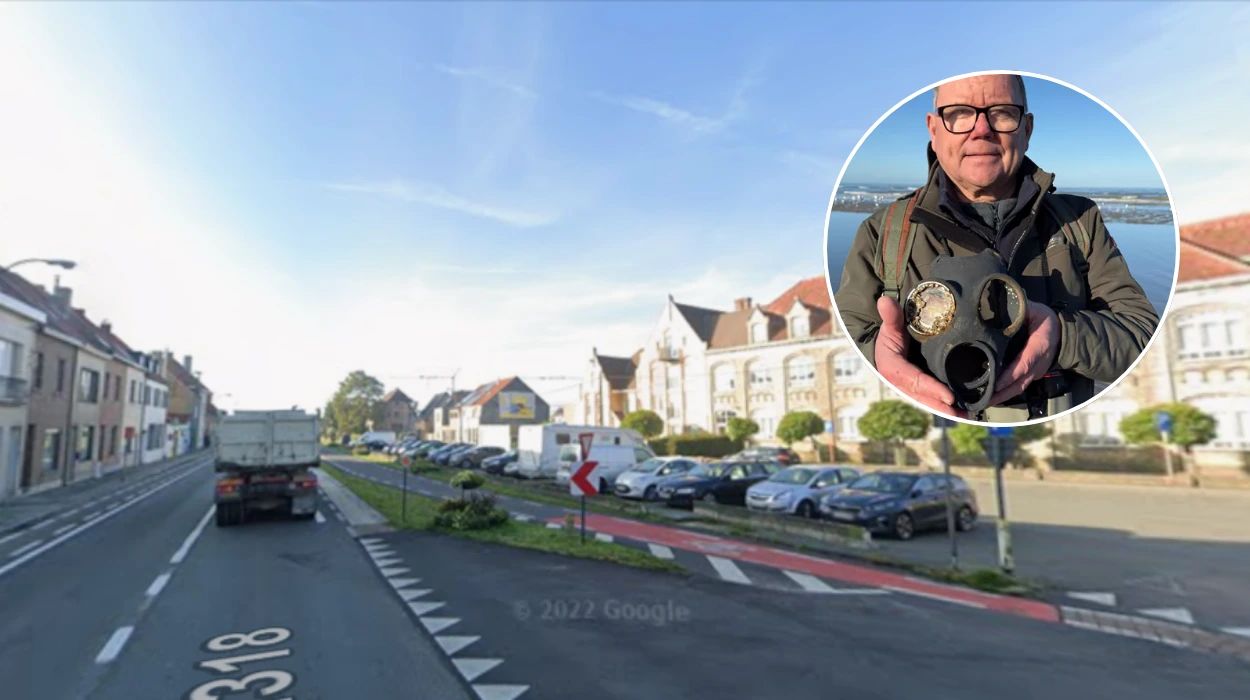
Lombardsijde (Brussels Morning Newspaper) 14 January 2026 – A beachcomber discovered a World War II-era gas mask on Lombardsijde beach near Ostend, Belgium. The finder suggested it might originate from German forces stationed in the area during the conflict. Local authorities confirmed the artefact’s historical significance, with no immediate safety concerns reported.
Lombardsijde, a coastal village in West Flanders province, lies along the North Sea shoreline, approximately 10 kilometres north-east of Ostend. The discovery occurred during a routine walk along the beach, a popular spot for locals and visitors to search for marine debris and occasional historical items washed ashore or buried in the sand. Beaches in this region frequently yield remnants from both World Wars due to their strategic position during occupations and battles.
The beachcomber, whose identity remains undisclosed in initial reports, spotted the gas mask partially exposed amid seaweed and pebbles. Belgian media outlets, including VRT NWS and Het Laatste Nieuws, detailed the event based on statements from the finder. “Perhaps from the Germans,” the beachcomber remarked, noting the mask’s design resembled those used by Wehrmacht troops between 1939 and 1945 [ from prior context].
Discovery Details and Initial Response
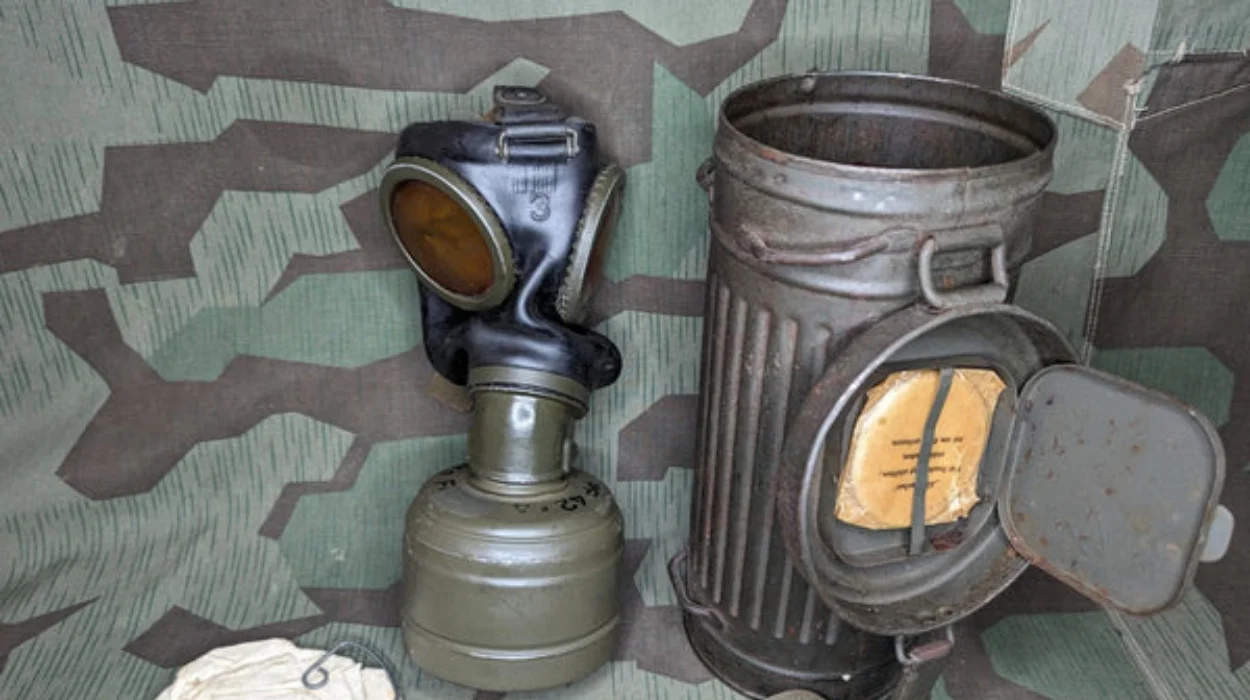
The gas mask, encrusted with sand and corrosion, measured approximately 20 centimetres in height and featured a distinctive filter canister typical of German M38 or M42 models produced during the war. Photographs published by local news services showed the item intact, with rubber straps deteriorated but the metal components recognisable. The finder promptly alerted nearby authorities rather than removing it from the site.
Police from Middelkerke municipality, which encompasses Lombardsijde, arrived within the hour to secure the area. A bomb disposal unit from the Belgian Federal Police’s DOVO service conducted an on-site inspection. Experts determined the object posed no explosive risk, as gas masks from that era contained no ordnance. The artefact was catalogued and transferred to a local museum for further examination and preservation.
Het Nieuwsblad reported that similar finds occur several times annually along Flanders’ coast. During World War II, Lombardsijde served as a defensive outpost under German control, part of the Atlantic Wall fortifications stretching from Norway to Spain. Soldiers stationed there utilised gas masks amid fears of chemical warfare, though none materialised on this front.
Historical Context of Lombardsijde During WWII
German forces occupied Belgium from May 1940 until liberation in September 1944. Lombardsijde’s beaches hosted bunkers, artillery positions, and anti-aircraft batteries, remnants of which still dot the landscape today. The area endured heavy Allied bombardment prior to D-Day operations, scattering military equipment into the dunes and surf.
Local historian Jan Vancoillie, quoted in De Standaard, explained that tidal action and erosion regularly uncover such items. “The North Sea has preserved these relics for decades,” he stated. Previous discoveries in the vicinity include helmets, ammunition clips, and personal effects from both Axis and Allied troops. Museums in Ostend and Nieuwpoort maintain collections bolstered by beach finds.
The gas mask’s potential German origin aligns with occupation records. Wehrmacht units, including coastal defence regiments, equipped troops with Dräger or Auer-manufactured masks. Production records from the Bundesarchiv indicate millions issued across occupied Europe. No serial numbers were legible on this specimen due to rust, complicating precise identification.
Local Authority Procedures for Artefact Recovery
Belgian protocol mandates reporting wartime discoveries to prevent mishandling of unexploded ordnance. The Directorate-General of War Victims (DGVW) oversees documentation, ensuring items enter public archives rather than private collections. In this instance, the gas mask joined inventories at the Atlantic Wall Open Air Museum in Raversijde, adjacent to Lombardsijde.
Municipal officials praised the beachcomber’s caution. “Prompt notification allows safe recovery and historical study,” said Middelkerke mayor Jean-Marie Dedecker in a statement to VTM Nieuws. The site was cleared by 1400 hours local time, with public access restored. No additional items surfaced during the sweep.
Flanders’ coastal councils promote “beachcombing responsibly” campaigns, urging finders to photograph and report rather than pocket relics. Violations carry fines up to €250 under heritage protection laws. Educational signage along promenades highlights WWII heritage, drawing tourists interested in military archaeology.
Significance for Local Heritage and Tourism
Lombardsijde’s economy benefits from its wartime legacy. Guided tours of bunkers and trenches attract history enthusiasts, contributing to West Flanders’ €1.2 billion annual tourism revenue, per 2025 Visit Flanders data. The gas mask discovery generated immediate media interest, with stories appearing on national broadcasters NOS and RTL Belgium.
Conservation experts at the museum plan non-invasive cleaning to reveal manufacturer markings. Radiocarbon or metallurgical analysis may follow, though funding limits such efforts for minor finds. Public exhibition is slated for spring 2026, alongside similar artefacts from 1940-1945 beach recoveries.
Comparable incidents include a 2023 machine-gun magazine found nearby and a 2024 British Lee-Enfield rifle on Ostend beach. Each bolsters regional collections, providing tangible links to the 80th anniversary of liberation commemorations planned for 2024-2025.
Broader Pattern of WWII Remnants on Belgian Coasts
Flanders reports over 500 wartime recoveries yearly, concentrated along a 70-kilometre coastal strip. The Province of West Flanders maintains a dedicated UXO (unexploded ordnance) response team, logging 4,200 interventions in 2025 alone. DOVO neutralised 127 explosive devices last year, underscoring ongoing hazards.
Environmental factors accelerate revelations. Storm surges, like those in late 2025, erode dunes and shift sands, exposing buried materiel. Climate change exacerbates this, with rising sea levels predicted to unearth more by 2030, according to a KU Leuven geological study cited in Knack magazine.
International collaboration aids preservation. Dutch and French authorities share data on cross-border finds, while UNESCO recognises the Atlantic Wall as cultural heritage. Public awareness campaigns, funded by the Flemish government, emphasise safety: “See something from the war? Leave it, mark it, call it.”
Community Reaction and Future Monitoring
Residents expressed fascination rather than alarm. “It’s a piece of our grandparents’ history,” commented a local shopkeeper in Het Parool. School groups visited the site post-clearance, incorporating the event into history lessons.
Authorities installed temporary fencing for monitoring, with drone surveys planned monthly. The beachcomber received a certificate of appreciation from the museum, encouraging continued vigilance. No rewards accompany finds, as Belgian law vests ownership with the state.
This incident reinforces Lombardsijde’s status as a living museum. As tides continue reshaping the shore, more echoes of 1940-1945 await discovery, handled with the precision honed over 8 decades.