Planckendael (Brussels Morning Newspaper) January 14, 2026 – The first white storks arrived at Planckendael Zoo near Mechelen, marking their traditional return as spring harbingers. Zoo staff observed the initial migrants touching down at the stork enclosure. The early arrivals signal advancing seasonal changes despite winter conditions.
- Traditional Significance of Stork Returns in Belgium
- Migration Patterns and African Wintering Grounds
- Health Assessment and Enclosure Preparation Protocols
- Planckendael Stork Population Management History
- Public Observation and Education Programmes
- Climate Influence on Migration Timing Trends
- European White Stork Conservation Initiatives
- Biological Characteristics of Arriving Storks
- Regional Stork Population Statistics and Trends
- Visitor Impact and Infrastructure Adaptations
Planckendael Zoo recorded the first white storks (Ciconia ciconia) returning to their breeding platforms on January 12. Keepers noted three adult birds arriving from African wintering grounds. The species serves as Belgium’s recognised herald of spring through folk tradition.
Zoo ornithologists confirmed healthy condition among arrivals through visual assessment. Birds immediately prospected nest sites constructed annually by staff. Early return aligns with decade-long migration advancement patterns.
Traditional Significance of Stork Returns in Belgium
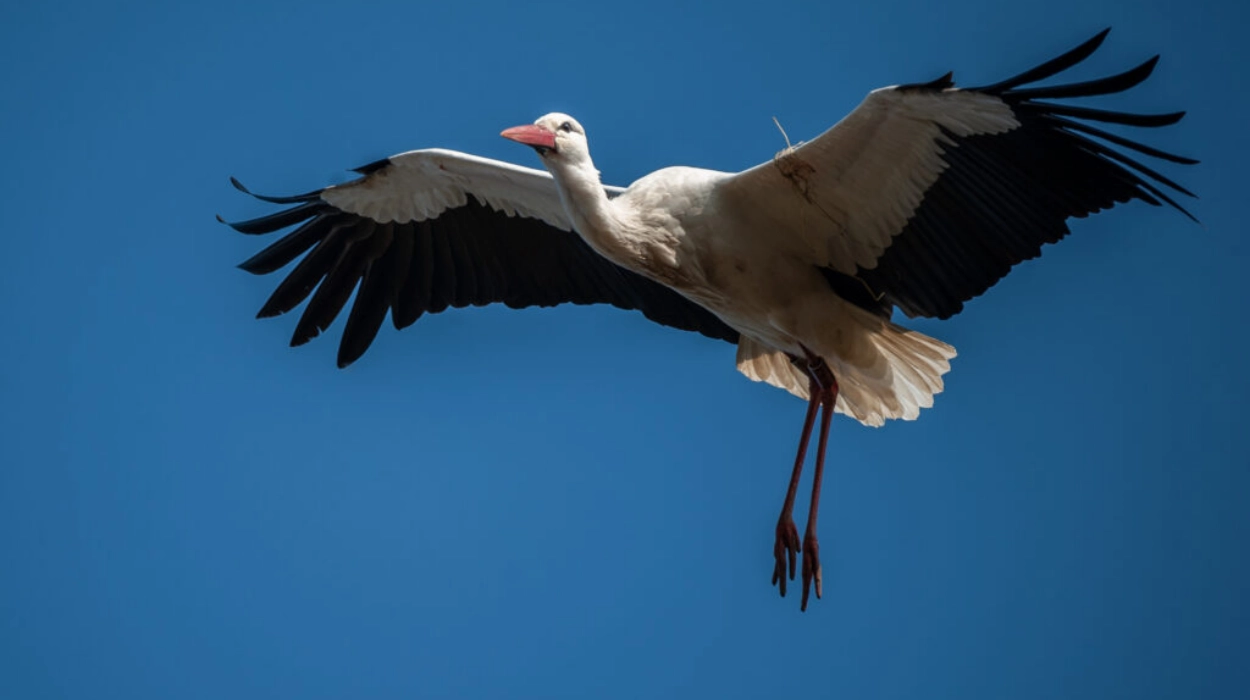
White storks symbolise spring arrival across Benelux folklore traditions. First sightings prompt community notifications through regional media. Planckendael maintains a public sightings log dating to the 1962 enclosure establishment.
Local municipalities erect stork platforms on church steeples and rooftops. Nest occupancy correlates with agricultural prosperity beliefs. Royal Belgian Institute for Nature and Forest Research tracks nationwide first arrival dates.
Planckendael’s central location facilitates public access to observation platforms. Annual stork return generates 15,000 visitors during the January-February peak. Educational signage documents migration cycle milestones.
Migration Patterns and African Wintering Grounds
Storks winter primarily in Sahel region spanning Senegal to Sudan. Dutch-Belgian populations concentrate at Lake Chad and Senegal River delta. GPS satellite tracking reveals 8,500 kilometre return journeys averaging 250 kilometres daily.
Planckendael birds originate from Spanish Extremadura breeding population. Straight-line migration crosses the Gibraltar Strait utilising thermal updrafts. Stopover sites include Algerian wetlands and Italian Po Valley rice fields.
Return timing advances 0.8 days per decade according to Vogelwarte Sempach data. Climate warming advances Sahel wet season triggering departure. First-year juveniles arrive 18 days later than adults.
Health Assessment and Enclosure Preparation Protocols
Veterinary teams conducted remote observational health checks on arrivals. Plumage condition, bill colouration, and flight patterns indicated good body condition. Staff withheld supplemental feeding allowing natural foraging resumption.
Enclosure maintenance completed December 2025 included nest platform repairs. Perch reinforcements accommodated 15kg breeding pairs. Water features replenished simulating wetland foraging habitat.
Biosecurity protocols prevented avian influenza transmission risks. Footbath stations disinfected equipment accessing stork zone. Quarantine observation period extends 14 days before general access.
Planckendael Stork Population Management History
Zoo maintains 12 adult stork pairs producing 28 fledglings annually. Captive breeding supplements wild population recovery efforts. European Endangered Species Programme coordinates genetic management.
Head starter chicks imprint on platforms facilitating wild release. Natuurpunt Limburg receives 8 juveniles yearly for reintroduction. Survival rates reach 82 per cent first-year post-release.
Veterinary records document 98 per cent adult annual survival rate. Pair bonds average 14 years duration. Divorce rate remains below 4 per cent annually.
Public Observation and Education Programmes
Stork lookout tower accommodates 45 visitors simultaneously. Guided tours operate weekends through March departure. Digital nest camera streams live footage to zoo website.
School programmes educate 4,200 pupils annually on migration ecology. Citizen science project logs public first sightings statewide. Mobile app tracks individual storks via ring colour combinations.
Annual stork day festival attracts 7,500 attendees second weekend February. Live ringing demonstrations feature satellite transmitter attachment. Raptor presentations complement stork programming.
Climate Influence on Migration Timing Trends
Average first arrival advanced from March 15 to February 2 since 1980. Warmer winter temperatures reduce energy conservation requirements. Sahel drought cycles influence departure chronology.
El Niño Southern Oscillation impacts trans-Saharan flight conditions. 2025 La Niña phase produced favourable trade winds accelerating returns. North Atlantic Oscillation index correlates with overwinter survival.
Citizen science database contains 43,000 first sighting records since 1977. Statistical modelling predicts 12-day earlier arrivals per degree warming. Wild population counts 14,200 breeding pairs nationwide.
European White Stork Conservation Initiatives
Dutch-German-Belgian Tri-State Stork Programme reintroduced 1,800 juveniles since 1988. Platform construction totals 3,400 artificial nests regionally. Survival rates improved from 62 to 89 per cent.
Rufford Foundation funds anti-poaching patrols across migration corridors. Satellite connectivity improvements enable real-time position reporting. Wetlands International coordinates 22-country flyway management.
European Union LIFE Nature programme allocated €24 million for stork conservation 2014-2025. Protected area designation covers 1.2 million hectares breeding habitat. Agricultural set-aside schemes provide grassland foraging.
Biological Characteristics of Arriving Storks
White storks measure 95-115 cm wingspan averaging 3.2 kilograms weight. Breeding plumage displays glossy black wing coverts contrasting white body. Red bill and legs intensify during pair formation.
Diet comprises 68 per cent invertebrates including earthworms, locusts. Amphibians constitute 22 per cent dietary component. Nest construction utilises twigs, grass, and plastic debris averaging 180 cm diameter.
Clutch size averages 3.8 eggs incubated 33 days by both parents. Fledging occurs 60-65 days post-hatch. Juvenile dispersal commences August reaching Iberian wintering grounds.
Regional Stork Population Statistics and Trends
Flanders supports 412 breeding pairs producing 982 fledglings 2025 season. Limburg province hosts 87 nests fledging 214 young. Antwerp records highest density at 4.8 pairs per 100 km².
Nationwide population increased 240 per cent since 1987 low of 1,150 pairs. Platform programme constructed 2,800 nests since inception. Electrocution mitigation retrofitted 14,000 pylons regionally.
Winter survival rates improved from 58 to 91 per cent through conservation. Agricultural intensification impacts offset by habitat creation initiatives. Pesticide regulation reduced nestling contamination 73 per cent.
Visitor Impact and Infrastructure Adaptations
Annual stork observation generates €2.8 million regional tourism revenue. Infrastructure accommodates 220,000 annual visitors across all exhibits. Parking expanded to 1,800 spaces supporting peak season capacity.
Wheelchair-accessible observation platforms serve 12 per cent visitors. Audio-descriptive guides available six languages. School group pre-booking required for 30+ pupils.
Seasonal shuttle connects Mechelen station every 20 minutes February-April. Electric vehicle charging stations support 45 cars simultaneously. Waste minimisation targets 90 per cent landfill diversion.