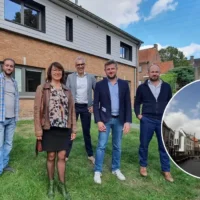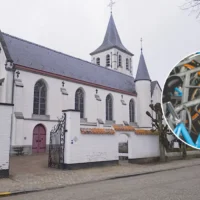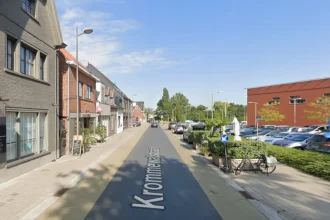

Tielt (Brussels Morning Newspaper) – Tielt will invest €150 million over 6 years after merging with Meulebeke. Mayor Luc Vannieuwenhuyze plans new projects, tax changes, and cost-saving measures while keeping finances stable.
As VRT News reported, Tielt, in the province of West Flanders, Belgium, plans to invest €150 million over the next 6 years. The city’s investment program follows its merger with Meulebeke, which expanded municipal responsibilities and projects.
Mayor Luc Vannieuwenhuyze (CD&V) said the city will build a new swimming pool costing €18 million and invest €25 million in local arts and music academies. Road maintenance and upgrades are also a priority, with €42 million set aside for improvements. Part of the funding comes from subsidies.
“We were indeed able to transfer €12.6 million in debt to Flanders as part of the merger operation.”
How will Tielt manage €150m investments and tax changes after the Meulebeke merger?
Mayor Vannieuwenhuyze noted that debt relief does not fully offset cuts in other Flemish municipal subsidies. The city also plans to reduce operating costs by 5%. The goal is to balance major investments with cost-saving measures.
“By operating on a larger scale, we hope to gain efficiency. But we explicitly don’t plan to lay off any staff,”
Vannieuwenhuyze said.
“There will be some changes to our taxes. The property tax surcharge will remain the same for residents of the former city of Tielt: 1,032 surcharges. For residents of Meulebeek, this is even a reduction, as they previously paid 1,039 surcharges,”
Vannieuwenhuyze said.
Tielt is changing its tax system as it moves forward with major investments. The supplementary personal income tax will rise from 7.5% to 7.8%. The city will also abolish the environmental tax, making the system simpler for residents. A new business tax will replace outdated levies, including the former tax on motive power, which applied to items such as motorcycles.
The tax measures have already drawn criticism from the opposition. They say the city could take on more debt to fund its ambitious investment plan. Mayor Luc Vannieuwenhuyze says borrowing may increase, but stresses that Tielt remains financially strong. He adds that careful planning and cost control will let the city carry out projects while keeping finances stable.
“This is evident from our debt ratio (a measure of a municipality’s financial health by measuring the ratio of its debts to its resources, ed.). It has risen from 0.3 to 0.7, but remains below the standard of 1. This means we have more resources than debts. And our self-financing margin also remains healthy.”
Belgian municipalities must follow rules to keep their finances balanced over several years. Since 2020, regulations have required cities to plan carefully for long-term spending and debt. Experts use a measure called the “self-financing margin” to see if a city can cover its debt from regular income. According to BDO’s 2023 benchmark, the self-financing margin for Flemish local authorities fell in 2022.
Debt is often seen as the main measure of a municipality’s financial health, but it only tells part of the story. Borrowing is not always bad. Cities use debt to fund long-term projects like social housing, roads, or bicycle bridges. What matters is that the municipality can pay back the debt and the interest on it. To check this, experts use a benchmark called the “self-financing margin.” This compares a city’s total debt to its regular income and daily expenses.