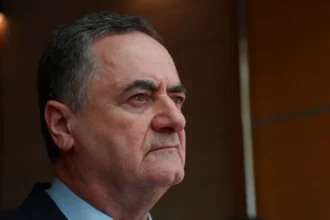

Tehran (Brussels Morning Newspaper) – Chief Justice of Iran, Gholamhossein Mohseni Ejei, has urged the implementation of stricter measures to address “social anomalies,” according to local media reports. He specifically highlighted concerns about more lenient attitudes toward the mandatory hijab.
Under rules established after the 1979 Islamic revolution, all women in Iran must cover their hair in public with a hijab, or headscarf, and wear modest, loose-fitting clothing. However, in major cities, especially Tehran, many women now go without head coverings. They frequently wear jeans and sneakers, which has sparked disagreement among conservatives.
What did Iran’s judicial chief call on?
“I have ordered the prosecutor general and all prosecutors in the country to ask the security and law enforcement agencies to identify organised and foreign-related movements in the field of social anomalies and introduce them to the judiciary,”
Ejei was quoted as saying.
“One manifestation of the enemy’s efforts lies in the issue of nudity and not observing hijab.”
Last year, in December 2024, the Iranian parliament approved a stricter hijab law. This law increased penalties, including imprisonment and fines, for women not wearing the hijab. Iran currently enforces some of the strictest hijab rules in the Middle East.
However, President Pezeshkian and his administration have rejected or at least put a hold on enforcing this law. They warned that enforcing such harsh measures would lead to social discontent and unrest.
How is the Pezeshkian administration resisting harsher hijab laws?
“We certainly cannot impose the wearing of the hijab on individuals,”
Last month, Iranian government spokeswoman Fatemeh Mohajerani, reflecting moderate President Masoud Pezeshkian, made a statement amid criticism from the conservative camp.
She stressed that the hijab cannot be forced on society. Social norms should be promoted through cultural engagement, not by coercion. The Pezeshkian administration turned down a law last year that would have significantly increased penalties for women without a hijab. He promised during his campaign to stop violent hijab patrols. He has also raised worries about the law’s acceptance and impact in Iranian society.
How did Mahsa Amini’s death reshape Iran’s hijab debate?
This trend of rejecting the hijab has become more noticeable in Iran since the protests after Mahsa Amini’s death in custody in September 2022. Amini died after being arrested by Iran’s morality police for supposedly wearing her hijab incorrectly. Her death sparked widespread protests throughout Iran.
This led to national and international outrage, with the “Woman, Life, Freedom” protests becoming a strong movement. It was mainly led by women who opposed the compulsory hijab law and sought broader social and political changes. The protests lasted for months and involved significant violence. Hundreds lost their lives, including security personnel, and thousands were arrested during severe crackdowns.