

The Douglas A-26 Invader (later redesignated as the B-26 Invader) is a tribute to American engineers during World War II. Douglas Aircraft Company was responsible for building the A-26 Invader.
A light ground-attack bomber with twin engines, it is a Douglas Aircraft Company product. Due to its effectiveness and versatility, it was deployed in a number of major conflicts.
Design and Development
The A-26 Invader replaced the Douglas A-20 Havoc. A-26 features innovative elements in its design, which were created by Ed Heinemann along with Robert Donovan & Ted R. Smith. This included a NACA-65-215 laminar-flow Airfoil Wing that was developed and designed by A.M.O. Smith. This new design offers improved speed, performance and maneuverability.
Benny Howard flew the Douglas XA 26 prototype at Mines Field on July 10, 1943. Early tests of the aircraft revealed great performance and handling. However there was still some work to be done. In order to address engine-cooling problems, cowling modifications had been required. Additionally, structural issues in the wheel’s nose needed strengthening. Initial tests resulted also in the removal, on production aircraft, of propeller spunners.
A-26 is available in two versions.
- A26B: A-26B is a variant of the A-26, which was known as the “Gun Nose” because it was armed to the hilt with 6-8.50 caliber machines guns.
- A-266C (Glass Nose); Equipped with Norden bombsights, this variant optimized medium-altitude precise bombing. Early versions came with two fixed.50 machine guns. However, they were soon replaced by either underwing weapon packs or internal mounted guns.
A clamshell design canopy was added to the production model, replacing an older “flat-topped” version, which improved pilot visibility.
Operational Capacities
The A-26 proved to be an incredibly adaptable aircraft. A-26B noses could easily be converted to A-26C versions in only a few short hours. A-26B variants were able to carry 14 machine guns in.50-caliber forward-facing.

Versions differed in their crew compositions. In the A-26B, a navigator/gun loader assisted the pilot-operated nose guns, while the A-26C required a navigator/bombardier. The rear gunner controlled both the dorsal (dorsal) and ventral (ventral) turrets with a complex periscope sighting device. Although it was innovative, maintaining this system in combat conditions proved difficult.
World War II Deployment
Pacific Theater
The A-26 made its combat debut on 22 June 1944. The A-26 served in the Southwest Pacific with The 13th Bombardment Group (“The Grim Reapers”). Initial missions targeted Japanese controlled islands close to Manokwari. While the speed and load capacity of this aircraft were impressive to say the least, some aircrews felt that the low visibility in the cockpit made it less effective for ground attacks. George Kenney remarked in a famous statement that
“We never want to use the A-26 for replacement of any aircraft.”
A-26 continues to be developed in spite of these failures. The 319th Air Group began using the A-26 by early 1945. It continued to operate alongside other planes until the war ended.
European Theater
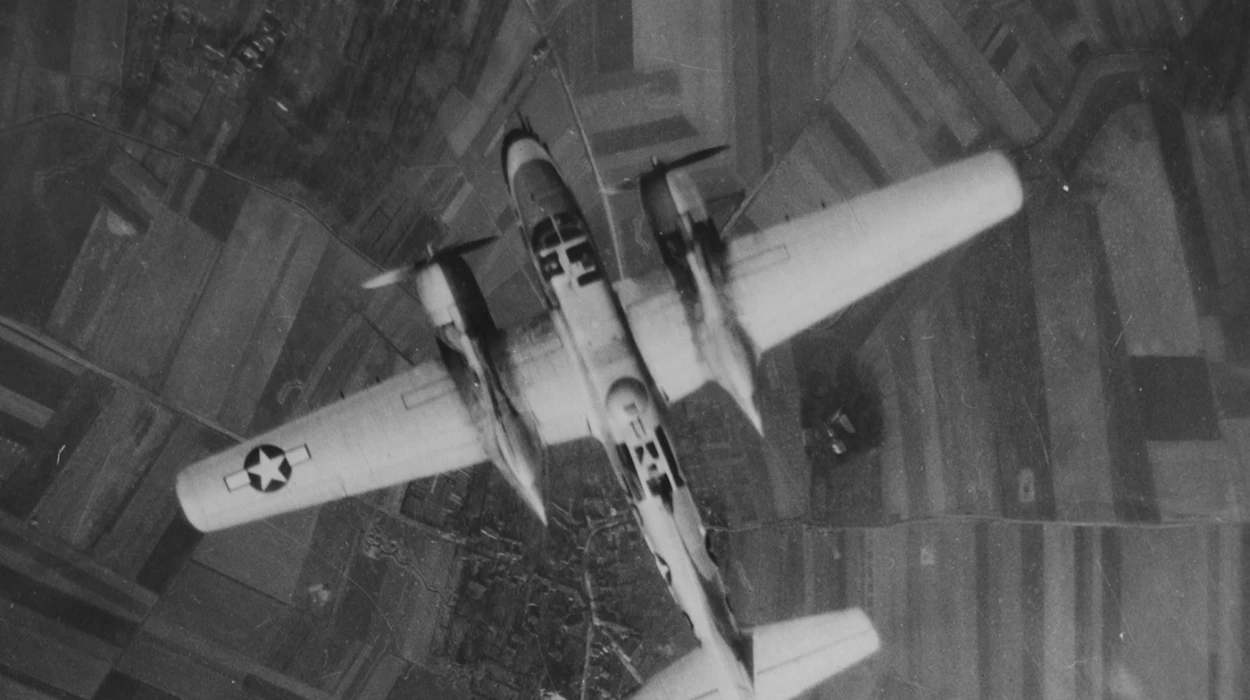
A-26 was received better in Europe as compared to the Pacific. The 553rd Bomb Group of the 386th Bomb Group was the first unit to deploy the A-26 in the European theatre in Late 1944. After pilots praised the performance of the aircraft, it was taken up by other Ninth Air Force groups, including the 416th Bombardment Group and the the 409th Bombardment Group .
A-26s carried out bombings, a sweeping maneuver, tactical reconnaissance and night interdiction. A-26s belonging to the Ninth Air Force were credited with completing 11,500 mission. They dropped 18,00 tons of Bombs. During the end of WWII, the Twelfth Air Force also employed the A-26 against German transport networks and troop concentrations throughout the Po Valley.
Postwar Service
United States
After World War II, A-26s were renamed B-26 Marauder so as to not be confused with Martin B-26 Marauders, which no longer existed. United States Air Force utilised the B26 for a variety of roles, including surveillance (RB-26) and tactical bombardment. The Tactical Air Command utilised the B-26 until the early 1960s.
The A-26 aircraft was used in the U.S. Navy’s target-towing and utility role under the designation JD-1. These aircraft later became UB26J, following standardization of military air aircraft designations.
Korean War
B-26 Invaders are among the earliest USAF aircraft used during Korean War. Operated from bases in Southern Japan, the B-26 conducted bombing operations over North Korea. These missions targeted North Korean airfields along with supply lines and troop concentrations. 452nd Bombardment Wing activated by the Air Force Reserve in 1950 for these missions, it was their first mobilization post-World War II.
Vietnam War and Later Service
In the Vietnam War versions of A-26 that were highly modified, such as B-26K Contra Invader for counter-insurgency or interdiction missions. Their advanced technology, including upgraded engines, reinforced wings, and advanced avionics allowed these aircraft to be used in difficult conditions. The A-26 was used in Southeast Asia till 1969, at which point it finally left active service.
Global Operators
Besides the United States and other countries, the A-26 is also used by:
- France A-26 is used in First Indochina War.
- South Vietnam Using aircraft for counter-insurgency missions.
- Brazil Operated A26s surplus for coastal protection and training.
- Indonesian and Biafra. Usage of the aircraft for regional conflicts.
Legacy and Preservation
Invaders are known for their durability, effectiveness, and versatility. It is one of the very few aircrafts that saw action in World War II as well Korea and Vietnam.
Numerous A-26 Invaders exist in private collections and museums around the world. Examples include:
- National Air and Space Museum – Smithsonian (Smithsonian). Displays the A-26, which is currently in service.
- Commemorative Aero Force: Maintains airworthy models for public exhibitions and airshows.
- National Museum of the U.S. Air Force Features an A-26 that is well-preserved.
The Douglas A-26 Invader remains a landmark in aviation. A-26 proved highly efficient over many years of service, both for its unique design and its versatility in combat roles. Invader and its brave crews will always be remembered thanks to the Invader’s continuing presence in museums.