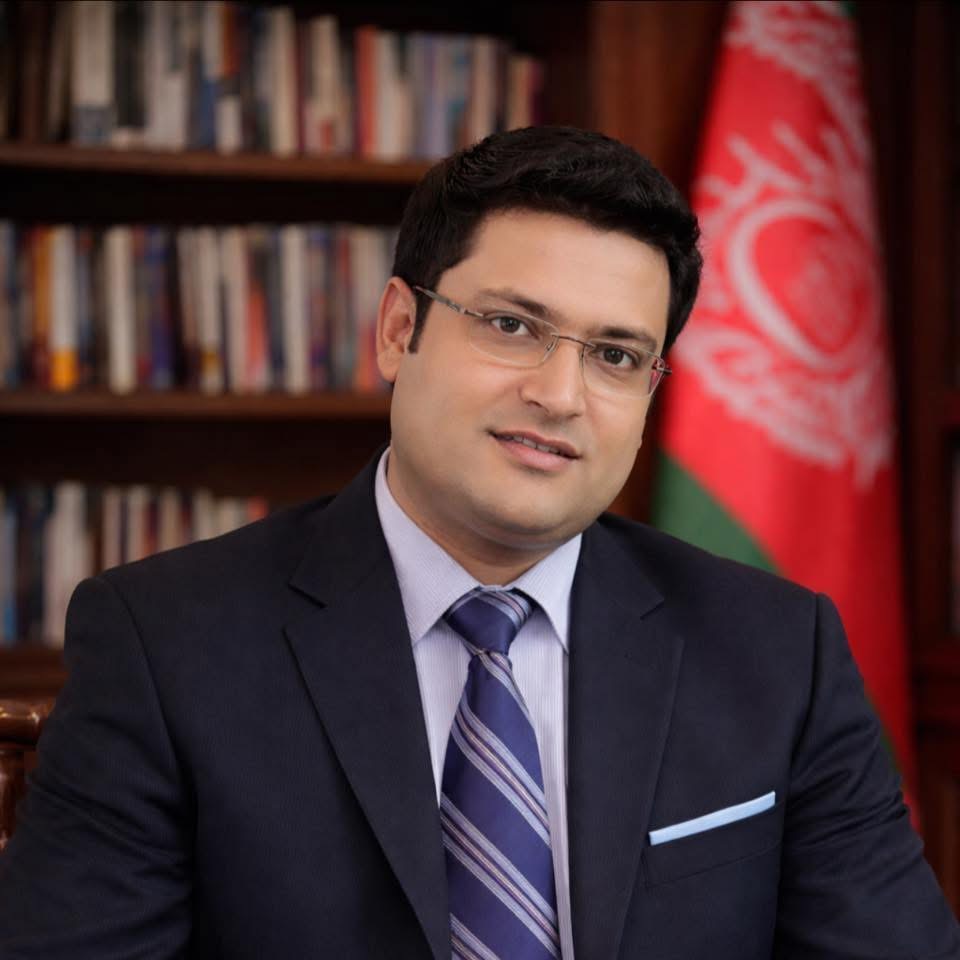

In every nation, scholars, writers, professors and custodians of thought constitute the conscience of that society and determine its trajectory into the future. When a nation is divested of the sources of knowledge, it is driven towards ignorance, fear and subjugation. Regrettably, Afghanistan is witnessing, in this dark chapter of modern history, a calamity we might aptly term a war on knowledge.
- Afghanistan’s Current Political Situation
- Intellectual Terrorism and the Assassination of the Intelligentsia
- The Taliban’s Ideological Nature and the Case Against Them
- The Role of the Nation and the Imperative of Intellectual Resistance
- Moral Responsibility and Civic Duty
- Generational Obligation
- The International Community’s Responsibility—and Its Silence
- Conclusion and Strategic Recommendations
- Strategic imperatives:
- The Rise of Conscience
In recent months the assassination of Kabul University professor Ramiz Peshtaz, together with the murders of dozens of other writers, journalists and intellectual figures, demonstrates that the conflict is not limited to arms and explosives; it is a campaign against thought, conscience and civic awareness.
The strategic objective of this campaign is clear: to eliminate the awakening social strata produced by knowledge, thereby consigning the nation, in perpetuity, to the shadow of an intellectual blockade. Ramiz Peshtaz was more than an academic; he was a representative of art, critical thought and national identity. Through his pen he championed intellectual freedom an ideal intolerable to a regime that thrives on ignorance and fear. His assassination is not merely the killing of an individual; it is an attack on knowledge, light and conscience.
Afghanistan’s Current Political Situation
Afghanistan stands at the centre of a profound political crisis that calls into question legitimacy, moral authority and international credibility. The Taliban administration, which styles itself as the “Islamic Emirate,” lacks legitimacy derived from popular consent, is not grounded in the rule of law, and does not conform to internationally recognized standards of statehood.
Their authority rests on force, intimidation and dogmatic distortion. While the Taliban rhetorically invoke “security,” in practice security exists only for their armed cadres not for scholars, educators and progressive citizens. In Kabul, Herat, Mazar and Nangarhar, those who embody thought and scholarship are being targeted for assassination.
The Taliban have subordinated the institutional mechanisms of the state to a process of intellectual purging: women are denied access to education; girls are expelled from universities; professors face systematic disrespect and threats; and every manifestation of free thought is branded as “apostasy” or “Western influence” and subjected to attack. This is not merely a political tactic of a faction; it constitutes an assault on the identity of a nation.
Intellectual Terrorism and the Assassination of the Intelligentsia
Intellectual terrorism is a pernicious phenomenon that undermines the foundations of a nation’s intellectual development and civilizational progress. It attacks the mind rather than the body, casts the shadow of bullets over the tip of the pen, and erects walls of darkness against the light of learning.
Over the past two years in Afghanistan, intellectual terrorism has assumed an organized, systematic form. Targeted attacks against scholars, professors, journalists, women’s rights activists, and members of civil society are symptomatic of a planned strategy designed to silence the voice of knowledge and to kill the nation’s conscience.
Professor Ramiz Peshtaz of Kabul University symbolizes this tragic process. Through his creative language, artistic expression and intellectual independence he promoted the values of freedom and enlightenment. For exercising that independence, he paid with his life. This is not an isolated homicide; it is a systematic offensive against the entire intellectual class.
The Taliban appreciate that firearms can intimidate individuals, but the power of the pen terrifies them because pens and ideas awaken societies and shatter the tyranny of fear. Accordingly, their primary strategic objective is to dry up sources of knowledge, to sterilize academic environments, to break the spirit of intellectual freedom, and to seal the imprint of “obedience” on the national mind.
This campaign is not limited to physical killings; it includes spiritual and institutional assassination manifested by:
- the prohibition of girls’ education;
- restrictions on women’s employment;
- censorship and burning of books;
- criminalization of freedom of expression.
These are mechanisms for eradicating a nation’s consciousness. It is a form of terror that makes no explosive sound, yet suffocates the breath of conscience. History records many societies that later regretted the extermination of their scholarly classes; Afghanistan is perilously headed down the same trajectory. When intellectuals and thinkers are killed, a nation becomes directionless and ignorance supplants reason. The Taliban aim to eradicate every voice that advocates human dignity, women’s rights, national liberty and the legitimacy of critical thought. This is a dangerous ideological monopoly sustained by arms, coercion and religious rhetoric.
The Taliban’s Ideological Nature and the Case Against Them
The Taliban are not merely a political formation; they embody an ideological framework grounded in ignorance, a distortion of religious tenets, and political exploitation. They claim the mantle of religious custodianship, yet in practice they oppose knowledge, scholarship and humanity. A system that regards a girl’s pen as a “sin,” a professor’s lecture as a “crime,” and an artist’s creation as “corruption” is neither Islamic in spirit nor humane in substance. Islam is a faith that esteems knowledge, deliberation and consultation; the Taliban instrumentalize sacred concepts to entrench their authority and perpetuate ignorance.
Their ascendancy has devastated Afghanistan’s cultural architecture. In the name of religion, books of learning are burned, university doors are closed, women are hidden behind veils, while the curtain of ignorance and coercion grows ever thicker. Ideologically, the Taliban are opposed to free thought. They justify the elimination of intellectuals as necessary for maintaining their doctrinal stability because the voices of reason and evidence expose the masks of their false interpretations. The conflict they wage is not simply one of arms; it is a campaign to exterminate a generation’s intellectual future.
The Role of the Nation and the Imperative of Intellectual Resistance
When intellectual leaders are targeted, the responsibility to bear the torch of enlightenment falls upon the shoulders of the nation. Afghanistan stands at a historic inflection point: it can either perish through silence or be reborn through the force of consciousness. Societies live by thought, not by fearful silence.
A community that loses its scholars and guides faces an uncertain fate. Therefore, Afghans must recognize that the continuation of silence equals the continuation of ignorance. National response must go beyond grief and anger; intellectual resistance is not an armed insurgency but a struggle of mind, conscience and learning. The nation must choose resistance founded on education, freedom of thought and intellectual unity. If universities are closed, homes must become schools. Historically, pen and intellect have triumphed over oppression. Safeguarding the nation’s intellectual capital is not the task of a single figure but the duty of every awakened citizen. Intellectual resistance entails:
- preserving the value of knowledge;
- supporting girls’ education;
- safeguarding freedom of expression and the pen;
- fulfilling our responsibility as creators of the nation’s future.
A people committed to knowledge cannot be enslaved. The power of learning exceeds that of any weapon because it reshapes thought.
Moral Responsibility and Civic Duty
Afghans must understand that silence contributes to the perpetuation of intellectual crimes. The killing of a professor is not merely a family tragedy; it is an assault on the conscience of the entire nation. The closure of a girl’s path to education wounds the conscience of humanity. Intellectual resistance does not presuppose the use of arms; it requires defending reason, science and truth. National vigilance will defeat the tyranny of oppression. Teachers, writers, journalists, religious scholars and civil society activists must form a united intellectual front. National unity must be anchored in the principle of intellectual freedom rather than geographic or sectarian divisions.
Generational Obligation
We owe a debt to prior generations who sacrificed for knowledge. Ramiz Peshtaz, Fatima Khail, the university martyrs and all those who shed their blood for the light of learning were beacons of Afghanistan’s awakening. The nation must keep their memory alive through books, pens and uninterrupted intellectual continuity. Protecting future generations requires practical intellectual engagement, not empty rhetoric. Every person who encourages a child’s education establishes a defensive strongpoint for intellectual resistance.
The International Community’s Responsibility—and Its Silence
The intellectual genocide unfolding in Afghanistan is not solely the result of domestic oppression; it is also engendered by international indifference. The international community, which professes to defend human rights, remains largely silent in the face of targeted killings of Afghan scholars, women and progressive voices. Western diplomats have pursued an “incentives policy” with the Taliban—attempting to moderate behavior through engagement and accommodation. This is a dangerous miscalculation because those who embrace the philosophy of annihilating thought are not easily reformed through dialogue alone.
The silence of the United Nations, the European Union, the Organization of Islamic Cooperation and international human rights institutions has facilitated the continuation of intellectual crimes. Such silence is not only a policy failure but a moral defeat. Global media must recognize that Afghanistan is not solely a landscape of conflict, poverty and displacement; it is also a cradle of knowledge, art and culture. The murder of the nation’s intellectuals is a test of the international conscience. If the world allows this slaughter to go unchallenged, the foundations of human rights protection will be severely undermined.
Conclusion and Strategic Recommendations
Afghanistan now stands on a perilous and pivotal verge of its modern history. On one side stretches the shadow of ignorance, intellectual monopoly and terror; on the other, the surviving light of national awakening, learning and free thought—dimmed, but not extinguished. The catastrophe of killing knowledge is not an isolated event; it is part of a protracted struggle against the nation’s conscience, the spirit of scholarship and human dignity. The martyrs of free thought are symbols of intellectual resistance—alive in the annals of conscience.
Strategic imperatives:
- National Intellectual Awakening: The populace must reject fear. While guns can silence voices temporarily, intellectual freedom cannot be permanently suppressed. Each Afghan who reads, teaches, or disseminates ideas resists intellectual monopoly.
- Pillars: education (universal access), conscience (discernment between right and wrong), and unity (a consolidated intellectual front).
- Defend Women’s Educational and Intellectual Participation: Depriving women of education and work is not only gender discrimination; it is a brake on national development. Women’s participation is foundational to intellectual preservation.
- A Clear International Moral and Political Message: The global community must abandon policies of silence and accommodation. Support must include investigations into killings of academics and activists, international pressure to guarantee women’s right to education, and sustained cultural and academic support programs.
- Responsibility of the Afghan Diaspora: Academics, writers and activists abroad must amplify, not mute, the voice of their homeland. Intellectual migration should serve as a conduit to international platforms that defend Afghan ideas and rights.
- Philosophy of Hope and Struggle: Though intellectual darkness spreads, it is often the prelude to rebirth. The Afghan nation must trust that the struggle for knowledge is ultimately the struggle for conscience. Every book, every idea, every pen is a weapon of resistance.
The Rise of Conscience
Afghanistan’s future will not be determined by the barrel of a gun but by the pen, knowledge and conscience. The Taliban may govern for a period through fear, but history will remember them for intellectual darkness, the suppression of women and the killing of knowledge.
Conversely, the Afghan people will be recorded for their resistance, scholarship and awakening. If the international community truly upholds human values, it must stand against the annihilation of Afghanistan’s intellectual heritage. And if humanity still listens to conscience, the voices of Ramiz Peshtaz and the nation’s martyred scholars should stir every free conscience to action. We must recognize that the pen is a trust from the Divine and that knowledge is the foundation of human dignity. Those who seek to extinguish both are agents.
Dear reader,
Opinions expressed in the op-ed section are solely those of the individual author and do not represent the official stance of our newspaper. We believe in providing a platform for a wide range of voices and perspectives, even those that may challenge or differ from our own. We remain committed to providing our readers with high-quality, fair, and balanced journalism. Thank you for your continued support.