
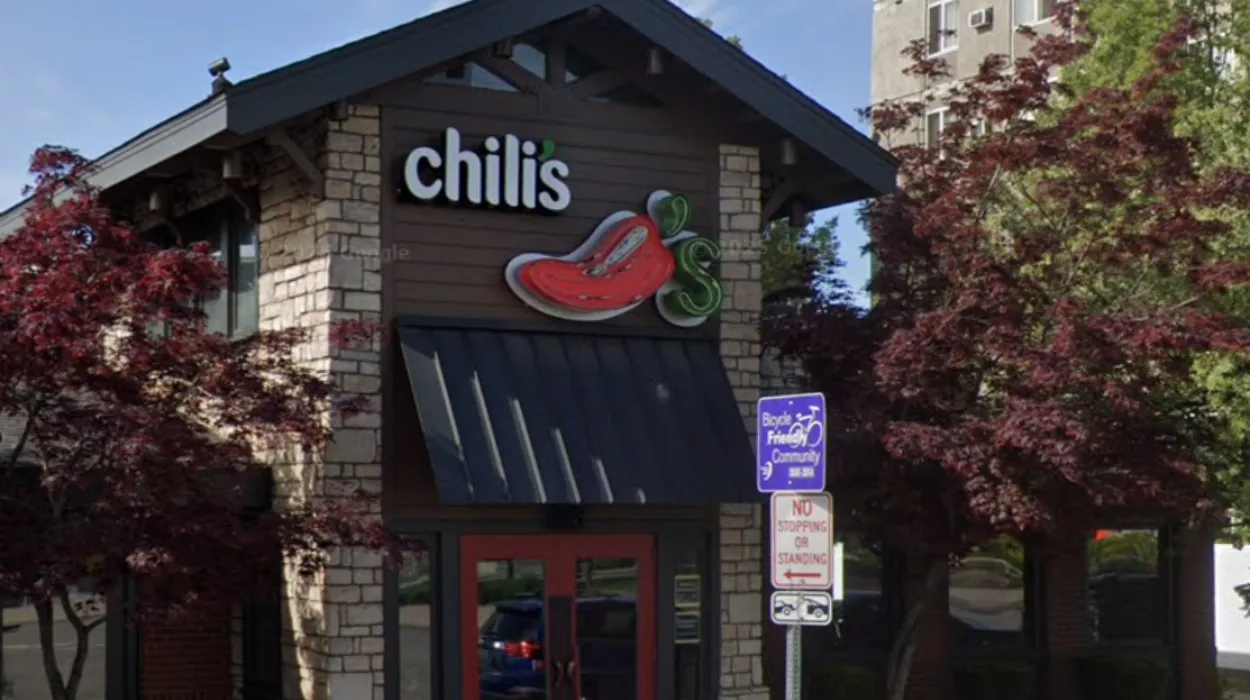
Chili’s Grill & Bar, a renowned American casual dining chain owned by Brinker International, has not publicly expressed support for Israel, nor is there any verified evidence indicating the company or its parent organization endorses Israel politically or philanthropically. The company’s operations in the Middle East, including its branches in Israel, are primarily driven by business considerations, such as market expansion and meeting local consumer preferences, like kosher certification standards in Israel. Its presence in Israel is part of its broader global strategy to tap into diverse markets and expand its footprint, rather than a stance on geopolitical issues.
- Chili’s business presence in Israel and the region
- Recent middle east expansion
- Models of licensing and franchising in global marketplaces
- Franchise model and regional operators
- Chili’s public and political positions
- Regional marketing and reception
- Charity and social responsibility in business
- How do consumers see brands in the Israeli-Palestinian context?
- Comparison with other American brands in Israel
- Doesn’t support Israel directly
Despite its sizable operation in the Middle East, with over 1,500 restaurants worldwide, there is a clear distinction between business activities and political allegiance. Brinker International, the parent company, maintains a neutral stance and focuses on operational growth and profitability. The company’s recent financial reports for fiscal 2025 and 2026 show robust growth and recovery, suggesting that its expansion efforts are driven by market potential rather than political activism or support.
While social discourse and activist groups sometimes scrutinise multinational corporations like Chili’s regarding their operations in Israel, there is no evidence that the company provides financial or logistical backing to the Israeli government or military. Most of its activities are confined to ensuring compliance with local laws and cultural norms, such as kosher certification, which is a standard business practice in many regions, including Israel.
Chili’s business presence in Israel and the region
Chili is present in lots of countries, and the many countries in this world that Chili is operating in are Middle Eastern countries, i.e., Bahrain, Kuwait, Lebanon, Oman, Qatar, Saudi Arabia, and the United Arab Emirates. However, at this point, there exists no corporate-level or franchised Chili in Israel. The places to go in Israel, going by the comprehensive location information of Chili restaurants’ site and other restaurant location directories, are non-existent. However, the restaurant is also named *Chili Pizza*, the Hebrew name of which, however, is spelled as *חאילי פיצא* (sometimes transliterated as *Chili Fizza*).
There exists a similarly named restaurant in Jerusalem, with no connection to Chili Pizza. A restaurant called Chili Pizza, which with its special cuisine and local tastes serves dominantly focused on handcrafted pizzas, is situated in a popular area in Jerusalem that is not religious. Chili is a Grill and bar, and this local business is not related. Chili is not directly represented in Israel, unlike the presence of other chains of its kind in the American entity, such as McDonald’s, Burger King, Domino’s Pizza, or KFC, which have a presence there. Chili operates in the Middle East with an aim at the Gulf Cooperation Council (GCC) countries rather than Israel, as it did in the past.
Recent middle east expansion
In August 2025, Chili’s opened its first Dubai branch at Ibn Battuta Mall, marking a significant expansion into a prominent UAE request. This new outlet follows successful openings in Sharjah, Al Ain, and Abu Dhabi, reflecting a growing footmark in the Gulf region.
This expansion underscores Chili’s broadening business ties in the Middle East and enhances its brand visibility across the region.
Models of licensing and franchising in global marketplaces
Franchising licenses granted to regional operators are frequently the foundation of Chili’s global expansion. Most of the operations in the Middle East are managed by its franchise partners, who operate stores under the stipulated brand policy of Chili. GCC countries where Chiii has multiple locations include Bahrain, Kuwait, Saudi Arabia, and the United Arab Emirates. These places are usually in business centers and luxurious malls, and their clientele is both domestic and foreign.
Considering the geopolitical sensitivity of Israel, Turkey, and the Palestinian Territories, a significant number of Western brands choose not to do business in the country or proceed with figuring out how to do it. Because of logistics, market forces, or even local collaboration, Chili seems not to have ventured into the Israeli market yet, either franchised into the country or even establishing a corporate presence, preferring to concentrate on markets in the Arabian Peninsula that had well-established partners in its franchise chain.
Franchise model and regional operators
In the Middle East, Chili’s operates through franchise agreements managed by the Food Innovation Company (FIC) in the UAE, Bahrain, and Oman.
This franchise partnership model is key for understanding Chili’s local business function, as these operators typically address regional geopolitical complexities independently from the parent company. This approach preserves brand consistency while adapting to local market dynamics.
Chili’s public and political positions
Being a more relaxed food chain, Israel Chili tends to focus on food and brand continuity rather than politics. Going through the company communications serving the general audience, using news releases and social media, it is hard to see the political stance that the company might have regarding Israel or the Israeli-Palestinian conflict.
Not to get into geopolitical matters, the parent company, Brinker International, also puts emphasis on sustainability, philanthropy, and corporate governance. No publicly available reports exist showing that Chili contributes to the political causes of Israel or Palestine, nor are there any public campaigns showing support for either side. As part of its nonpartisan policy, the brand is more focused on its culinary and hospitality activities, rather than political activism.
Regional marketing and reception
The UAE branches, including the new location in Dubai, focus on child-friendly settings and the American flavor profiles that are characteristic of Chili’s. These locations have a warm reception from both locals and tourists, as marketing efforts engaged the community and emphasized enjoyable times together, thus demonstrating success in cultural adaptations and a more positive and softer brand image in the Gulf States.
Charity and social responsibility in business
Chili’s and Brinker International are known for their commitment to community service, with a focus on health, education, and hunger alleviation programs, mostly in the United States. They manage initiatives to support local communities, food banks, and employee philanthropy. Similar to their political neutrality, Chili’s does not appear to allocate its charitable funds exclusively to Israel or Israeli causes. They continue to engage in domestic and generally humanitarian charitable endeavors.
How do consumers see brands in the Israeli-Palestinian context?
The world is increasingly turning against corporations due to their real or apparent standpoints regarding the issue between Israel and Palestine. In the Middle East and other heavily Muslim countries, lots of individuals use their purchasing actions to support their political views and the social issues that they are concerned about, especially the moral ones. They often mobilize either along the lines of boycotts or support acts, depending on the message put across by a company, reputation, or direct participation in the crisis.
Even without an official position, many individuals may see a company’s business activities in Israel, support for Israeli institutions, or statements by its executives as forms of tacit political endorsement. Consumers are keen to censure businesses wherein they have the perception that the business is a dishonest or incongruous one, like making charity or peace-related appeals, and also engaging in activities that are controversial in certain parts of the world.
When a company’s communications or business decisions are perceived as supporting one side of the conflict, even those that are not specifically targeted by BDS become the subject of grassroots activity.
Comparison with other American brands in Israel
Without publicly expressing political opinions, the majority of American companies doing business in Israel concentrate on growing their businesses and tailoring their products for Israeli customers. Instead of overt political reasons, the lack of a brand like Starbucks or Chili’s may be due to partnering, economic, or strategic reasons. These companies rarely engage in political activism or conversation in their public communications, instead emphasizing food, quality, and service. There are numerous large fast-food and casual dining franchises in Israel, which distinguishes the American restaurant scene there.
No public political support for Israel
Despite its expanding footprint in the Middle East, Chili’s has not publicly endorsed any governments or taken political stances related to conflicts in the region. The brand instead focuses on delivering a consistent dining experience and growing its market presence, steering clear of politicizing its operations or communications.
Broader Middle East footprint
Chili’s presence spans other Gulf countries beyond the UAE including Bahrain, Kuwait, Oman, Qatar, Saudi Arabia, and Lebanon. This broad regional footprint ties the brand economically to the Middle East, although Chili’s maintains a politically neutral stance focusing solely on hospitality and business growth within the region. Such positioning reflects careful brand management amid regional geopolitics.
Doesn’t support Israel directly
Although Chili Grill & Bar is a highly popular American restaurant chain with extensive operations in the Middle East, it does not at present support Israel directly by means of its business, political, or donation programs. The mere fact that Chili restaurants are beyond the geographical borders of Israel and the corporation does not get involved in any geopolitical issues alludes to the circumstance under which the corporation has the posture, which can best be described as politically as well as commercially neutral concerning Israel.
To the customers and observers, the position of Chili matches those of most large, multinational companies, which focus on expanding the business to places where partnerships and licenses are strategically feasible. On the other hand, it is avoiding politically sensitive markets such as Israel, especially after the complexities surrounding the Israeli-Palestinian conflict.