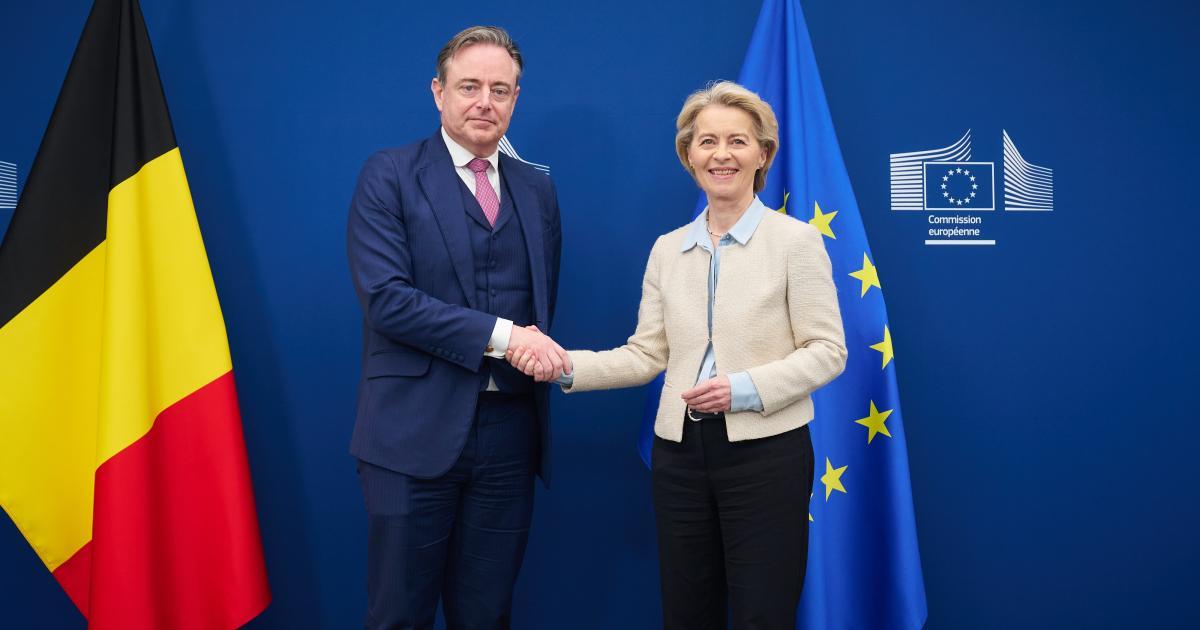
Brussels, 22 October, (Brussels Morning Newspaper) – Belgium budget talks have entered a critical phase as Prime Minister Bart De Wever struggles to secure agreement among his coalition partners on a multibillion-euro fiscal package. The continuing deadlock has delayed the government’s 2027 budget statement, increased political pressure on the prime minister and raised concerns about Belgium’s public finances.
The government is seeking approximately €10 billion in additional fiscal measures by 2029. However, disagreements over taxation, spending reductions and the distribution of the financial burden have prevented the five-party coalition from reaching a comprehensive agreement.
Belgium Budget Talks Face Critical Coalition Divisions
The latest negotiations have exposed significant disagreements within De Wever’s governing coalition, which brings together the New Flemish Alliance (N-VA), Reformist Movement (MR), Vooruit, Christian Democratic and Flemish (CD&V), and Les Engagés.
A central dispute concerns proposals to increase Belgium’s standard value-added tax rate from 21% to 22%. MR has opposed the increase, while other coalition partners have argued that additional revenue measures are necessary to improve the government’s fiscal position.
Differences have also emerged over healthcare expenditure and the balance between taxation and public spending reductions.
Senior ministers held negotiations on 20 October, but the discussions ended without a breakthrough. De Wever subsequently moved to individual meetings with deputy prime ministers in an attempt to narrow the differences.
Speaking in the Belgian Chamber of Representatives on 21 October, De Wever acknowledged the urgency of reaching an agreement.
“We are already in injury time,” he said, expressing hope that coalition parties would set aside their disagreements.
Belgium’s Budget Deficit Raises Economic Concerns
The negotiations are taking place against a challenging fiscal backdrop.
Belgium recorded a government deficit equivalent to approximately 5.2% of gross domestic product in 2025, according to figures reported during the budget discussions. Public debt was forecast to exceed 110% of GDP in 2026.
Belgium is also subject to the European Union’s excessive deficit procedure, which requires the country to address its fiscal imbalance.
The National Bank of Belgium and the Belgian Debt Agency have warned ministers about the risk of rising interest payments worsening the country’s debt burden.
Their warnings have added urgency to the negotiations, with the government seeking measures that would improve Belgium’s fiscal position over several years.
Budget Dispute Sparks Public Protests in Brussels
The political deadlock has coincided with public opposition to the government’s proposed economic measures.
Thousands of demonstrators gathered in Brussels on 9 October to protest against planned spending cuts and changes affecting public services and social protections.
Further industrial action on 12 October disrupted rail transport, public services, broadcasting and education.
Trade unions have criticised the potential consequences of austerity measures for workers and households, while the government argues that fiscal consolidation is necessary to protect Belgium’s longer-term financial stability.
Impact on Belgian Households and Businesses
The eventual budget agreement could influence taxation, public expenditure and the financial outlook for households and businesses across Belgium.
Changes to VAT would directly affect the taxation of certain purchases, while adjustments to healthcare expenditure and social programmes could influence public services.
Businesses are also watching the negotiations because tax changes and uncertainty over fiscal policy can affect investment decisions and operating costs.
For European policymakers, the negotiations represent an important test of Belgium’s ability to meet its commitments under EU fiscal rules.
What Happens Next for De Wever’s Government?
De Wever is attempting to secure an agreement that would allow the government to advance its 2027 budget and restore momentum to its wider fiscal programme.
An analysis published by ING on 16 October identified approximately €4 billion in measures for 2027 as the government’s immediate priority, with further consolidation envisaged for subsequent years.
Any agreement must still be translated into legislation and considered by Parliament.
The central question remains whether the coalition can resolve its disagreements quickly enough to avoid another prolonged budget delay. As of the latest verified parliamentary reporting on 21 October, no final comprehensive agreement had been confirmed.