
Ghent (The Brussels Morning Newspaper) October 19, 2026 – Design Museum Gent has reopened following a four-year renovation and expansion, introducing a new building wing alongside an inaugural exhibition examining the relationship between design and democratic participation. The renovated museum complex integrates new civic spaces designed by Carmody Groarke and ATAMA, aiming to function as a public forum for civic involvement. Curated by Amelie Klein and Vera Sacchetti, the opening exhibition Public Matter(s): Design and Democracy explores how physical and systemic design choices shape democratic institutions, voting systems, and political inclusion.
Ghent’s primary design institution, Design Museum Gent, has officially reopened its doors to the public following the completion of a four-year redevelopment project. The extensive overhaul includes the addition of a new museum wing, a redesigned central courtyard garden, and a revamped curatorial framework that positions design as an active instrument for civic participation and democratic debate.
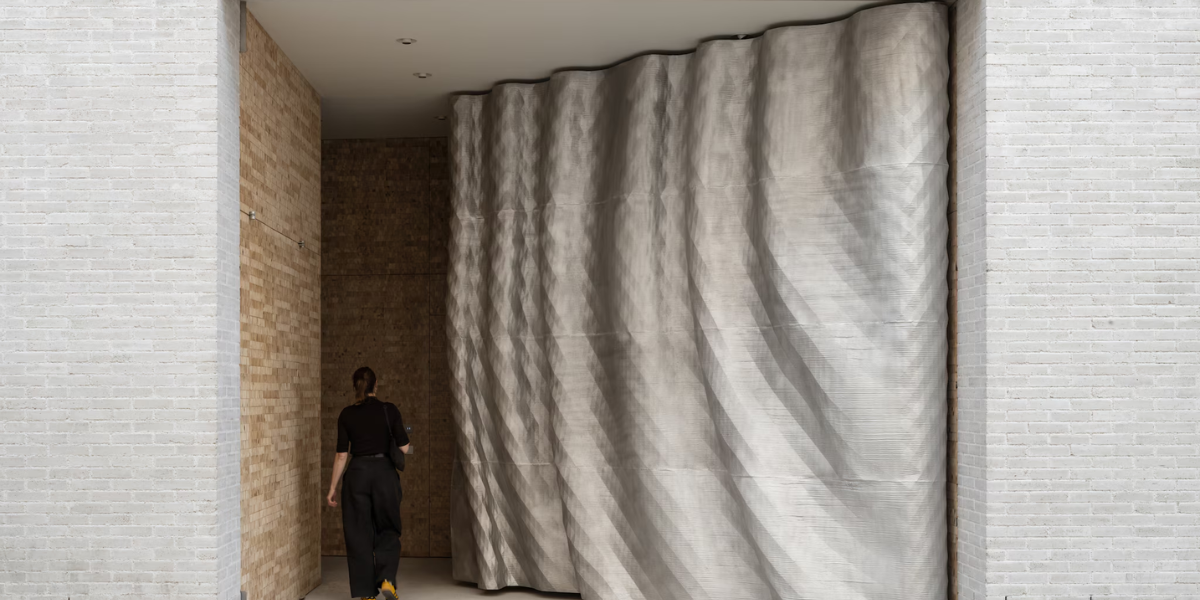
The architectural expansion connects the museum’s historic core—the 18th-century Hôtel De Coninck—with a newly constructed wing designed jointly by London-based architecture practice Carmody Groarke and Belgian firm ATAMA. At the centre of the expanded footprint is a reimagined interior courtyard garden created by landscape architect Bas Smets. The project incorporates a freely accessible public hall, designated as the Stadskamer (City Room), designed to open the institution to local residents and host public gatherings, workshops, conferences, and community activities without requiring an entry fee.
The reopening coincides with the launch of the museum’s inaugural temporary exhibition, titled Public Matter(s): Design and Democracy, which runs from October 2026 through April 2027. Curated by independent design curators Amelie Klein and Vera Sacchetti, alongside assistant curator Stefanie Heyvaert, the exhibition examines how designed objects, spatial arrangements, and bureaucratic frameworks construct and influence democratic life.
The exhibition’s curatorial premises establish that political systems and democratic practices are consciously designed constructs rather than static institutions. The displays analyze the visible and invisible structures that govern public life, ranging from the graphic layout of ballot papers and the architectural layout of parliament chambers to digital civic interfaces and policy mechanics.
Exhibits trace the historic and contemporary evolution of representative democracy within Belgium and internationally. The content addresses key constitutional milestones, including historic suffrage movements, the struggle for civil rights, and ongoing legislative debates surrounding voting rights for non-citizen residents living in Belgium. The exhibition further extends into alternative models of governance, presenting conceptual and practical framework options such as sortition—the selection of political representatives by lottery—and ecocracy, which explores the extension of legal personhood and constitutional rights to natural ecosystems, rivers, and forests.
A major component of the exhibition focuses on themes of political inclusion and voter marginalisation. Curators have gathered historic and contemporary artefacts to illustrate how specific groups have been systematically excluded from democratic processes based on gender, national origin, socio-economic background, or legal status. The collection includes archival documents, photography, protest banners, political campaign graphics, and architectural models. Notable works on display include contributions by international artists, designers, and architecture collectives, such as COOP HIMMELB(L)AU, photographer Wolfgang Tillmans, designer Leo Lionni, and mischer’traxler studio.
In addition to static historical displays, Public Matter(s): Design and Democracy incorporates interactive elements aimed at visitor engagement. The museum has integrated a dedicated practical segment called the “Democracy Workout,” designed to test visitor participation through exercises focused on active listening, debate, and civic deliberation. Educational programming accompanying the opening includes guided tours focusing on protest design and digital toolkits developed for school groups.