As Xi Jinping prepares to meet Donald Trump in Washington this week, the usual checklist of summit topics – Taiwan, artificial intelligence, tariffs, rare earths – will dominate the commentary. That is understandable. Yet the more consequential story lies elsewhere, in two narrow waterways thousands of miles from either capital. The Strait of Hormuz remains effectively constrained by Iranian conditions that show little sign of softening. Bab al-Mandeb, after the Houthis’ recent consolidation of control over Yemen’s Red Sea coast and the strategic island of Perim, has become a second, simultaneous pressure point on global shipping. Together they form a dual chokepoint crisis that is already elevating energy prices and disrupting container traffic. In this environment, the single most important deliverable from the Trump-Xi meeting is not a grand bargain on technology or security. It is a quiet, durable extension of the existing trade truce – and the broader signal that Washington and Beijing intend to keep their economic relationship functional.
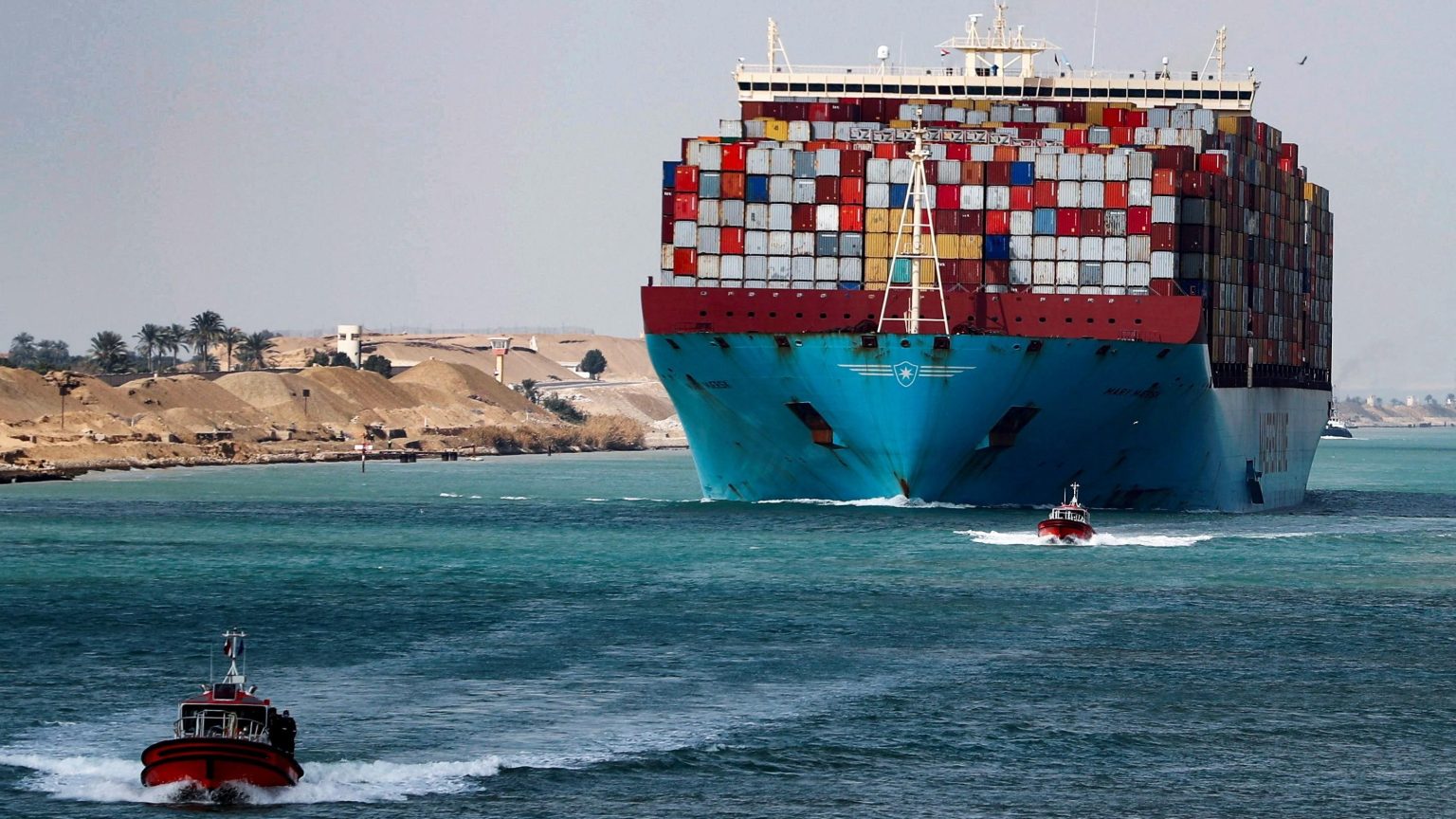
Consider the arithmetic. Before the current Iranian conflict, roughly a fifth of the world’s oil passed through Hormuz. Even with partial workarounds and naval escorts, volumes have been volatile and lower than historical norms. At the same time, Bab al-Mandeb, which handles a meaningful share of global container traffic and a portion of energy moving to and from Asia and Europe, has seen traffic halved on certain days since the Houthis seized key positions earlier this month. Saudi crude that once moved westward through the Red Sea has been forced into longer, costlier routes around the Cape of Good Hope or through already strained alternatives. The result is a classic supply shock layered onto an already fragile post-pandemic recovery: higher freight rates, elevated oil prices, and the threat of secondary inflation in food, fertilizer, and manufactured goods.
China sits at the center of this vulnerability. It remains the world’s largest importer of oil and a dominant buyer of many bulk commodities. Its export machine, which has continued to expand even under successive rounds of American tariffs, depends on predictable energy costs and open sea lanes. When those lanes tighten, Chinese manufacturers face higher input prices; when Chinese demand softens in response, commodity markets everywhere feel the chill. The United States and its partners are not insulated. Higher global energy prices feed directly into American inflation and European industrial costs. Supply-chain disruptions that begin in the Persian Gulf or the Red Sea quickly appear in factory inventories from Michigan to Bavaria to Guangdong.
This is why a stable U.S.–China trade relationship functions as a form of systemic insurance. The current truce, struck last year and set to expire in November, has prevented a full-scale tariff war that would have compounded the maritime shocks. Extending it – and expanding the volume of non-sensitive trade in agriculture, energy, and certain manufactured goods – does not require either side to abandon its strategic competition. It simply recognizes that both economies are now co-dependent on the free flow of goods and energy through waterways neither can fully control. A renewed escalation in tariffs or export controls would raise the cost of everything that still moves through the remaining open routes, accelerating the very stagflationary pressures the world is trying to avoid.
Critics will argue that deeper economic engagement with China rewards bad behavior or creates dangerous dependencies. That argument has force on technology and national-security grounds. It is less persuasive when the alternative is to allow a dual chokepoint crisis to cascade through global markets. History offers a cautionary parallel. In the 1970s, oil shocks combined with protectionist impulses and monetary mistakes to produce prolonged stagflation. Today the shocks are maritime rather than purely geopolitical, but the transmission mechanism is similar: higher input costs, disrupted logistics, and policy responses that risk making the problem worse.
The preparatory talks held in New York on Sunday between Scott Bessent and Chinese Vice Premier He Lifeng reportedly focused on precisely these practical matters – trade in non-sensitive products and limited AI guardrails – rather than maximalist demands. That is the correct priority. China’s export engine is still roaring; American agricultural and energy producers still need reliable large-scale buyers; and the global economy still needs the two largest players to avoid adding a trade war to a shipping war. A stable truce will not resolve the underlying conflicts in the Middle East. It will, however, reduce the probability that those conflicts trigger a broader economic contraction.
There is an uncomfortable truth here that both capitals prefer to avoid. Strategic rivalry between the United States and China is real and will persist. Yet the two countries are now bound together by a shared vulnerability to disruptions far from their shores. In a world where Hormuz and Bab al-Mandeb can be constrained at the same time, the luxury of pure decoupling no longer exists. The practical choice is between a managed economic relationship that cushions the shock and an unmanaged one that amplifies it. The September 24 summit will be judged, in retrospect, less by the optics of the state dinner than by whether the two leaders choose the former.