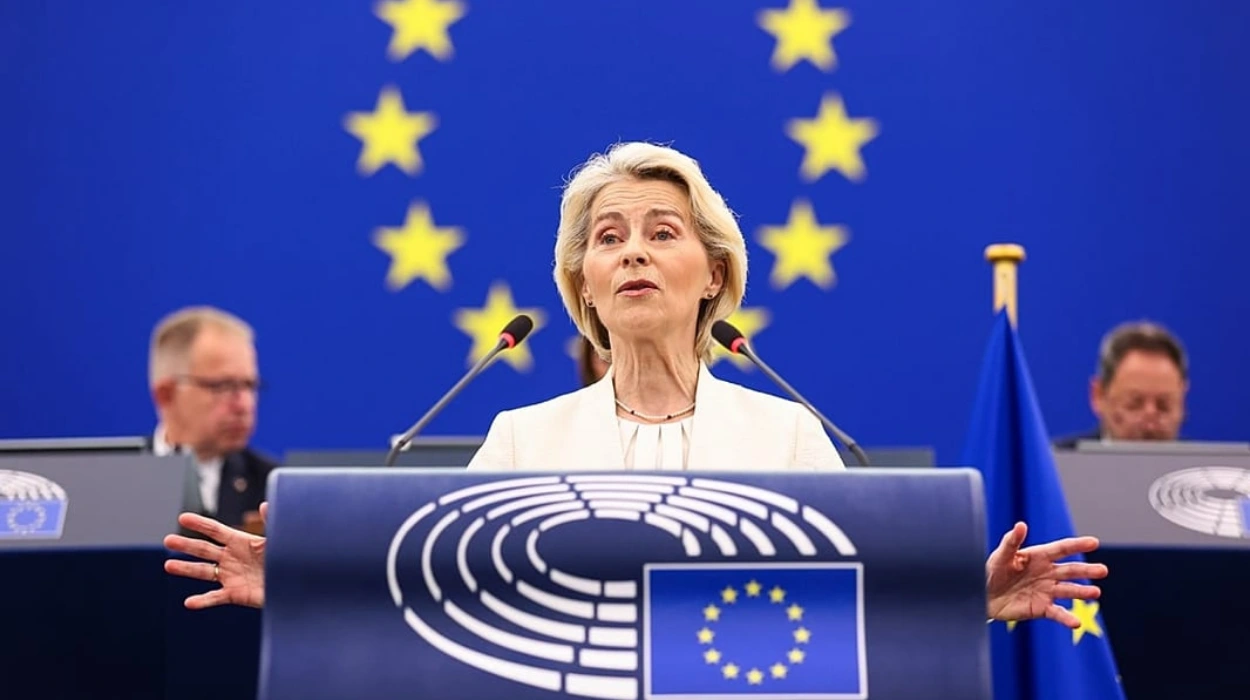
STRASBOURG (Brussels Morning Newspaper) September 17, 2026 — European Commission President Ursula von der Leyen has proposed the creation of a European Security Council alongside an Emergency Security Protocol designed to coordinate rapid responses to hybrid threats, arson, and sabotage across the continent. Delivering her State of the Union address to the European Parliament, von der Leyen outlined plans to seat non-EU allies including Britain, Norway, Ukraine, and Canada, while introducing a NATO-style Article 4 mechanism allowing individual member states to trigger collective European consultation during security incidents.
European Commission President Outlines New Counter-Hybrid Strategy
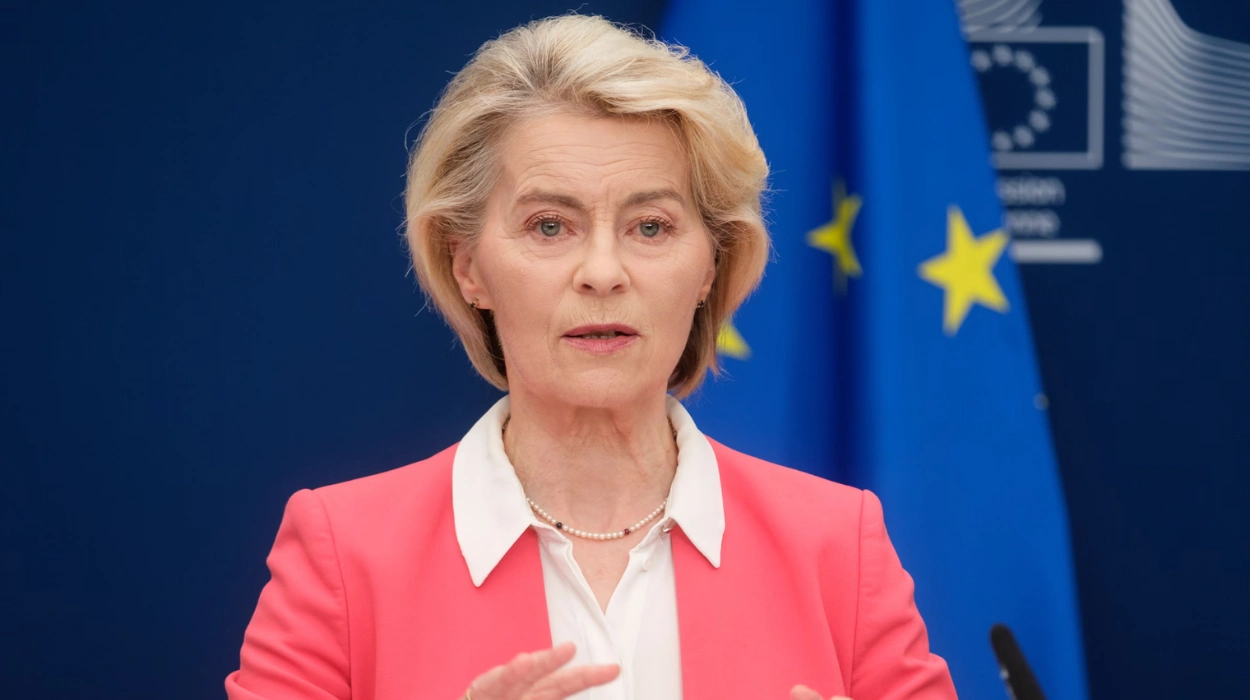
European Commission President Ursula von der Leyen told the European Parliament in Strasbourg that Europe’s security doctrine must adapt to grey-zone hostility and non-conventional military tactics. Speaking during her annual State of the Union address, von der Leyen presented a twin-pillar strategy aimed at reforming European collective defence and deterrence.
The first major proposal entails the creation of a European Security Council. Designed as a leadership-level forum rather than a formal treaty organisation, the body would bring together the 27 European Union member states alongside strategic international partners. Von der Leyen explicitly named the United Kingdom, Norway, Ukraine, and Canada as core non-EU participants in the initiative.
The second core proposal involves an Emergency Security Protocol intended to counter hybrid warfare. The protocol would function as a collective response framework, enabling individual member states to trigger Europe-wide coordination, consultation, and mitigation measures without requiring prior unanimous consent across the bloc.
“Europe needs its own counter-hybrid playbook,”
von der Leyen stated during her address to the assembled members of the European Parliament.
The European Commission confirmed that detailed institutional and legislative proposals regarding the architecture of the new security framework will be published before the end of the year.
Incident Framework and Modelled Trigger Protocols
The security proposals presented by the Commission President draw directly from a pattern of non-conventional security incidents across Europe that have fallen below the threshold of conventional military attacks or existing legal provisions on the use of force.
Under the framework outlined in Strasbourg, the Emergency Security Protocol is explicitly modelled on NATO’s Article 4 mechanism. Article 4 of the North Atlantic Treaty permits any member state to request formal consultations whenever its territorial integrity, political independence, or security is threatened. Under von der Leyen’s proposed European variant, the activation of the protocol by a single EU member state would automatically convene all 27 member states to coordinate deterrence, share intelligence, and deploy joint mitigation measures against sub-threshold aggression.
The Commission cited multiple recent incidents across the continent to illustrate the vulnerabilities targeted by the protocol:
-
Infrastructure Incursions: Unarmed drone flights over critical transport hubs, including an incident at Leipzig airport in Germany that forced a temporary closure and flight delays.
-
Logistics Sabotage: Arson and physical attacks directed at freight and courier facilities, including DHL infrastructure and logistics warehouses in Poland and Germany.
-
Digital and Physical Disruptions: Cyberattacks, state-sponsored sabotage, and coordinated intrusion operations into critical European infrastructure networks.
German authorities formally attributed the Leipzig airport drone incident to Russian intelligence services in early September. The European Commission noted that such campaigns exploit institutional delays and gaps in conventional collective defence treaties.
International Partners and Canadian Association
The inclusion of non-EU nations within the proposed European Security Council represents a shift toward broader continental and transatlantic security coordination.
Canadian Prime Minister Mark Carney attended the address in Strasbourg as a guest of honour. The presentation of the security framework coincided with a proposal made one day earlier by von der Leyen to offer Canada associate membership within the European Union—a newly conceived legal category within the bloc’s treaty structure.
Addressing reporters following the State of the Union speech, Carney welcomed the discussions surrounding deeper security and institutional alignment with European partners.
The proposed council would also create a formal institutional channel for security dialogue with the United Kingdom, marking a structural development in post-Brexit relations. The British government has maintained a policy of defense cooperation with European allies, though London has not yet issued a formal public statement regarding the proposed council structure.
Legislative Outlook and Implementation Timeline
The announcement comes ahead of the United Nations General Assembly high-level week in New York, where European leaders are scheduled to hold bilateral and multilateral security discussions.
While the European Commission outlined the primary objectives of the Security Council and Emergency Security Protocol, several structural parameters remain subject to upcoming legislative drafting:
-
Enforcement Mechanisms: Specific operational powers and enforcement capabilities under the Emergency Security Protocol have not yet been detailed.
-
Implementation Schedule: A definitive timeline for establishing the European Security Council beyond the preliminary outlines will depend on the Commission’s formal proposals expected later this year.
-
Member State Coordination: The framework will require alignment among EU member states, including France, Germany, and Poland, each of which has historically advocated distinct approaches to European defence integration and strategic autonomy.
The European Parliament and the Council of the European Union will review the Commission’s formal legislative drafts once they are officially submitted before the close of the calendar year.