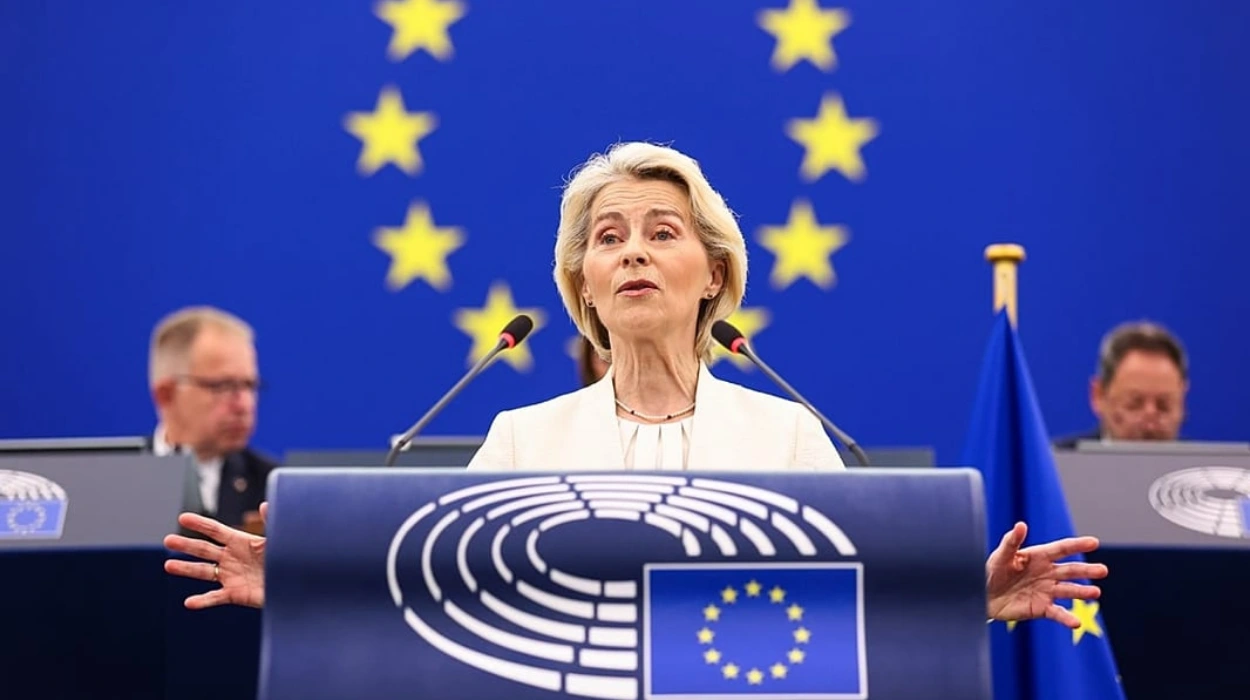
BRUSSELS (Brussels Morning Newspaper) September 17, 2026 — The European Commission has officially introduced the proposed EU KIDS Act, establishing sweeping restrictions on access to social media platforms, online video games, and artificial intelligence companions for children across the European Union. The draft regulation mandates a total prohibition on social media usage for minors under the age of 13 and establishes a minimum age threshold of 15 for individuals seeking to open independent accounts.
- European Commission Drafts Legislative Framework to Restrict Social Media Access for Children
- Statutory Safe-by-Design Mandates and Restrictions on Addictive Features
- Age-Assurance Requirements and Verification Infrastructure
- Official Statements and Political Background from EU Leadership
- Legislative Process and Legal Enforcement Framework
- Global Context and Platform Industry Reactions
Under the legislative framework, technology platforms face requirements to ensure services are safe by design, enforce robust age-verification systems, and eliminate features designed to foster addictive behaviour. Compliance failure risks financial penalties reaching up to 6 per cent of a provider’s total annual global turnover.
European Commission Drafts Legislative Framework to Restrict Social Media Access for Children
The European Commission on Thursday formally presented its proposed EU KIDS Act (EU Keeping Internet Digital Spaces Accountable and Trustworthy), marking a comprehensive effort to establish uniform rules governing minors’ interactions with digital platforms across all 27 EU member states.
Under the core provisions of the legislative package, children under the age of 13 will be entirely prohibited from accessing social media services. For minors aged between 13 and 15, the draft act establishes a restricted access model. Teenagers within this age bracket will not be permitted to register standalone personal accounts. Instead, they will only be granted access through limited “mini accounts” or secondary profiles directly created, linked to, and monitored by a parent or legal guardian.
These supervised accounts for 13-to-15-year-olds will be subject to strict statutory operational boundaries. The legislation dictates that these profiles must incorporate automated daily screen-time limits capped at a maximum of one hour. Furthermore, the functionality of these accounts will be curtailed to restrict direct communication and social contacts with unverified or non-approved third parties.
For older adolescents aged between 15 and 18, social media companies will be permitted to grant independent account creation rights, but platforms will remain legally bound to enforce heightened default safety features tailored specifically to teenagers.
Statutory Safe-by-Design Mandates and Restrictions on Addictive Features
The scope of the EU KIDS Act extends beyond traditional social networking applications to encompass video-sharing services, online gaming platforms, interactive AI companions, and automated chatbots accessible by minors. All relevant digital services operating within the European Single Market will be required to build their product architecture around “safe by design” principles.
A primary target of the draft regulation is the systemic elimination of platform design mechanisms engineered to maximize screen exposure and engagement. The act explicitly restricts features identified as drivers of addictive usage patterns, including infinite scrolling interfaces, automated autoplay mechanisms, push notifications delivered during standard sleeping hours, and gamified reward structures.
Default privacy configurations for all accounts operated by minors will be mandated at the highest statutory level. Profiles belonging to underage users must be automatically designated as private upon creation. Operating permissions—including access to precise location geolocation data, device cameras, and integrated microphones—must remain disabled by default and cannot be activated without explicit operational authorization.
The proposal includes specific regulatory safeguards governing artificial intelligence models and companion tools. AI companions and interactive conversational agents will be rendered inactive by default for minor profiles. Platforms are prohibited from deploying AI tools that simulate human interpersonal relationships or emotional intimacy in a manner capable of inducing psychological or emotional dependence among young users.
Age-Assurance Requirements and Verification Infrastructure
To enforce the proposed age thresholds, the EU KIDS Act requires digital platforms and app store operators to integrate reliable age-assurance mechanisms across their services. The legislation outlines operational guidelines for verifying a user’s age prior to granting account access or app download permissions.
The European Commission highlighted that platforms can satisfy these regulatory requirements through integration with the EU’s age-verification application framework. According to technical details published alongside the proposal, this verification infrastructure is designed to confirm an individual’s age eligibility without requiring digital services to collect, process, or store identity documentation, official credentials, or biometric data from users.
Beyond technical age gates, the legislative proposal introduces a fundamental legal shift regarding platform accountability by reversing the burden of proof for Very Large Online Platforms (VLOPs) and Very Large Online Search Engines (VLOSEs). Under the current framework, regulatory authorities generally carry the obligation to demonstrate that a digital platform presents harm to consumers. The EU KIDS Act reverses this dynamic, placing the legal responsibility directly onto platform operators to prove that their systems, algorithms, and interface choices are safe for minor populations prior to deployment.
As part of this requirement, tech providers will be obligated to draft and submit preliminary compliance assessment plans to independent regulatory bodies for formal auditing. These audits must be successfully concluded before platforms can launch new digital services, software features, or interface modifications targeting or accessible to children.
Official Statements and Political Background from EU Leadership
European Commission President Ursula von der Leyen outlined the core objectives of the legislative package during her address to the European Parliament in Strasbourg.
“It is time for Europe to act,”
von der Leyen declared, emphasizing the necessity of continent-wide standards.
“No social media under the age of 13. No personal account under the age of 15.”
Von der Leyen stated that the initiative is designed to assist parents in managing their children’s exposure to digital environments.
“We are reversing the burden of proof. Platforms will have to prove to us that they are safe,”
she said.
“Because it is not about our minors accessing social media. It is about when and how we allow social media to access our minors.”
The Commission President addressed concerns regarding the market power of international technology corporations, stating,
“I am aware that many perceive the power of Big Tech as overwhelming and impossible to roll back. I disagree.”
She further stated,
“We do not have to accept addictive features. We do not have to accept children being drawn into ever more extreme content. We do not have to accept that girls have their photos used for AI-generated sexualised images.”
During her address, von der Leyen referenced the case of a 14-year-old Belgian girl who died by suicide following online harassment, citing the account of the victim’s family regarding the impact of digital platforms on adolescent mental health.
Support for broader algorithmic regulations was voiced by Manfred Weber, leader of the European People’s Party group in the European Parliament. Weber called for measures enabling European citizens to disable platform recommendation algorithms entirely, pointing to similar policy debates in Australia.
The announcement follows sustained advocacy from several EU member states—including France, Denmark, Greece, Spain, and Portugal—which have previously pursued or called for national restrictions on youth social media usage. French Government Spokeswoman Maud Bregeon characterized the European Commission’s announcement as a constructive development while national authorities continue refining domestic regulatory measures.
Legislative Process and Legal Enforcement Framework
The EU KIDS Act proposal has been officially transmitted to the European Parliament and the Council of the European Union for legislative scrutiny, potential amendment, and formal approval. To become binding law across the European Union, the draft text must complete the ordinary legislative procedure, requiring agreement between the co-legislators representing the 27 member state governments and the elected members of the European Parliament.
If formally enacted, enforcement of the rules will be integrated into the regulatory architecture established under the existing Digital Services Act (DSA) and the Artificial Intelligence Act. Oversight responsibility will be coordinated through the European Commission alongside designated national digital services coordinators across member nations.
The act establishes a penalty structure for non-compliant organizations. Digital service providers, technology companies, and platform operators found in violation of the safety, age-gating, or default privacy provisions face administrative fines scaled to a maximum of 6 per cent of their global annual turnover for the preceding financial year.
The proposal also arrives amid ongoing regulatory monitoring under the Digital Services Act, through which the European Commission previously requested technical details from major platforms—including Meta’s Facebook and Instagram, as well as TikTok—regarding interface designs and risk management strategies concerning minors. European officials noted that regulatory progress via existing tools warranted specific, statutory rules focused directly on minor safety.
Global Context and Platform Industry Reactions
The European Union’s proposed restrictions reflect a broader global trend among regulatory bodies seeking to institute legal safeguards for children operating online. The move follows Australia’s enactment of legislation establishing a minimum age limit of 16 for social media access, as well as legislative attempts in various jurisdictions across North America and Asia to limit minor access to algorithmic feeds.
Digital rights organizations and industry analysts offered varied assessments following the publication of the proposal. Representatives from human rights and digital advocacy groups, including European Digital Rights (EDRi), noted that while age restrictions set operational boundaries, long-term child safety online requires continuous focus on platform monetization structures and engagement-based algorithmic design.
International observers also note potential regulatory friction regarding global compliance. US tech firms and political representatives have previously raised questions regarding European digital regulations and their impact on cross-border service operations. European Commission officials maintain that the proposed measures are focused strictly on consumer safety, platform accountability, and the protection of minors’ health and well-being within the European Single Market.