Beringen (Brussels Morning Newspaper) – The city of Beringen has announced a significant expansion of its automated external defibrillator (AED) network, installing devices at three new locations while replacing nine older units to ensure reliable emergency cardiac care across the municipality.
What Does the New AED Expansion Include?
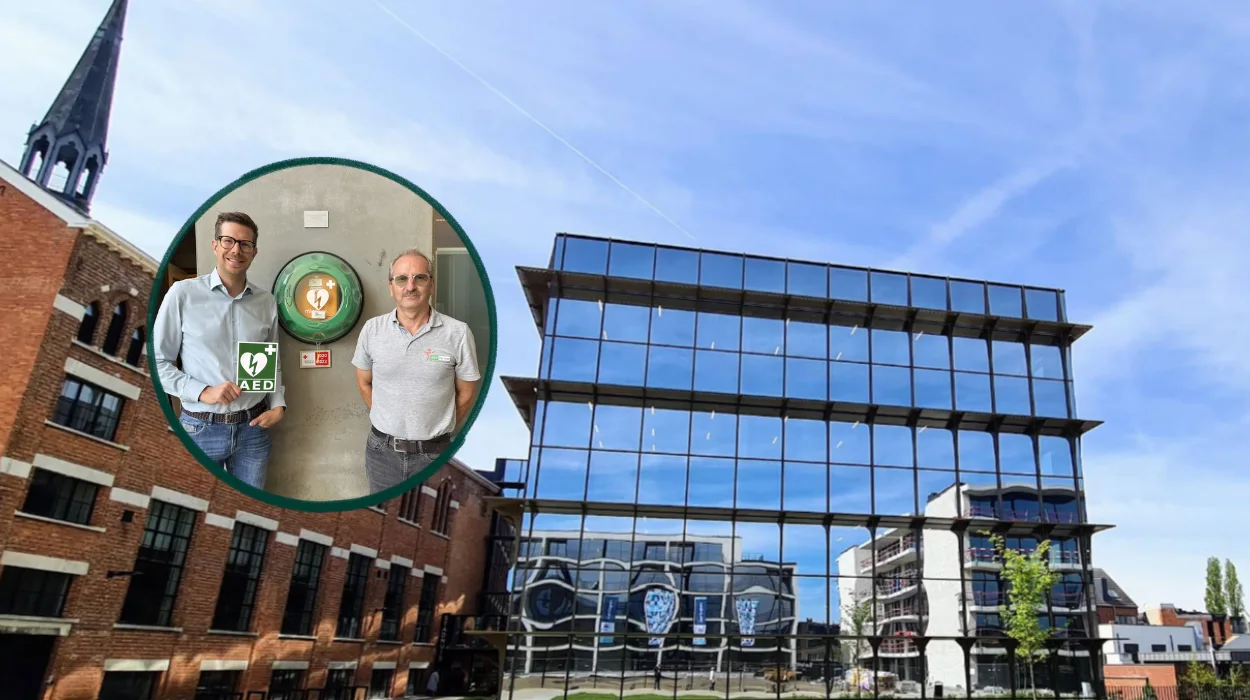
The new phase in the development of the Beringen Automated External Defibrillator (AED) network involves the provision of potentially lifesaving defibrillation equipment in three further high traffic public facilities. Out of the three, two AEDs have already been installed and are operational, namely one located in Service Centre De Klitsberg in Paal and the other in the youth facility in Stal. The third and last device will be installed later this year in CC Casino in Beringen Mijn.
In addition to these three new installations, the municipality of Beringen has also been undertaking a complete replacement project for nine outdated AEDs whose lifespan has expired. Due to discontinuation by manufacturers, critical parts like batteries and electrode pads are no longer available for these old AEDs making their replacement essential. Through this replacement, all 20 AEDs located at the public access locations within the Beringen AED network become completely operational.
Why Is This Investment Critical for Public Safety?
Cardiac arrest is among the most common causes of death in Belgium, and according to the statistics, there are about 30 out-of-hospital cardiac arrests in Belgium every day. Without any medical intervention, survival chances decrease to only 10 percent. Nevertheless, the survival rate rises to 70 percent if CPR and the AED are used by a bystander within the first three to five minutes after the arrest.
Mayor Thomas Vints (CD&V) emphasized the life-or-death stakes of this infrastructure investment, stating,
“In the event of a cardiac arrest, an AED can literally make the difference between life and death.”
He continued,
“That is why we are deliberately investing in a well-distributed network of devices throughout Beringen. We want residents, visitors, and associations to be able to count on there always being a working device nearby. That is an investment in safety and in lives.”
How Does Device Replacement Ensure Long-Term Reliability?
The upgrading of the nine older units of the AED system is an attempt to solve one of the most prevalent problems faced by municipalities everywhere; that is, the problem of obsolescence of technology. It is important to note that medical device companies tend to withdraw their old products from the market regularly.
According to the city administration, the replaced devices
“were no longer future-proof because they have been taken out of production. Parts are no longer available, meaning reliable long-term operation could not be guaranteed.”
Mayor Vints elaborated on this proactive approach, noting,
“An AED is only valuable if you can also rely on it working perfectly when needed. That is why we choose to replace outdated devices in a timely manner.”
Where Can Residents Find the Complete AED Network Map?
Transparency is one of the mainstays of Beringen’s AED program, which has published an exhaustive list of all 20 AED devices available to the public on the municipal website, which can be accessed via this link: www.beringen.be/aed-toestellen.
The AED system covers multiple sites, including civil sites, sport sites, religious sites, and community centers in Beringen districts, such as Centrum, Paal, Stal, Koersel, Beverlo, and Beringen-Mijn. Some of the sites include the entrance of Lutgart on Hoogstraat, Central Church in Beringen Centrum, Sporthal Spectrumcollege, Visit Beringen on Koolmijnlaan, Mijnstadion, Paalse Plas, and Service Centre De Klitsberg in Paal. This geographic spread makes sure that irrespective of where the cardiac arrest occurs, there will always be an AED available in the recommended four to six minutes’ time.