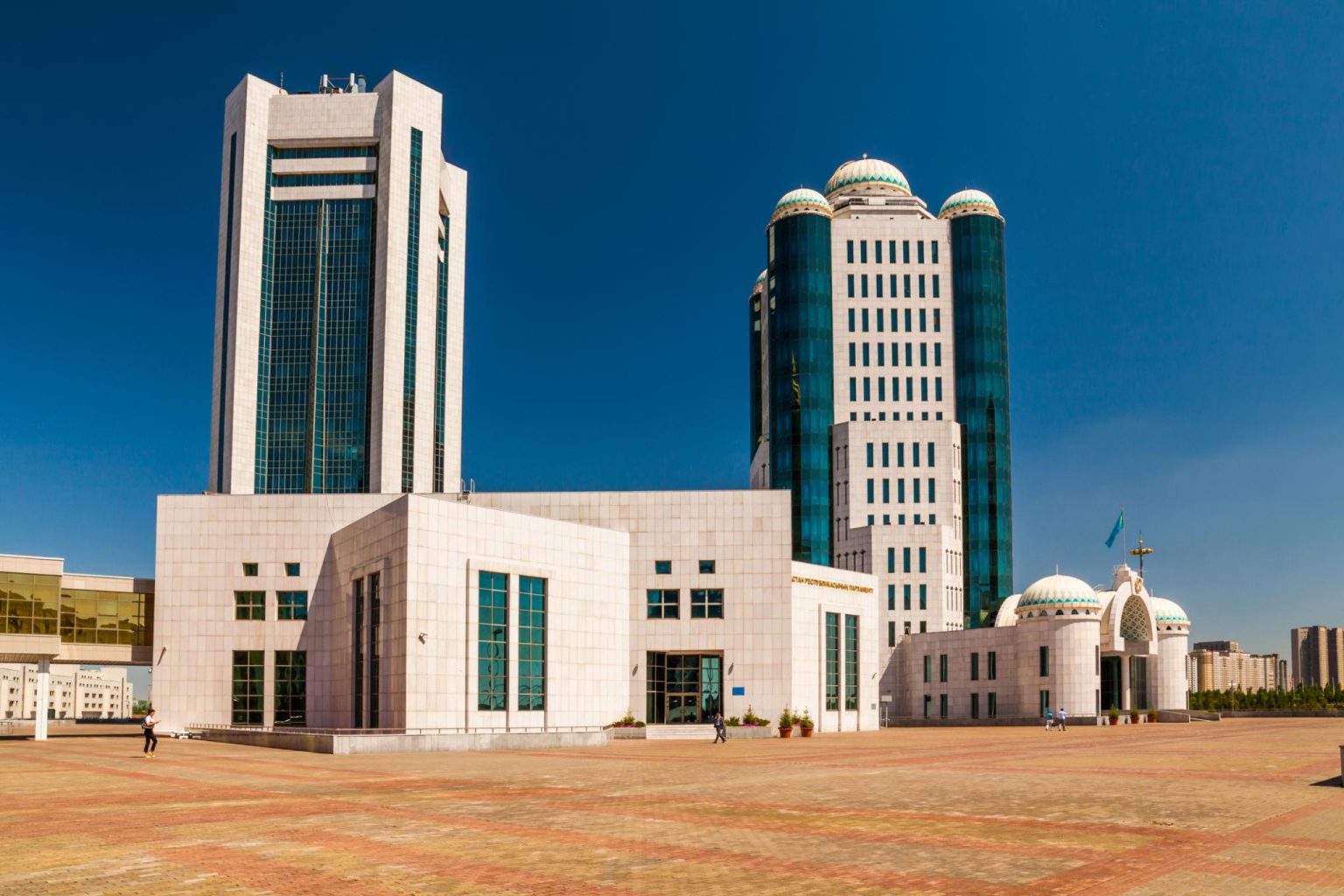
Kazakhstan has elected the first members of its new national parliament, known as the Kurultai, completing the institutional transition approved in the country’s constitutional referendum in March.
Voter turnout reached 74.08 per cent. Adilet secured 71.17 per cent of the vote, while four other parties passed the five percent threshold and gained parliamentary representation.
Adilet’s decisive majority gives the party a clear mandate to advance President Kassym-Jomart Tokayev’s reform programme.
The result should provide policy continuity, while also placing responsibility on the new majority to demonstrate that a streamlined parliamentary system can produce effective legislation and visible results.
For Brussels, this is more than a change to Kazakhstan’s domestic political architecture.
The European Union has spent the past decade constructing an ambitious relationship with Central Asia’s largest economy. Much of that work has been conducted between presidents, ministers and European Commission officials. The arrival of the Kurultai gives the European Parliament a newly constituted legislative partner at precisely the moment when EU–Kazakhstan relations are moving from broad agreements towards detailed implementation.
The election followed the replacement of the former Senate and Mazhilis with a single elected chamber. Seven parties contested the vote, fielding 545 candidates. The new structure should make political responsibility easier to identify: legislation can no longer move between two chambers while ownership of decisions becomes blurred.
The Kurultai will adopt laws and the national budget, question ministers, hear government reports and, under defined procedures, express no confidence in the government. Its consent is also required for the appointment of the prime minister, vice-president and several senior institutional officials.
These responsibilities highlight the wider direction of Kazakhstan’s reforms since 2022.
The country has restored its Constitutional Court, lowered barriers to political-party registration and introduced safeguards intended to limit the concentration of political and economic privilege.
Kazakhstan remains a presidential system, and institutional development is necessarily gradual. But the election marks an important move from designing reforms to testing them through the everyday work of government.
That work will intersect with Europe’s interests.
The Enhanced Partnership and Cooperation Agreement, which entered into force in 2020, covers 29 areas ranging from trade, energy and transport to justice, education and political dialogue. During Tokayev’s visit to Brussels in June this year, EU and Kazakh leaders described their partnership as increasingly important to connectivity, energy security and resilient supply chains. The EU recognised Kazakhstan’s continuing political reform agenda and welcomed dialogue on the rule of law, anti-corruption and cooperation with the Venice Commission.
The same visit produced practical commitments.
The European Investment Bank signed a €150 million agreement supporting transport connectivity. Negotiators concluded discussions on visa facilitation and readmission, while a Horizontal Aviation Agreement was signed to improve air links.
The two sides agreed to advance their partnership on sustainable raw materials, batteries and renewable hydrogen, as well as cooperation in digitalisation and emerging technologies.
An agreement between Air Astana and Airbus covering up to 50 aircraft, valued at €7.145 billion, offered a striking commercial example of the relationship’s scale.
Each of these areas eventually encounters legislation. Transport corridors need rules covering procurement, customs procedures, digital documentation and environmental standards. Energy cooperation requires credible regulation and long-term investment frameworks. Visa facilitation depends on legal safeguards and effective administration. European companies need transparent commercial rules, while Kazakh exporters must adapt to European measures such as the Carbon Border Adjustment Mechanism.
The relationship will therefore be sustained not only by diplomacy, but also by the quality of the laws enacted and scrutinised in Astana.
Parliamentary cooperation is not starting from zero. The European Parliament and Kazakhstan have held 22 meetings of their Parliamentary Cooperation Committee, most recently in Brussels in November 2025.
That meeting addressed trade, connectivity, climate change, the war in Ukraine, relations with Russia, human rights and the rule of law. It also produced support for more intensive exchanges between parliamentary committees. The formation of the Kurultai provides an opportunity to give those exchanges a more practical and systematic character.
Members of the European Parliament and Kurultai deputies could work more closely through their foreign affairs, transport, economic, environmental and legal committees. They could compare approaches to public procurement, industrial decarbonisation, digital regulation and budgetary scrutiny.
Parliamentary dialogue can also support cooperation under Erasmus+, Horizon Europe and EU programmes such as TAIEX and Twinning. Such engagement would allow European representatives to discuss governance and rights directly while helping both sides anticipate the legislative obstacles that can prevent political agreements from becoming functioning projects.
Kazakhstan’s importance to Europe is often explained through geography and resources. It is a major energy partner, a source of critical raw materials and the central state along the Trans-Caspian route connecting Europe with Central Asia and China.
But durable relationships cannot depend on geography or commodities alone.
They require institutions able to set consistent rules, examine government performance and maintain cooperation beyond individual political cycles. That is why the composition and conduct of the new Kurultai should matter in Brussels.
The election does not conclude Kazakhstan’s political transformation. It begins the operational phase of the constitutional changes endorsed earlier this year.
Adilet’s majority offers stability and a mandate to proceed, while the new parliamentary structure creates clearer lines of authority and accountability.
If the Kurultai uses its powers effectively, it can, it is hoped, strengthen Kazakhstan’s domestic development and provide Europe with a more capable institutional partner.
The next stage of EU–Kazakhstan relations should therefore have a stronger parliamentary component. Deeper cooperation between European Parliament and Kurultai committees would complement the work already taking place between governments, regulators and businesses.
The election results have opened that path. Many will hope that Europe should now take the opportunity to build a partnership with Kazakhstan that is not only strategic in ambition, but parliamentary and institutional in practice.