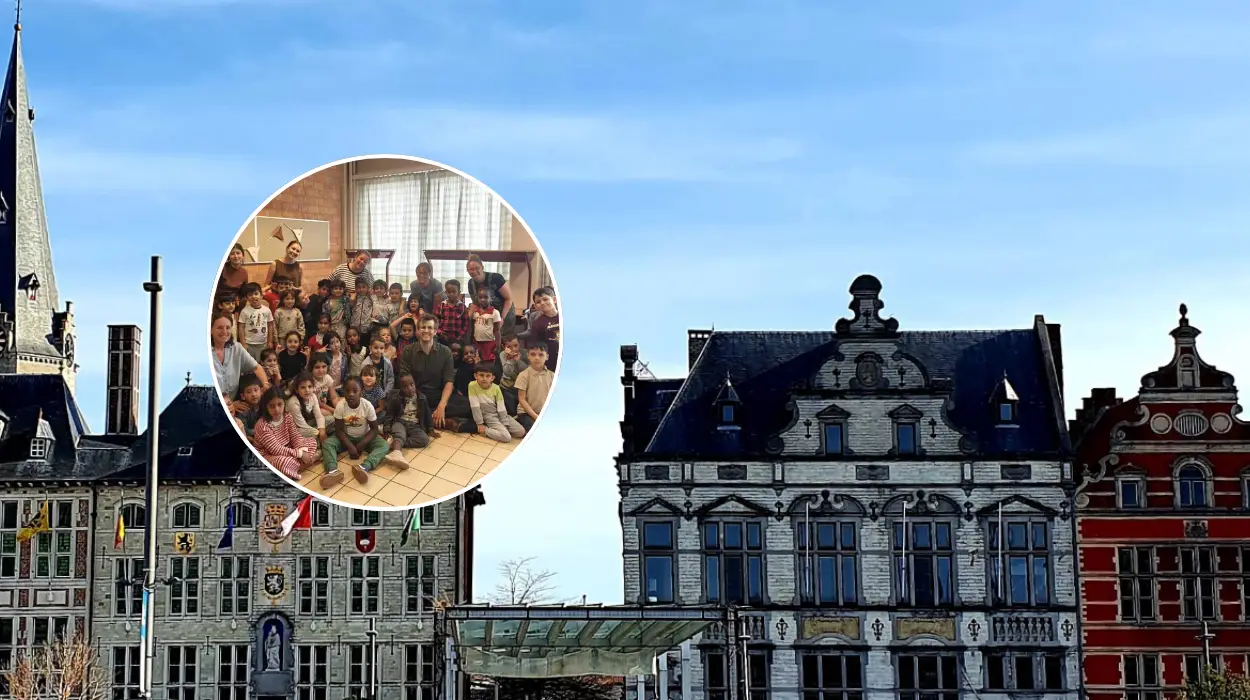
Sint-Niklaas (Brussels Morning Newspaper) – Sint-Niklaas’ municipal summer schools have reached a milestone: two decades of operation, and in 2026 the city has, for the first time, extended the programme to include a kindergarten track aimed at about 40 preschoolers practising Dutch before the new school year.
What exactly happened in Sint-Niklaas this summer?
In the 2026 edition of Sint-Niklaas summer schools, there were three levels: pupils from primary and secondary school as well as the new category of preschoolers participated in classes that lasted two weeks. In terms of secondary education, about 210 pupils received education at Sint-Jozef-Klein-Seminarie, and about 140 pupils from primary school were taught at Heilige Familie school. The whole project was carried out with the help of 35 teachers and language tutors. Moreover, for the first time, there was a separate track for preschoolers called “kleuterwerking.” There were about 40 kids who had to learn the basics of Dutch language.
Why was the kindergarten track added now?
According to city authorities and organizers, the expansion is justified not only by educational research, but also by the demands of parents who recognize that language education needs to begin as soon as possible and not when there is already a problem.
Mieke De Graeve of Theater Tomaat, a key partner in the summer school, explained that
“‘Een veertigtal kleuters oefenden spelenderwijs Nederlands. Die taalondersteuning en het aanleren van een schoolse attitude zijn ook op jonge leeftijd erg belangrijk, zeker in aanloop naar het eerste leerjaar’”
adding that
“‘Gezien de grote vraag bekijken we ook de mogelijkheden om de komende jaren nog verder uit te breiden’”.
Education alderman Adelheid Van Hauwermeiren (Vooruit) and welfare alderman Kristof Van Gansen (CD&V) echoed this line, stating that
“‘We zijn blij dat onze nieuwe kleuterwerking meteen een succes was. Dat toont aan hoe belangrijk het is om al op jonge leeftijd in taal te investeren. Een goede kennis van het Nederlands zorgt voor meer kansen op school’”.
How is the programme structured for young learners?
The kindergarten track follows the same broad philosophy as the older age groups: mornings are used for language and school-readiness activities, while afternoons are reserved for creative, sport and play-based sessions that keep the experience engaging for young children. Organisers emphasise that the goal is not only to improve vocabulary and comprehension but also to familiarise preschoolers with routines such as listening in a group, following instructions and participating in structured activities, all of which are seen as crucial for a smooth transition into first grade. The high uptake and quick fill-up of places are cited as evidence that families value this kind of early support, prompting the city to consider further expansion in coming years.
Where else in Flanders are similar summer language programmes running?
Sint-Niklaas is not the only municipality that uses summer courses to improve their language skills. Indeed, there are other municipalities that organize similar courses, and some of them have been involving younger kids in the project in the recent years as well. In Aalst, there has been organized the municipal “Taalbubbels” summer course that celebrated its 19th anniversary in 2026. There were 132 kids aged 5-18 from 19 different countries who participated in the intensive Dutch “language bath” along with various activities. The city of Wevelgem runs its language camp “Babbel” since 2020, starting with third-year pre-schoolers and first and second graders and extending the project up to sixth grade.
Lubbeek’s summer school, now in its seventh edition, saw participation rise from 69 pupils the previous year to 107 in 2026, with the programme explicitly expanded to include first- and second-year preschoolers as organisers stressed that
“‘Je Nederlands aanscherpen kan best zo jong mogelijk starten’”.
Further examples of such summer schools include Merelbeke-Melle’s “Zomerwijs” which catered to 95+ children during two sessions in July and August focusing on language, maths and social skills; the revived summer school in Kortrijk that had 64 multilingual children from primary schools participate in a pilot Flemish project to try out new approaches before implementing the quality framework by 2027; and finally Brussels’ Talentboost Zomer, which is currently at its 21st edition, and saw 130 children from primary schools spend July improving their Dutch language skills through reading and language games. Another instance is the municipality of Wuustwezel which hosted its very first municipal summer school in 2026 after having a language camp for two weeks with 35 children aged between 5-12 years old.