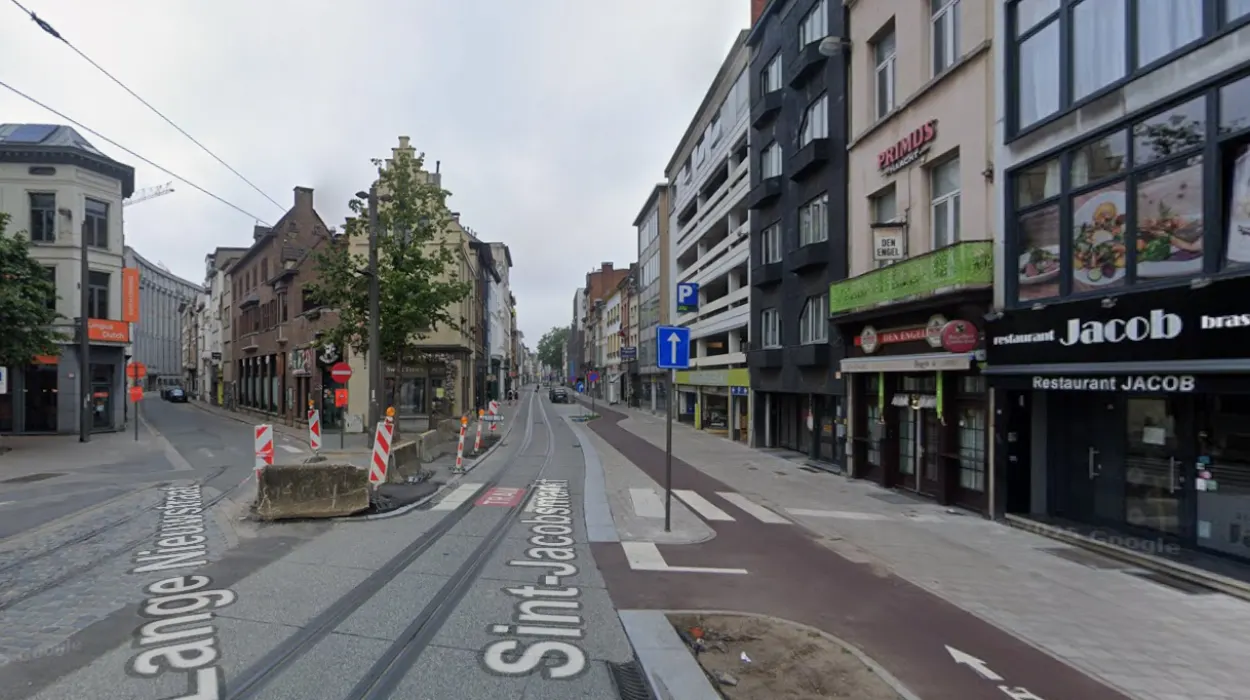
Antwerp (Brussels Morning Newspaper) – A dockworker from the Port of Antwerp-Bruges was caught riding his motorcycle at 115 km/h on the Noorderlaan, a main port artery where the speed limit is 70 km/h.
This speeding incident occurred in June 2025, yet it only appeared before the Antwerp police court (politierechtbank) on Thursday, 20 August 2026, where the man was charged with this violation of the law. The difference between the speed indicated in the ticket and the one allowed—the driver exceeded the limit by 45 kilometers per hour—puts this offence into the most severe category of traffic violations that exist in Belgium; it is a fourth-degree traffic offence. According to the existing prosecution procedure, speeding more than 40 kilometers per hour off the urban territory excludes fines on the spot.
Why was the case referred to the Antwerp police court?
In Belgium, the distinction has been made between a minor violation of traffic law (a speeding offense that could be settled with an administrative fine) and an excess that would be classified as a criminal level offense. The College of Procurators General set specific parameters: +30 km/h in the areas that are considered to be highly trafficked (zone 30 or school zones) and +40 km/h elsewhere.
Since the speed of the dockworker was 115 km/h in the area where the limit was 70 km/h, the difference of 45 km/h is more than +40 km/h, and that is why there is an obligation to refer the case to the politierechtbank. This requirement is set in order to give the most dangerous cases an examination from a judge who will consider the presence of aggravating circumstances (traffic, type of car, etc.). A motorcycle attracts special attention due to its acceleration properties and low visibility, and the Noorderlaan, being a heavily used port road with constant truck movement and difficult access, is the ideal example.
What defence did the dockworker offer in court?
During the court hearing, the dock worker did not deny the essential facts regarding the speed reading; rather, he tried to explain the circumstances of his behavior. As reported by the media, the dock worker said that he “wanted to defuse a dangerous situation,” giving an explanation for speeding to 115 km/h. This means that he tried to justify his behavior in terms of necessity, a legal concept that could serve as a justification in some cases.
In order to prove necessity in a traffic violation case, the court of Belgium would normally require evidence that the defendant was faced with an imminent and serious danger, the use of speeding was necessary in order to avoid it, and that the way of behavior was proportional to the level of danger. However, a simple claim of the existence of the danger, without any supporting evidence like witness statements or the video recordings made by the police, may not be sufficient to prove necessity especially where the defendant exceeded the limit up to 45 km/h.
What penalties can the court impose in such cases?
After the speeding offence has reached the police court as a fourth-degree offence, the sanctions for the driver are broader than in cases where only fines were imposed. The minimum sanctions include not only the fine based on the tariff but doubled due to the so-called opdecimes, which are surcharges on all judicial fines imposed in Belgium. Moreover, a driving ban (rijverbod / déchéance) may be ordered for a certain period of time, which is quite common when the speeding is rather serious or when the driver has previous cases.
As it happened in similar recent cases, a driving ban can be imposed for several weeks to several months for offenses in the category of +40 km/h to +50 km/h when they are committed together with another violations like the operation of the vehicle without the appropriate license or with a defective vehicle. The conviction leads to a criminal record in the sphere of fourth-degree traffic offenses and may influence insurance rates and employment opportunities for certain jobs. For employees working at ports and operating company-owned vehicles or machinery, a driving ban may mean a professional restriction as well.
How does this case fit into broader speeding trends around Antwerp?
This case involving the dock worker is by no means an exception to high-speed violations in the broader Antwerp region. Within the period of one month during the special speed checks conducted in July 2026, Minos region police confirmed that 12.12 percent of the checked drivers violated the speed limits, some of whom had been sent to court due to their excessive speeds. One of the speeders was recorded at 112 km/h in a 70 km/h zone, almost the same speed as in Noorderlaan incident.