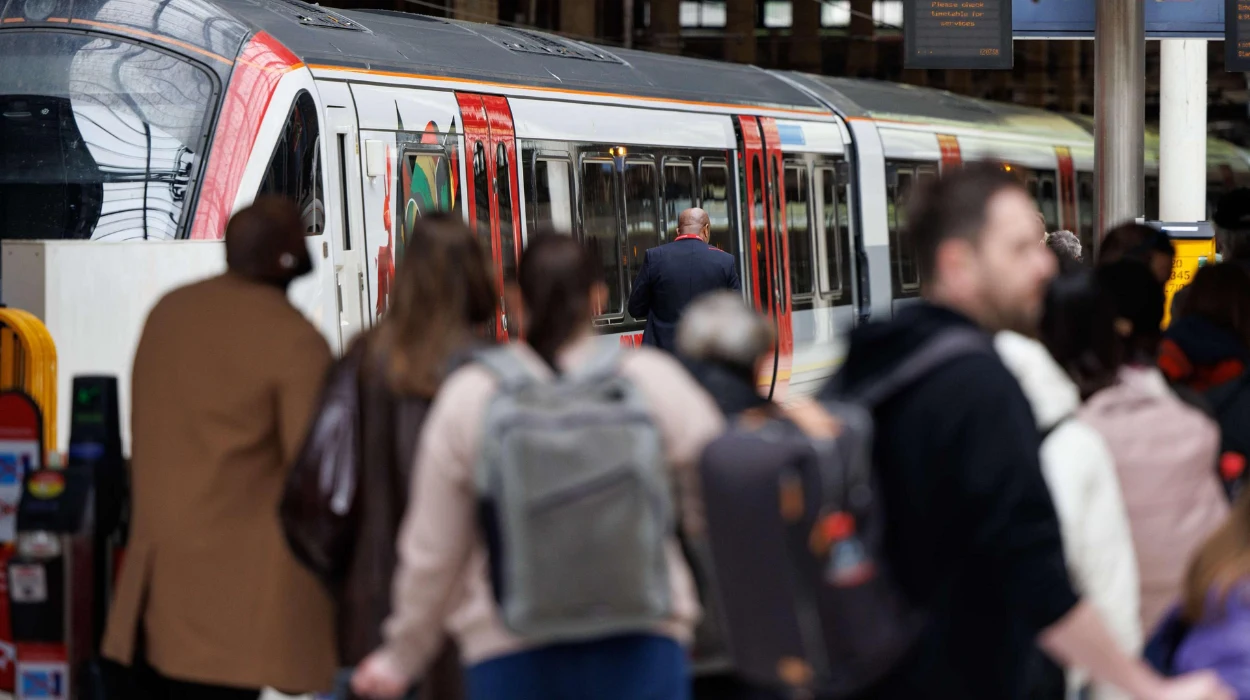
Train traffic between Sint-Niklaas and Willebroek and between Lokeren and Dendermonde remained disrupted on Tuesday after a technical failure in the railway signalling system, with no confirmed timetable for a full restoration of services.
Infrabel, which is the body responsible for the Belgian railways’ infrastructural management, indicated that the problem had occurred on Line 54 linking Sint-Niklaas to Willebroek and on Line 57 linking Lokeren to Dendermonde. The problem started at about 06:20 local time, when there was a problem on the Puurs-Sint-Niklaas rail line, which later expanded to the whole of the Waasland and Dender region rail lines. While technicians were sent to investigate the problem, the rail operator indicated that there had been no stability in the signaling system. There seemed to be a resolution to the problem around midday, enabling trains to run again, but this was soon realized to be untrue.
Which rail services were affected?
Passengers using the routes from Sint-Niklaas to Willebroek, and those using the Lokeren-Dendermonde lines, were impacted by the suspension. The corridors impacted are significant links that span across East Flanders and Antwerp provinces. They link the Waasland region with Dendermonde and Mechelen, as well as connecting further national railway networks. Replacement buses were provided by NMBS/SNCB for passengers travelling in the suspended sections. Passengers travelling from Willebroek to Mechelen could also make use of De Lijn bus services if they possessed a valid train ticket or season pass. No official figure was provided by the railway companies for the number of cancelled trains, number of affected passengers and delay minutes during the period of disruption.
Why did the signalling failure stop trains?
Railway signals coordinate the movement of trains, control track access, and ensure separation of trains. In cases where the system fails to provide positive assurance on the clearness of a path, normal train operations cannot be maintained due to the need for safety rather than continuity of the timetable. Infrabel did not give any reports of crash, injury, fatality, sabotage, or any other form of security issues associated with the disruption. The nature of the issue was described as a technical issue with regard to signalling infrastructure. The infrastructure manager’s reaction to the situation reveals how critical this system is in ensuring that no train enters an occupied track.
Has a similar disruption happened before?
Another case of such type was documented in Sint-Niklaas on 28 May 2025, when the NMBS punctuality dashboard referred to an issue with a signalling system in the station, which caused 20 canceled trains and 1,147 minutes of delay and highlighted the possible network implications of signaling failures in this region. In September 2025, Dendermonde faced ongoing train troubles because, according to the reports, there was an installation that provided information to the signaling system. This equipment was connected to several systems; hence, a single technical problem could have some other consequences. None of these previous incidents prove that this week’s accident had anything to do with the same malfunctioning equipment or technical issues. Infrabel did not make any official statements about it.
What is known about the wider impact?
The Belgium railway system has continually been under criticism regarding punctuality and reliability of the train services. Infrabel documents the cause of delays and gives performance figures concerning the delays and infrastructure disruptions via open data websites. According to national statistics, Belgian rail punctuality had been recorded to be 87.5% in 2023 from 89.2% in 2022. With the cancellations included, the punctuality rate stood at 84.6%, while the number of trains that had been cancelled in 2023 was 46,086. The immediate question on the minds of passengers of the current Belgium train disruption was how the signal could be restored and tested to allow normal train services. Infrabel had said that its engineers were on site, but no estimated time had been provided for restoring normal train services.