The current revision of EU legislation on tobacco has soared up the political agenda of late, with debate fiercely raging on how any new laws should look.
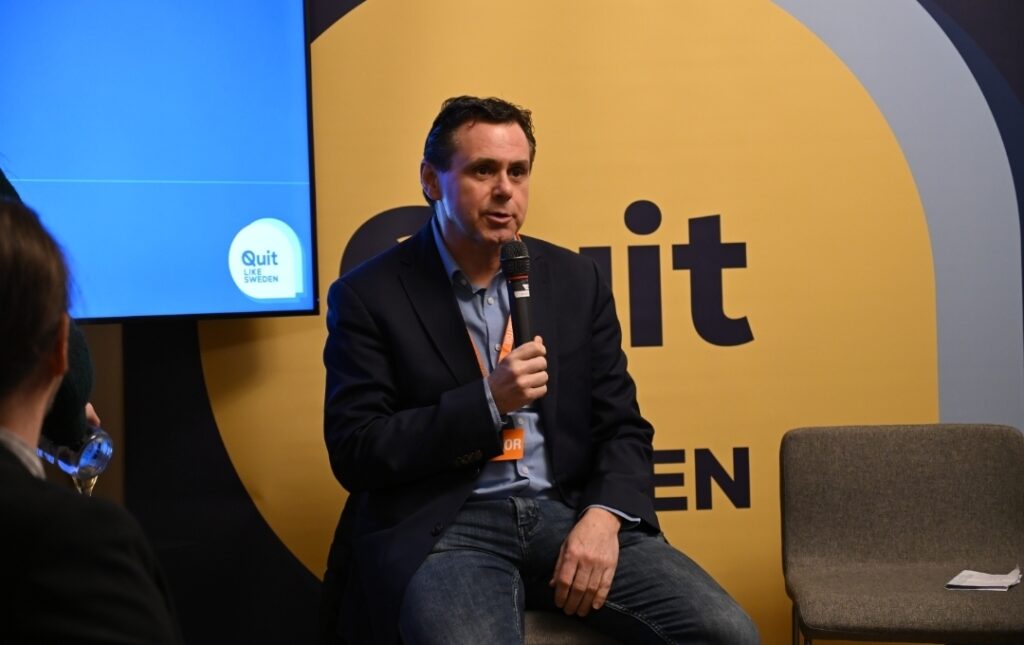
Dr Garret McGovern is an ardent advocate of ready access to safer nicotine products as an alternative to smoking.
In an exclusive Q&A with this site, he insists family members can “reap the benefits” of loved ones who smoke switching to e-cigarettes.
Q: Dr. McGovern, from a clinical perspective, does it surprise you that 62% of people living with a former smoker reported less second hand smoke exposure once they switched to a reduced-risk product?
A: This is not surprising at all. E-cigarette vapour has markedly less toxic chemicals than second hand tobacco smoke. There is no evidence that shows there are harms from second hand vapour. Further, breathing second hand smoke, as well as being unhealthy, is also an unpleasant experience. This is not the same for people in the slipstream of e-cigarette vapour.
Q: The data shows the biggest quality-of-life gains were reported by younger households, ages 18 to 34. As a physician, why do you think that generation in particular feels the health benefits of a household member switching so directly?
A: There is no question that household members reap the benefits of the loved one switching to e-cigarettes or indeed any non combustible nicotine product. They worry less about the family member succumbing to a smoking related illness or dying prematurely. In the case of the early demise of the main “breadwinner,” the financial implications of a parent dying early can have a devastating impact on the family.
Q: Support for adult access jumps by 10+ points among people who’ve actually watched a friend or relative quit using these products. As someone who sees patients make this switch, does that gap between perception and lived experience match what you encounter clinically?
A: There is no doubt that word of mouth success stories can have a hugely beneficial impact on contemplators who want to quit smoking. Unfortunately, there is a lot of misinformation in the media and from academic bodies and tobacco control about e-cigarettes which can dent the confidence of a smoker who is looking for a product to help them break their smoking habit.
Q: As a physician who’s spent years in this field, how would you explain the risk difference between combustible cigarettes and reduced-risk products like vapes, heated tobacco, and pouches to a colleague who hasn’t followed the evidence closely?
A: I say to colleagues that smoking is a devastating dependence and the burden of disease is from combustible tobacco. Non combustible products may come with some harms but they pale into insignificance compared to smoking, and this is supported by good research evidence and studies of toxicological comparisons. I also say that the WHO has got it wrong in relation to safer nicotine products. Badly wrong.
Q: The European Commission’s own fitness check admitted the current framework doesn’t adequately cover novel nicotine products. From a clinical standpoint, what’s the one gap you’d most want regulators to close?
A: I would like regulators to recognise the harm reduction benefits of non combustible products. Make them attractive and easily accessible to smokers whilst also discouraging adolescents from using them. These products need to remain a consumer product as this makes it easier for a smoker to try them.
Q: Sweden is often held up as the harm reduction success story in Europe. What do you think the rest of the EU’s medical community should be learning from that experience?
A: Sweden is indeed an incredible success story and I would have thought physicians would be shouting from the rooftops about this as a blueprint for tobacco harm reduction. Unfortunately the WHO and Bloomberg are on a crusade to malign these products and the medical community is listening to them, regardless of the evidence.
Q: If TPD3 takes a precautionary, restriction-heavy path instead of a harm-reduction one, what’s your biggest concern as a doctor about the impact on patients trying to quit?
A: In simple terms, there will be more smokers, less quitters, more smoking related illness and death.
Q: In your ideal world, what would an evidence-based, continuum of risk TPD3 actually look like for patients and prescribers?
A: Ready access to non combustible nicotine products and an international campaign to highlight their benefits to smokers trying to quit.
Q: Ireland has just taken the EU Council presidency and has pushed for a tougher line on novel nicotine products. Speaking purely as a clinician, does a more restrictive approach serve public health, or could it undercut harm reduction?
A: No. A restrictive approach is anti harm reduction and pro smoking. Any approach that reduces access to these products makes no sense to me.
Q: With health ministers negotiating this file under Irish leadership through December, what would you, as a doctor, want at the top of their agenda?
A: I would like Ireland to recognise the role of non combustible nicotine products in the fight against smoking related diseases and premature death, and realise that maybe the stagnated smoking prevalence (hovering at 17–18% for the past 7–8 years) is in large part due to the misinformation campaign about these products and the doubt it creates in smokers who are considering quitting.
Q: Ireland’s own tobacco policy has leaned toward tighter control. Do you see its EU presidency as a chance to build consensus around harm reduction, or a risk that one country’s caution gets exported across the whole bloc?
A: I am pessimistic the EU presidency will make a difference to the way Ireland views safer nicotine products. They have decided to go all in with the WHO model of demonising these products.
Q: It has been said Europe risks undermining progress against smoking if policymakers ignore real world evidence from countries that have successfully reduced cigarette use. Do you agree?
A: In a nutshell, yes I do, for all the reasons I have mentioned.