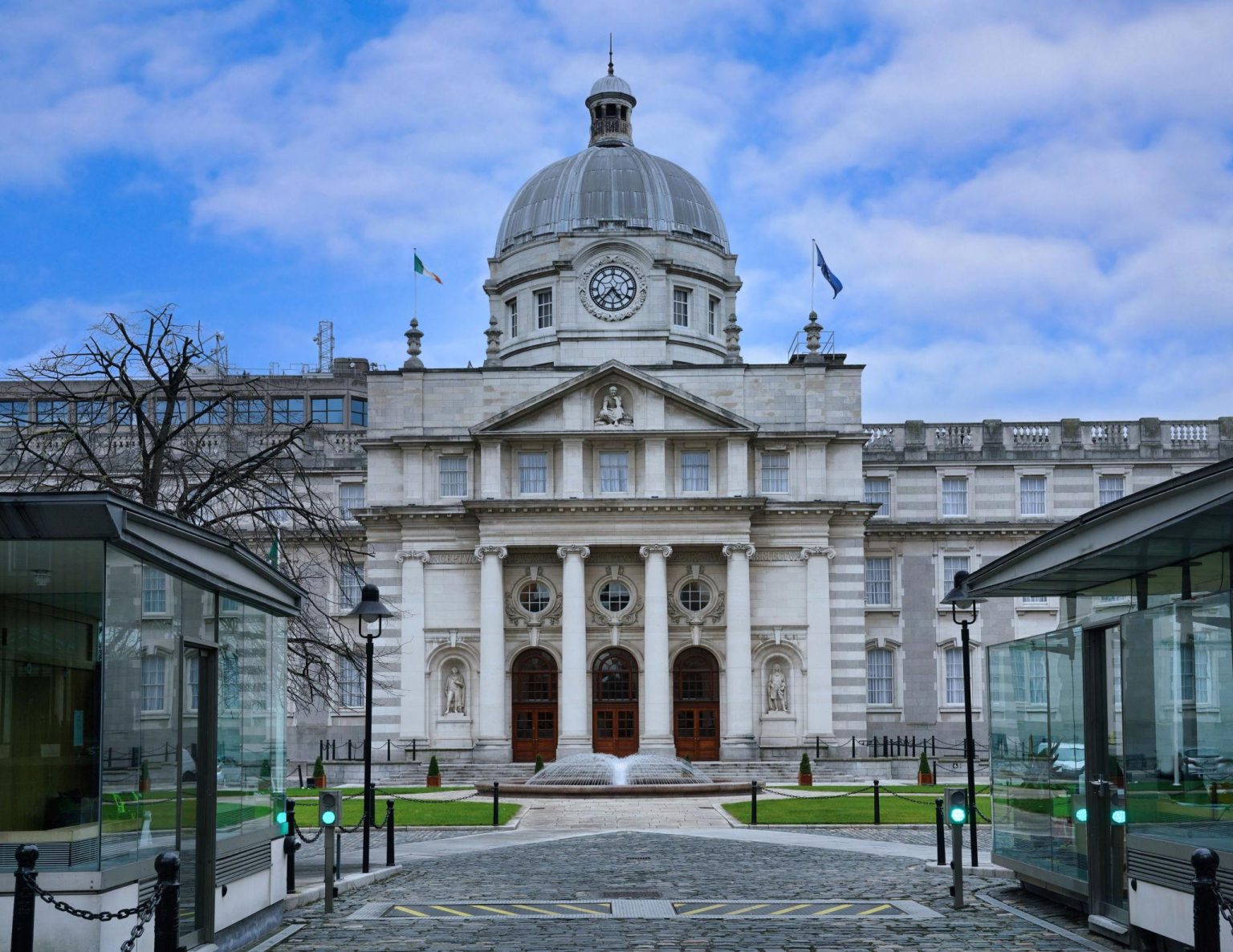
Ireland will take on one of the European Union’s most influential roles when it assumes the presidency next week.
Its term at the helm of the EU runs from 1 July to 31 December and comes amid much uncertainty, including multiple wars and ongoing talks about the EU’s long term budget.
Helen McEntee, Irish Minister for Foreign Affairs and Trade, said, “This Presidency is not just about meetings and negotiations; it is about reconnecting people with what Europe means in their lives.”
For six months, Ireland will be at the centre of EU decision‑making, steering complex negotiations that shape laws and policy for around 450 million people.
It comes at a challenging time for the EU as the war in Ukraine continues, migration remains politically sensitive, competitiveness is under pressure, and the demand to meet climate targets is intensifying.
Ireland has successfully held the EU presidency no less than seven times before, often during periods of significant change.
An Irish presidency source said, “The 2026 term offers another chance to steer the EU, relying on experience and diplomacy, and with a commitment to partnership.”
Ireland will chair some 180 council preparatory bodies, such as working parties and committees and it forms a “presidency trio” with Lithuania and Greece, following the current trio of Poland, Denmark and Cyprus. Trio partners cooperate for 18 months to develop a shared programme
Ireland’s broad thematic priorities for its presidency will align with the EU’s Strategic Agenda 2024-29 agreed by European leaders in late 2024, framed around three themes: values, security, and competitiveness.
Among the key issues likely to feature are:
Enlargement:
The EU’s possible expansion, particularly in light of the war in Ukraine. Ireland says it supports a “merit-based” process for countries such as Ukraine and Moldova, arguing that enlargement strengthens peace and prosperity across Europe.
Competitiveness:
efforts to make the EU economy more innovative and better able to compete globally.
Defence:
The invasion of Ukraine has reshaped European security policy and there are serious concerns about the EU’s ability to defend itself. Ireland points out it has increased defence spending while maintaining its policy of military neutrality, and supports EU cooperation in this area.
EU Budget:
Negotiations on the EU’s long-term budget for 2028–2034 are expected to be among the most demanding tasks of the presidency. The European Commission tabled its proposal in July 2025, and Ireland says it will aim to advance talks decisively during its six-month term.
Ireland has led the council seven times since joining the then EEC in 1973.
Speaking at an event in Brussels on Thursday, Ireland’s Permanent Representative to the EU, Aingeal O’Donoghue reminded reporters that it is the country’s eighth presidency.
She said, “Past performance is no predictor, necessarily, but it does give us, I suppose, two things: a sense of confidence, but also a sense that in the past we have delivered free Europe, and that’s what the presidency is going to be about, delivering free Europe.”
“One of the interesting things about how we approach the preparations for the presidency at home has been the extent to which we have been engaged in very widespread consultation around the presidency programme, so not just, shall we say, the usual stakeholders, but a whole campaign of outreach right across Ireland.”
She said the presidency programme was built around “three core pillars” of competitiveness, security, and values.
“Cutting across that you have the MFF, you have Ukraine in all its dimensions and, to a certain extent, you also have enlargement as a cross-cutting issue.
“We actually look at the presidency now with a very strong momentum on competitiveness which has been a big theme at the European Council since the start of the year, starting with the informal European Council in Alden Beeson through the March European Council, and then at the informal European Council in Cyprus.”
She pointed out that the three EU institutions, the council, the parliament, and the commission had signed a roadmap for “one Europe, one market.”
The briefing was organised by the International Press Association (API-IPA).
Separately, the presidency source added, “Russia’s ongoing war of aggression against Ukraine, the conflicts in the Middle East and the Gulf, and the evolution of new threats and new forms of warfare present serious challenges.
“We must work together to address these challenges, which have highlighted the need for Europe to invest in all dimensions of our own security and develop our defence capabilities.
“The Irish Presidency will work to advance measures that contribute to the strengthening of European security and defence.”