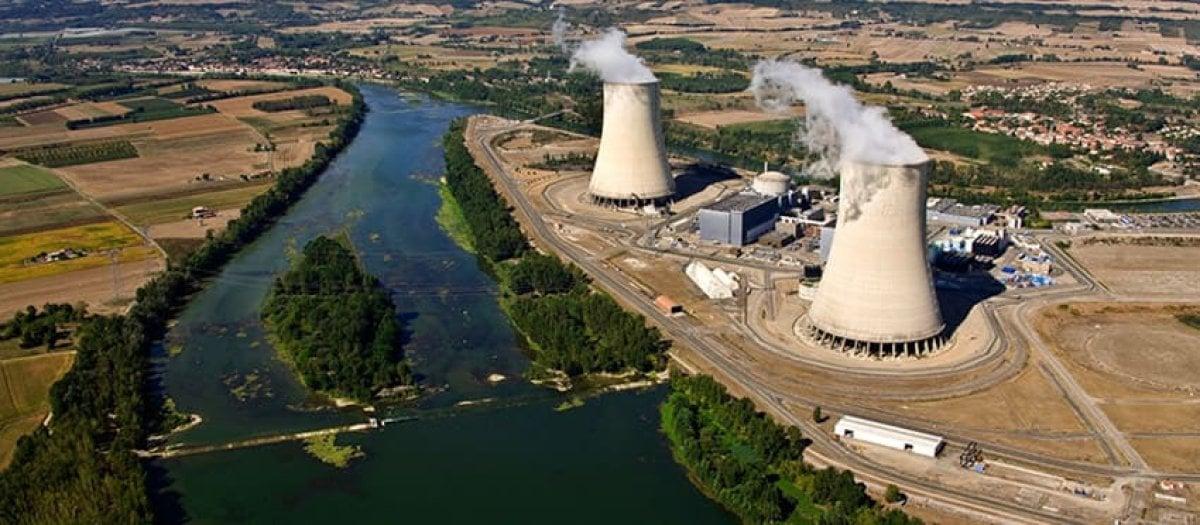
On June 23, France recorded its hottest day since measurements began in 1947. The national temperature indicator hit 30°C – a record broken again the very next day, when the national average reached 30.0°C, according to Météo-France. Around 50,000 French households lost power after a transformer failure linked to the heat. The Golfech nuclear plant near Toulouse shut down reactor unit two – river water too warm to cool it. By June 25, EDF had shut down two further reactors at Nogent-sur-Seine and Bugey, bringing the total to three offline and output reduced at several more sites, cutting 4 GW – roughly 6% of France’s total nuclear capacity. Across Western Europe, 380 million people faced temperatures above 30°C. Belgium recorded electricity prices above €1 per kilowatt-hour at sunset. Five UK gas plants cut a combined 2.5 gigawatts of output due to heat stress.
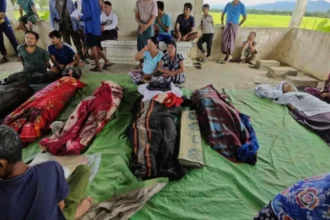
This is Europe’s third heatwave of 2026 – and the deadliest. France has confirmed at least 40 fatalities, with Paris recording 44 cardiac arrests in a single 24-hour period against an average below 10. Hundreds of schools have closed. Rail services have been disrupted by thermal expansion of tracks. Researchers from the World Weather Attribution project have confirmed that this heatwave would have been “virtually impossible” 50 years ago, with human-driven climate change “unequivocally to blame.”
Policymakers should treat this not as a weather event but as a systems stress test. Europe failed it. The dominant narrative since 2022 has been that Europe’s energy crisis stems from overreliance on Russian gas. That framing is now obsolete. The deeper problem is that Europe built an energy system for a climate that no longer exists – grids designed for winter peaks, nuclear maintenance in spring, and moderate summers. Climate change has invalidated all three assumptions simultaneously. The heat wave is not a geopolitical shock that diplomacy can resolve. It is a physical reckoning that demands industrial transformation.
Simone Tagliapietra of the Bruegel think tank identifies a “triple squeeze”: cooling demand rises sharply, power plants lose efficiency in the heat, and nuclear and thermal plants must cut output because cooling water is too warm. France supplies 58% of the EU’s nuclear electricity. European hydropower fell 13% in the first five months of 2025. EDF estimates climate-proofing its fleet will cost €600 million per year over 15 years. The IEA projects energy use for cooling will double globally by 2050. Europe, where fewer than 10% of homes have air conditioning, is entering that transition structurally unprepared.
The positive signal is also worth noting. During last year’s June–July heatwave, record EU solar generation helped keep power supply stable despite soaring demand. In Germany alone, solar delivered up to 50 GW on peak days – 33–39% of the country’s electricity, according to Ember. The renewable buildout is already providing structural resilience. The imperative is to accelerate it.
The dominant European instinct has been to frame China as a dependency problem. Applied to clean energy, that framing is strategically self-defeating. Over 95% of solar panels installed in the EU come from China. Panel prices fell from €0.20 per watt to under €0.12, which is why solar installations in 2022 and 2023 alone saved the equivalent of 15 billion cubic metres of Russian gas imports. China installed more photovoltaic capacity in the first half of 2025 than Germany deployed over 25 years. The cybersecurity risks from Chinese grid components are real and warrant calibrated management – not blanket exclusion at the moment Europe needs to deploy renewables faster than ever.
Europe’s pivot from Russian pipeline gas to American LNG brought real gains: EU energy import bills fell from €693.4 billion in 2022 to €336.7 billion in 2025, a 51% reduction. But it is a partial illusion. American LNG is more expensive, volatile, and entangled in U.S. domestic politics. The ongoing U.S.–Iran conflict has roiled Middle East energy flows since early 2026. When the Strait of Hormuz becomes contested, LNG prices spike globally and Europe absorbs the shock regardless of its own choices. Diversification from one fossil supplier to another only defers the structural problem. On the hottest week in French recorded history, the constraint on power generation was not which country exported the gas – it was that every thermal system performs worse in extreme heat.
Three decisions will determine whether Europe learns from this week. Grid reinforcement cannot wait for the clean energy transition to mature – battery storage must be treated as critical infrastructure. The EU must end ambiguity in its China solar policy: voluntary commitments will not build manufacturing capacity; binding domestic content targets are required. And the investment case has materially strengthened: for the first time in history, wind and solar generated more electricity globally than gas in April 2026, according to Ember.
The 2003 heatwave killed 15,000 people in France and was once described as exceptional. It is now a baseline. Scientists find that parts of Europe are experiencing up to 40 additional days of extreme heat stress compared with the 1970s. UN Secretary-General António Guterres warned that “until humanity stops burning coal, oil and gas, extreme heat will keep getting worse.” Climate science did not fail to warn Europe. Political systems failed to act at the required speed. The decisive variable in Europe’s energy future is not which country exports the fuel – it is whether the physical infrastructure can survive the climate it was never designed for. The answer, for now, is no.